Loading...
Please wait for a bit
Please wait for a bit
Click any word to translate
Devi Sridhar is right that this Ebola outbreak needs urgent attention (Ebola in the DRC needs the world’s attention now – if your neighbour’s house is on fire, you don’t wait and watch, 19 May). Present an engineer with a problem needing a build or fix and you will often hear: “You can have it good, fast or cheap – pick two.” In global outbreak responses, we learn too late every time that we must pick “fast” first.
Having worked on the west African Ebola outbreak in 2014-16 and on smaller Ebola responses in the Democratic Republic of the Congo in 2018-2020, I have seen the same failure pattern repeat. We think too long before going in, despite knowing what is needed, and we overestimate the complexity of what must be accomplished.
The fixes are clear. First, lightweight rapid-response teams of clinicians, logisticians and, where appropriate, researchers should be salaried, equipped and ready to deploy in days, not weeks. Think of coastguard rescue, not military campaigns.
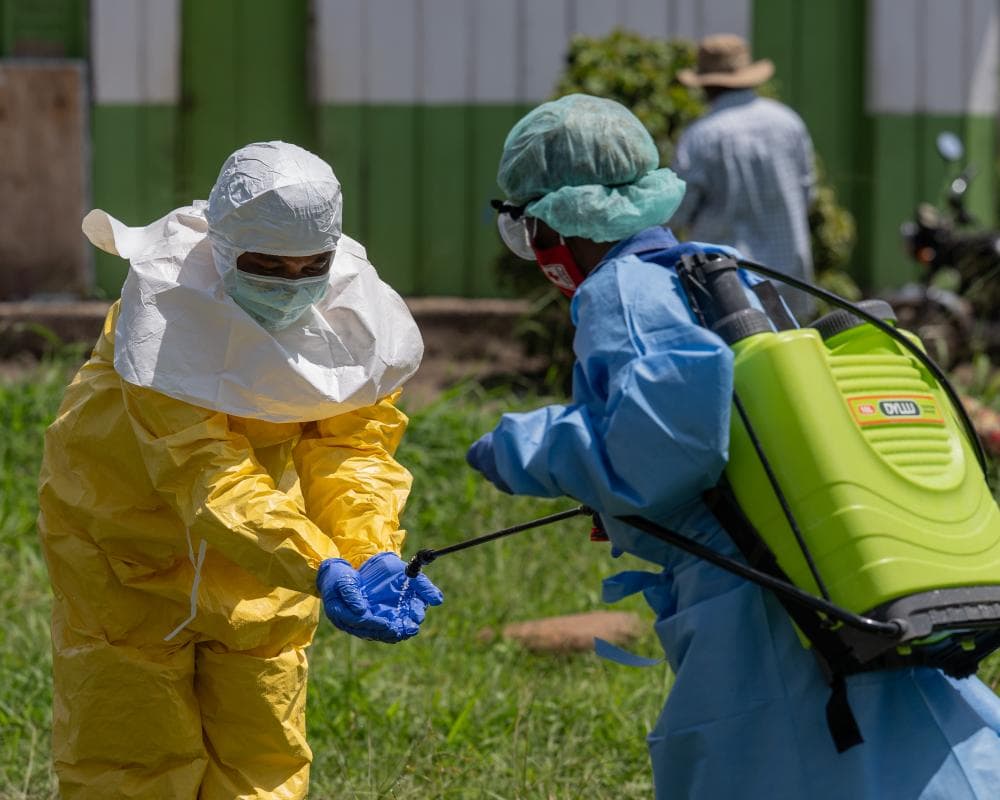
Second, local capacity must be mobilised immediately. Community health workers are essential for contact tracing, guiding teams through remote areas, supporting sample movement and building trust. There are smart, capable people on the sidelines now waiting to help. Basic personal protective equipment and infection control training can be delivered quickly.
Third, secure support areas should be staged adjacent to hot zones. This was essential in west Africa and may be even more important here, given conflict, mobility and the lack of specific countermeasures for this strain.
We have been here before and will be here again. A few dozen well-equipped experts ready to move immediately cost almost nothing compared with recovering from an outbreak allowed to grow. When will we learn?
Eric Perakslis
Marstons Mills, Massachusetts, US
• Devi Sridhar’s warning on the Bundibugyo Ebola strain exposes an unresolved domestic faultline: the delicate balance of duties between frontline healthcare workers and the state. As the medical director of the Cabinet Office’s Covid-19 PPE taskforce, I learned that equipment supply lines are ultimately about workforce confidence. In an infectious outbreak, reporting for duty relies on a social contract.
No one would expect firefighters to enter a burning building with faulty breathing apparatus. Yet during the pandemic, hundreds of thousands of NHS staff crossed the threshold every day despite severe shortages and downgraded safety guidelines. During the 2014-16 west African Ebola epidemic, a lack of PPE turned care into a suicide mission. Rationally, large numbers of healthcare workers elected to avoid their workstations because the risk was simply too great.
Prof Sridhar’s own 2015 Harvard-London School of Hygiene & Tropical Medicine panel report into that crisis outlined how to prevent future disasters. Those lessons were not learned then, and they were bypassed during Covid-19. If governments fail to ensure PPE availability, they will eventually face a novel kind of pandemic: all patients and no staff.
Dr Darren Mann
Former medical director, Cabinet Office Covid-19 PPE taskforce
• I notice that viruses are still being named after places – in this case, Bundibugyo, a district in Uganda. During Covid, there were concerns about the virus being named after Wuhan in China, where it originated. Why can’t the World Health Organization and international media extend the same courtesy to countries like Uganda to avoid negative stereotypes?
Dilman Dila
Seeta, Uganda
• Have an opinion on anything you’ve read in the Guardian today? Please email us your letter and it will be considered for publication in our letters section.