Australia deporting refugee to Nauru may cause his ‘imminent’ and ‘preventable’ death, court hears
Click any word to translate
Original article by Sarah Basford Canales
Lawyers for an Iranian refugee Australia wants to deport to Nauru say there is a “real risk he will die” there, setting the stage for a showdown against the federal government’s $2.5bn NZYQ deal.
The case surrounding the Iranian refugee, known as TCXM, who was granted a 30-year visa for Nauru in February and subsequently placed back into immigration detention after being freed by the 2023 high court ruling, was heard in the high court on Tuesday.
Lawyers for the man are appealing an earlier decision to dismiss his case in the federal court, arguing the original judge had accepted Nauru’s medical facilities were “inadequate” to treat his severe asthma but ruled in the government’s favour of deporting him.
They said his removal to Nauru could result in his “imminent” and “preventable” death.
The man’s legal team said his condition would worsen on Nauru due to his age, the weather conditions and “insufficient” facilities to manage his condition on an ongoing basis or treat a severe and potentially fatal asthma attack.
The commonwealth’s lawyers argued government officials are duty-bound to deport non-citizens on a removal pathway, pointing to a 2003 court ruling that said it was required “even if it is virtually certain that he or she will be killed”.
Sign up: AU Breaking News email
Lawyers for TCXM also said he was not afforded procedural fairness under the interim arrangement with Nauru because he did not have a chance to state his case against it.
According to a chronology submitted to the court, Australia and Nauru entered into the interim arrangement on 12 February 2025 for the three men, including TCXM, and the government applied for his visa – without his knowledge – two days later.
TCXM was taken back into detention on 16 February when he was notified that Nauru had issued the long-term visa. He remains in detention while his high court case is heard.
The government’s counsel said the Nauru deal was lawful and that TCXM was not afforded procedural fairness because it related to foreign affairs matters – namely, Australia’s dealings with Nauru.
Lawyers for TCXM are seeking an injunction on his deportation to Nauru, which, if granted, could have broader implications for the government’s multi-billion-dollar deal.
TCXM was one of more than 350 non-citizens released from indefinite detention in 2023 after the high court ruled in favour of a stateless Rohingya man known as NZYQ.
The chief justice, Stephen Gaegler, in 2023 said the man’s indefinite detention was unlawful because there was “no real prospect of his removal from Australia becoming practicable in the reasonably foreseeable future”.
TCXM arrived in Australia in 1990 and was granted a protection visa five years later. In 1999, he was convicted of murdering his wife and sentenced to 22 years in prison.
His visa was cancelled in 2015 and once released from jail, he was placed in immigration detention indefinitely until his release under the 2023 ruling.
The Australian government has recognised he is owed non-refoulement obligations and cannot be sent back to Iran.
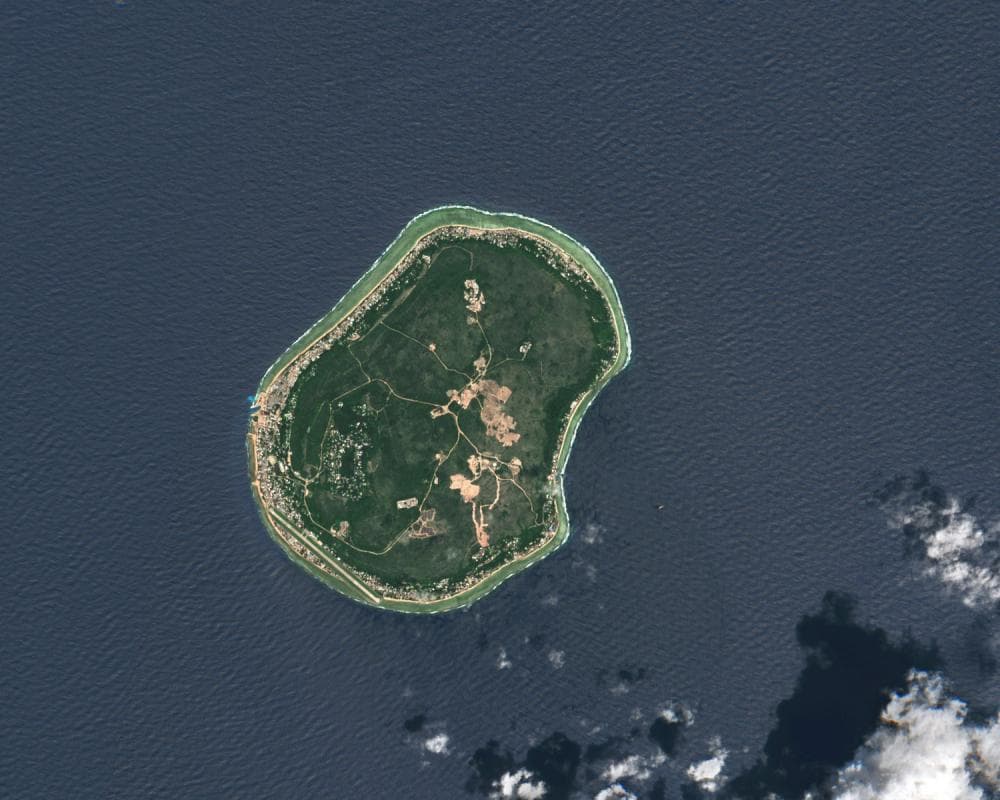
A deal signed with the Nauruan government in February this year allows the Albanese government to apply for 30-year visas on behalf of those within the NZYQ-affected cohort to offload them to the tiny Pacific island.
The deal will cost at least $2.5bn over three decades and Guardian Australia is aware of at least five men removed to the island so far.
In early September, the government passed amendments to the Migration Act to remove natural justice – access to a fair hearing and to a decision without bias – for non-citizens on a removal pathway.
The changes also retrospectively validate government visa decisions made before the high court’s NZYQ ruling in November 2023 that could subsequently have been deemed unlawful.
The government said the tweaks aim to speed up deportations by removing the cohort’s right to natural justice – and therefore further legal challenges – once the government decides to send them to Nauru, by preventing any legal “delay or uncertainty”.
Lawyers for TCXM argued on Tuesday these changes were valid but not lawful.