Loading...
Please wait for a bit
Please wait for a bit
Click any word to translate
Original article by Sam Jones in Madrid
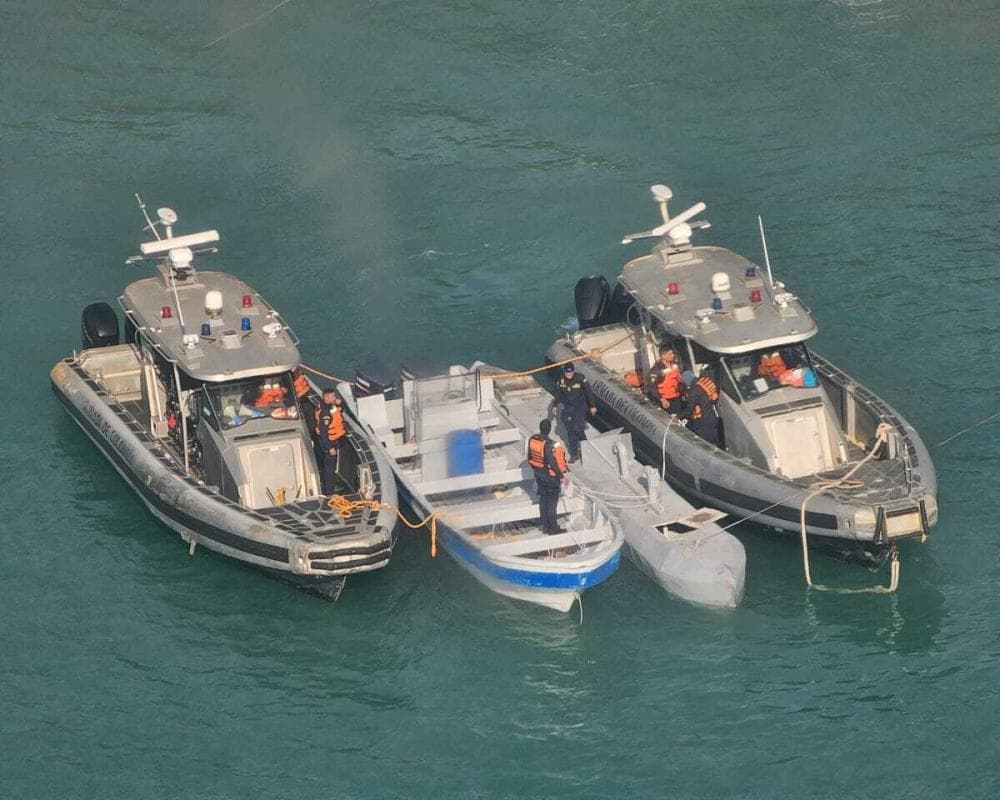
The plummeting price of cocaine is forcing drug-traffickers to reuse the “narco-submarines” they would previously have scuttled once the custom-built vessels had completed their cargo runs from South America to Europe, according to a senior Spanish police officer.
While semi-submersible vehicles have been used regularly in Colombia and other parts of South and Central America since the 1980s, they were not detected in European waters until 2006, when an abandoned sub was found in an estuary in the north-west Spanish region of Galicia.
Since then, 10 such subs have been spotted or seized by Spanish police. Until recently, the boats, which cost about €600,000 (£524,000) to build, were used for one-way trips.
But with massive cocaine production leading to market saturation – wholesale prices have halved to €15,000 (£13,000) a kilo over the past few years – drug-traffickers can no longer afford to consign their vehicles to a “narco-sub graveyard” between the Azores and the Canary Islands.
“These semi-submersibles used to head to the area around the Canaries on one-way voyages and they’d then be sunk,” said Alberto Morales, the head of the central narcotics brigade of the Spanish Policía Nacional.
“Back then, the cost of the merchandise in comparison with the cost of the vessel still made doing that very worthwhile – they’d be carrying three or four tonnes minimum, so operating that way was very profitable. But what’s happened lately is that the price of the merchandise is really, really low, so the organisations have, logically, had a rethink.
“Rather than sink them, what they do now is unload the merchandise and set up a refuelling platform at sea so that the semi-submersibles can head back to the countries they came from and make as many journeys as possible.”
Spanish police and customs officers seized 123 tonnes of cocaine last year, up from 118 tonnes in 2023 and 58 tonnes in 2022. In September this year, the Policía Nacional arrested 14 people and seized 3.65 tonnes of cocaine allegedly brought to Galicia by narco-sub.
Morales said police had noticed an uptick in narco-sub activity over the past two years and a decrease in the use of sailboats to bring drugs to Spain.
“Right now, [the organisations] have two basic methods which are merchant ships and semi-submersibles, which allow them to do their transporting at any time of year.”
He added that while 10 narco-subs had been logged over the past two decades, the true number in operation was likely to be higher. “Obviously there will have been more than 10,” said Morales. “Logically speaking, we can’t detect everything that reaches the Spanish coast as we have 8,000km of coastline.”
He also said although multiple people had confirmed the existence of the “narco-sub graveyard” in the eastern Atlantic, details were scarce.
“We don’t have a location; we don’t even have any numbers,” he said. “And even if we did, it would be almost impossible to recover the [subs] because of the depth of the waters. It’s something for the fish to enjoy.”
The increasing use and reuse of narco-subs is not the only recent trend to have attracted the attention of Morales and his colleagues.
Officers from the brigade’s synthetic drugs and precursors department say they have dismantled more amphetamine, methamphetamine and MDMA laboratories in Spain over the past two years than in the previous 18.
Two labs were raided and put out of business in 2023, followed by six in 2024 and another three so far this year. Drug seizures from those facilities have included more than five tonnes of MDMA, 450kg of amphetamine sulphate and 27kg of methamphetamine.
Although the overwhelming majority of synthetic drug manufacture has historically taken place in the Netherlands – where police dismantle about 100 clandestine labs a year – gangs are continuing to branch out across Europe.
Officers in the department believe production has outgrown the cramped geographical confines of the Netherlands and spread to countries such as Spain, France and Germany where there is more room to make the drugs and dispose of the waste materials, and where ingredients and drugs are easier to move around.
“There are laboratories all over the place – especially in rural areas where there aren’t many people and where things are better from a security point of view,” said one senior officer.
He added that as well as paying some locals to keep an eye out for strangers and police, the drug gangs also used drones to watch over their operations.
“We’ve been pretty surprised by the synthetic drugs phenomenon because of the numbers of the laboratories we’re dismantling and because of the nature of some of these laboratories,” he said. “These are large-scale production laboratories.”