Loading...
Please wait for a bit
Please wait for a bit
Click any word to translate
Original article by Thomas Graham in Mexico City
Costa Rica heads to the polls on Sunday in an election dominated by increasing insecurity and warnings of an authoritarian turn in a country long seen as a model of liberal democracy in the region.
Crime is a big concern for many voters as criminal groups battle to control lucrative cocaine trafficking routes to Europe and the US, casting a shadow on the Central American country famous for its wildlife tourism.
Voters are choosing the president and 57 members of congress for the next four years after a campaign that centred on President Rodrigo Chaves, a polarising figure who has upended Costa Rica’s political system, even though he was unable to run again as the constitution prohibits consecutive terms.
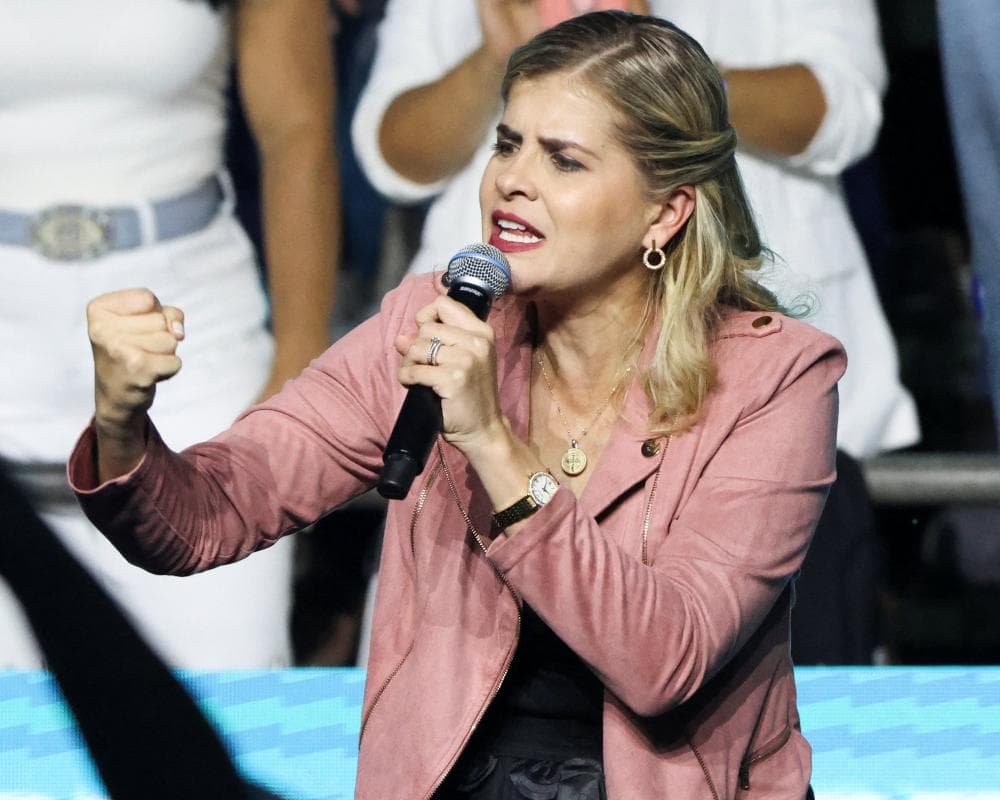
The president’s handpicked candidate, Laura Fernández, 37, a former minister promising a hard line on security, leads the latest polls with about 40% of the vote – enough to secure a first-round win. Meanwhile, the opposition is fragmented, with no candidate exceeding 10%.
However, roughly a third of voters are still undecided, meaning the outcome is wide open.
“Where [these voters] flip will determine everything,” said James Bosworth, founder of Hxagon, a consultancy. He said Fernández could get a majority or even a supermajority in congress. Alternatively she could get a minority, and struggle in the second round if the opposition vote consolidated.
The Costa Rican political landscape was transformed in 2022 when Chaves, an economist who left the World Bank after being accused of sexual harassment, tapped into anger at corrupt and discredited political elites, with a late surge in the polls winning him the presidency.
Since then, Chaves has worked to boost the economy – with mixed results – while scorning political norms with his abrasive style, and clashing with Costa Rica’s institutions.
Courts sought to prosecute Chaves on charges of corruption and meddling in the coming election, but congress blocked both attempts to strip him of his presidential immunity. Fernández has said she would name Chaves to her cabinet, which would allow him to retain immunity.
Meanwhile, the traditional parties have struggled to reinvent themselves, and Chaves’s approval ratings remain at about 50% despite the steep rise in violence related to organised crime during his term.
Costa Rica, long considered one of the safer countries in the region, now has a homicide rate of 16.7 per 100,000 people, the third highest in Central America.
Last year, authorities dismantled the “South Caribbean Cartel”, described as Costa Rica’s first transnational crime organisation, and arrested a former security minister on US charges of drug trafficking.
In response, Chaves spoke about imitating the hardline security policies of the president of El Salvador, Nayib Bukele, and invited him to the groundbreaking for a new prison modelled on Bukele’s infamous Terrorism Confinement Center, or Cecot.
Fernández has gone further, saying she would start a state of exception in violence hotspots – something opposition candidates have said would be “an authoritarian move”, according to Eugenia Aguirre, an investigator at the University of Costa Rica’s Observatory of National Politics.
This reflects broader concerns about the authoritarian direction of Chaves’s political project, which has until now been limited by his party’s minority in congress.
“So far, we’ve seen changes of [political] style: attacks and threats directed at political opponents – things we hadn’t seen in Costa Rica for a long time,” said Aguirre.
But a landslide win for Fernández could mean more structural changes to come. “If they win a simple majority in congress, that gives them room to make a lot of changes to institutions,” she said. “If they win a supermajority, they have announced a series of constitutional changes to transform the state.”
Luis Antonio Sobrado, former president of the supreme electoral tribunal, said: “This election will determine whether Costa Rica corrects its populist drift or sinks more or less definitively.”
But others believe Costa Rica’s institutions will endure. “Costa Rica will still have fair elections four years from now,” said Bosworth. “Costa Rica will remain Costa Rica.”