Loading...
Please wait for a bit
Please wait for a bit
Click any word to translate
Original article by Julian Borger Senior international correspondent
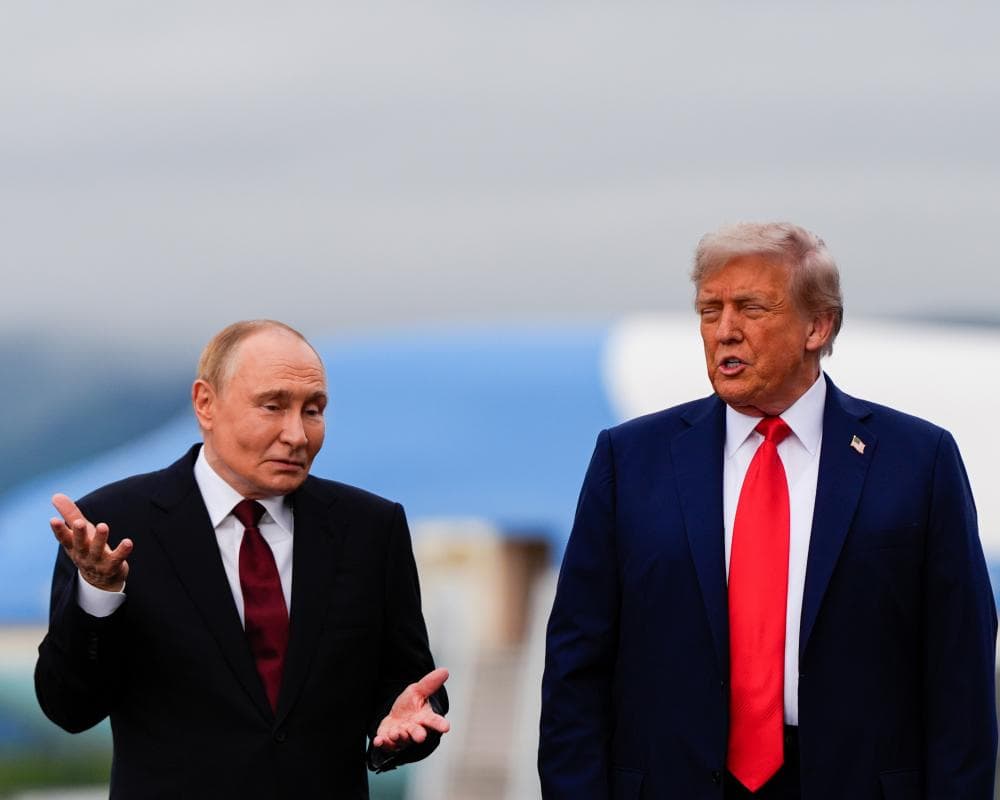
The Kremlin has announced that Vladimir Putin has been invited to join Donald Trump’s “board of peace”, set up last week with the intention that it would oversee a ceasefire in Gaza.
The Kremlin spokesperson, Dmitry Peskov, told journalists on Monday that Russia was seeking to “clarify all the nuances” of the offer with Washington, before giving its response.
The claim of an invitation comes with Putin showing no signs of ending his invasion of Ukraine, in which hundreds of thousands have been killed and Russian troops have carried out atrocities against civilians. The Russian president has repeatedly rejected proposals of ceasefire along the current frontlines.
The Kremlin also said on Monday that Putin’s special envoy Kirill Dmitriev would be attending the World Economic Forum in Davos this week and would meet members of the US delegation there. It is unclear whether those meetings will involve discussions of the Gaza board.
The invitation to Putin, which has yet to be confirmed by Washington, raises more questions about the intended agenda for the board. It was originally part of Trump’s ceasefire proposals for the Gaza war, and was supposed to oversee the transition to a lasting peace in the territory and supervise the work of a committee of Palestinian experts, also announced last week, who would take care of the day-to-day running of Gaza. The vaguely described scheme was endorsed in a UN security council resolution in November.
The first appointments to the board, announced on Friday, included Trump himself as chair, with a “founding executive board” that included the former British prime minister Tony Blair and the current US secretary of state, Marco Rubio. Also appointed were Trump’s troubleshooting envoy, the property developer Steve Witkoff, the president’s son-in-law Jared Kushner and the president of the World Bank, Ajay Banga.
It has emerged over the weekend that Trump had also sent invitations to the leaders of states including Argentina, Paraguay, Turkey, Egypt, Canada and Thailand. Belarus announced that its leader, Alexander Lukashenko, had been invited and that he welcomed the invitation.
The UK prime minister, Keir Starmer, was reportedly approached with an offer of membership last week although was awaiting a formal invitation.
The invitation letters included a “charter” saying the board would seek to “solidify peace in the Middle East”, and at the same time “embark on a bold new approach to resolving global conflict”.
Each national leader would serve a maximum of three years on the board, unless their governments paid a $1bn (£745m) fee to become permanent member, in an echo of Trump’s elite membership structure for his Mar-a-Lago estate and his golf clubs. It is unclear who would be the recipient of such membership payments and how they would be used.
The charter states: “The board of peace is an international organisation that seeks to promote stability, restore dependable and lawful governance, and secure enduring peace in areas affected or threatened by conflict.” It adds that the board should have “the courage to depart from approaches and institutions that have too often failed”, a likely swipe at the UN.
News agencies quoted French officials on Monday as saying that France would decline the offer of membership, because of the board’s broader aspirations. Earlier in the day the French foreign ministry had said it was reviewing invitation to join the new body “whose project extends beyond the situation in Gaza”. The ministry statement “reiterates its attachment to the United Nations charter, [which] remains the cornerstone of effective multilateralism”.
The French press agency AFP also quoted a Canadian official as saying the country would not pay for membership, nor had it been asked for payment, but it was not clear whether Ottawa would also reject the invitation outright.
The inclusion of Putin in a global body supposed to oversee peace around the world would add considerable weight to longstanding suspicions that Trump leans heavily in the Russian president’s favour in his approach to the Ukraine conflict.
At the same time as he was apparently inviting friendly leaders to join the board of peace, Trump also sent a letter to Norway’s prime minister, Jonas Gahr Støre, over the weekend, telling him that “considering your country decided not to give me the Nobel Peace Prize for having stopped 8 Wars PLUS, I no longer feel an obligation to think purely of Peace”.
Trump has been escalating pressure on Denmark and the rest of Europe to accept his plans to take over Greenland, an autonomous Danish territory, and has imposed punitive measures on European countries who have objected most strenuously to his plan.
The UK is one of the targeted countries, and Starmer denounced the tariffs as “completely wrong” on Monday, restating that “any decision on Greenland belongs to people of Greenland and Denmark alone”. However, Starmer did not commit to the imposition of retaliatory tariffs on the US, and downplayed the prospect of Trump using force in Greenland.
Peskov, the Kremlin spokesperson, meanwhile suggested that a US takeover of Greenland would cement Trump’s place in the history books.
“Here, perhaps, it is possible to abstract from whether this is good or bad, whether it will comply with the parameters of international law or not,” Peskov said, but he added it would “certainly go down in history”.