Loading...
Please wait for a bit
Please wait for a bit
Click any word to translate
Original article by Martin Belam
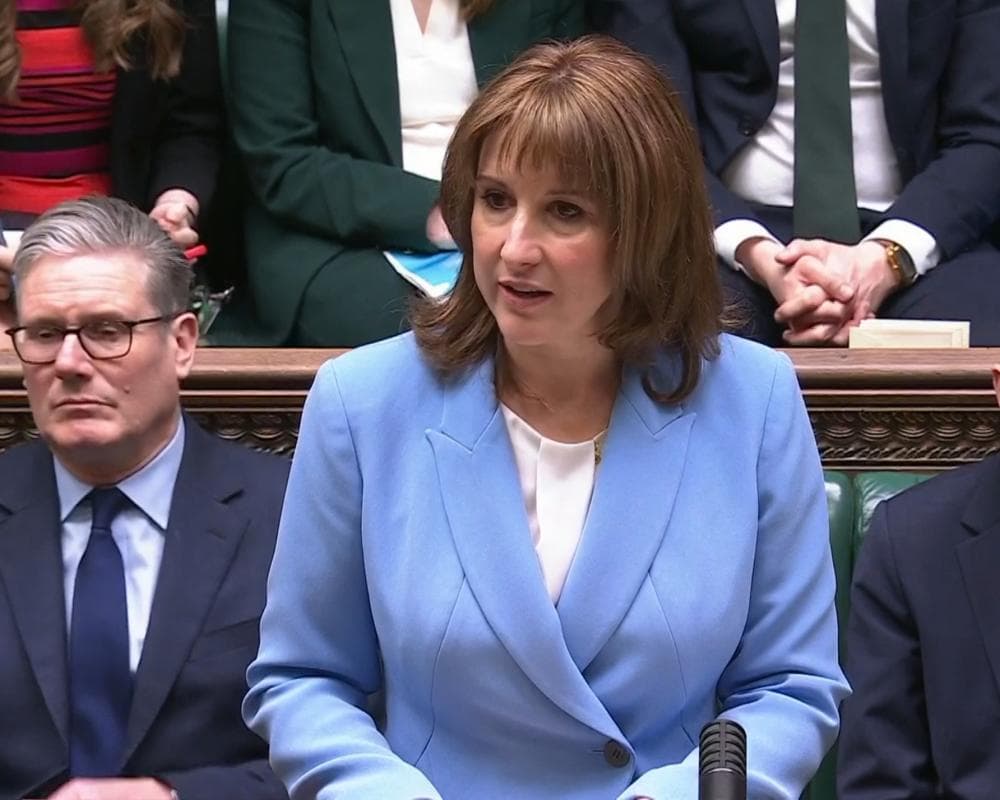
Good morning. When she stood up in parliament yesterday to deliver the spring statement, Rachel Reeves insisted that “inflation is down, borrowing is down, living standards are up and the economy is growing” – and that Labour’s economic plan was the right one for a world that has become “yet more uncertain”.
In narrow fiscal terms, the chancellor achieved what she set out to do. Borrowing is forecast to fall, her headroom against the fiscal rules has edged up to £23.6bn, and the statement contained no policy surprises to unsettle investors. But the economic weather beyond Westminster has shifted sharply.
The Office for Budget Responsibility’s (OBR) forecasts were finalised before the US and Israeli attack on Iran, which has sparked a surge in oil and gas prices and war across the Middle East. Reeves was speaking against a backdrop of tumbling markets and rising geopolitical risk.
For today’s newsletter, I spoke to the Guardian’s economic editor, Heather Stewart, about whether Reeves achieved the calm she was aiming for – and how long it might last. First, the headlines.
Iran | Israel and the US intensified their attacks on Iran as Donald Trump said he had rejected what he claimed was an attempt by Tehran to restart negotiations.
UK news | A doctor who gave crucial expert evidence for the prosecution of the nurse Lucy Letby was under investigation at the time due to serious concerns about his fitness to practise.
US politics | The US justice department has dropped legal proceedings against four law firms that stood up to retaliatory executive actions by Donald Trump for representing clients or causes the president did not like.
Reform UK | More than half of Reform UK members believe non-white British citizens born abroad should be deported or encouraged to leave, according to polling.
Baftas 2026 | Alan Cumming has joined the chorus of disapproval at the BBC’s failure to edit out a racial slur from their Baftas telecast, saying it turned the event “into a trauma-triggering shitshow”.
Reeves acknowledged that growth will be “slightly slower” this year, with the OBR downgrading its 2026 forecast from 1.4% to 1.1% after weaker-than-expected data late last year. Unemployment is now expected to peak at 5.3%, up from a previous estimate of 4.9%, as new entrants to the labour market struggle to find work amid subdued hiring.
For a chancellor effectively telling parliament that short-term growth is slowing and unemployment is rising, she struck a notably upbeat tone. As Heather Stewart put it to me, had Reeves delivered the same statement a week earlier “we’d all have been writing that the public finances were improving a little bit and there were modest causes for optimism”. Instead, she was making the case for restored “economic stability” while the US and the Middle East have gone to war.
***
Did Reeves succeed in delivering a boring statement?
In one sense, yes. There were no rabbits pulled from hats, no new fiscal loosening and no deviation from the government’s self-imposed rules. Headroom increased modestly, debt is forecast to fall slightly faster than expected and inflation is projected to return to target in the second half of this year. Labour’s strategy relies on what Reeves has called a “stability premium” – a period of calm in which lower borrowing costs encourage businesses to invest and households to spend.
“There’s all this chaos going on around them,” Heather says. “Her absolutely central message is supposed to be that the government has restored economic stability, but a lot of that will depend on what happens in the Middle East.”
“It’s very hard to know how long that situation will last,” she adds. “If it doesn’t last very long, and energy prices come back to something a bit more like normal, the markets calm down, then it won’t do particularly lasting damage to the UK economy.”
But markets did not provide the calm backdrop Reeves might have hoped for yesterday. Expectations of a near-term interest rate cut have fallen sharply as energy prices have risen, the FTSE fell and the pound plunged.
***
What are ordinary people going to feel in their pockets?
Labour’s argument is that real wages are rising and that households will be about £1,000 a year better off in real terms by the next election. The OBR forecasts GDP per person will grow by 5.6% over the parliament.
Yet, as Heather notes, there is a persistent disconnect between economic metrics and lived experience. “For economists and central bankers, 2% inflation is about right – you don’t want zero or negative inflation because that risks recession. But when politicians say inflation is ‘under control’, people probably assume prices are going to fall. They aren’t”. In fact on the morning of the spring statement, Reeves had the unwelcome news that grocery inflation had risen.
Ministers, she says, have pinned their hopes that households will notice April’s energy bill reduction and, potentially, lower mortgage rates if further Bank of England cuts follow. But if higher global energy prices persist, that relief could prove short-lived.
And it isn’t just directly in people’s pockets that the economy is felt. Heather notes that unemployment, particularly among first-time jobseekers, is already close to a five-year high and forecast to rise further this year.
“If voters – or their kids – are struggling to get a job, that’s not going to make you feel particularly cheerful. Unemployment has already risen quite significantly, and the OBR has it ticking up further this year, especially among first-time jobseekers. That’s something people really notice.”
***
What role does immigration play in the OBR’s forecasts?
One of the more technical but potentially significant issues behind the scenes was migration. The OBR has previously assumed higher levels of net migration, which tend to support growth and tax receipts. But recent data suggests inflows are falling sharply.
The OBR has already factored in weaker-than-expected migration, Heather says. “But it hasn’t yet incorporated the government’s tougher new immigration policies. Economists expect those to be taken into account in the autumn forecast – and that’s likely to put further downward pressure on growth. That’s a looming issue.”
That leaves Reeves navigating a delicate balance: addressing voter concerns about migration, which are being exploited by Reform UK, while relying on labour supply to support economic growth and tax receipts.
***
Is the OBR still fit for purpose?
Beyond the numbers, there is a broader debate gathering pace about the role of the OBR itself (as covered by Aamna in this very newsletter, back in December). Heather wrote at the weekend that some Labour-aligned thinktanks have labelled the OBR “a backseat driver with out-of-date maps”. Others warn that weakening the watchdog would risk unsettling markets at a time when fiscal credibility remains fragile.
“There is a sort of bubbling argument about its role,” she tells me. “People say it’s got too much power, it doesn’t give enough weight to the long-term benefits of investment, it’s just too much of a constraint.”
But, as Heather observes, it may not be the moment for change. “It’s very difficult to abolish or reform the OBR’s remit at a time when markets are highly sensitive about fiscal credibility. That’s the sort of thing you would want to do from a position of strength, when everything is calm and it would barely be noticed. At the moment, it would probably cause a significant wobble.”
***
A political speech, not an economic one
The spring statement was billed as a non-event. In fiscal terms, it was largely that: no new policies, modest revisions and slightly improved headroom. In many ways it had more political content than economic content, with Reeves broadening her attacks not just against the Tories, but also having barbs at Reform – noting the MP for Clacton, Nigel Farage, was not in the chamber – and the Greens.
“It felt like a soft-left speech,” Heather points out. “There’s been pressure on Labour to shift left after the Gorton and Denton byelection defeat, and she really leaned into language about moving on from a broken economic model and making sure working people and every part of the country benefit. She also talked about getting closer to the EU. There was clearly something there aimed at reassuring the backbenches.”
But ultimately the stability Reeves sought to project rests on assumptions about falling energy costs, easing borrowing pressures and a gradual return of business confidence. In a world that has indeed become “yet more uncertain”, those assumptions may prove more fragile than the OBR and Treasury’s spreadsheets suggest.
Much has been said about the government’s draconian plan to double the wait for settled status. Kevin Rawlinson’s interviews with those whose lives are now in limbo is an important read that cuts through. Aamna
Jason Okundaye thoughtfully laments a growing intolerance in British society – typified by footballers observing Ramadan being booed this weekend – and, he says, politicians are not doing much to help. Martin
There is so much horror in the world, so this piece about retirees discovering a new world through dance feels like a genuine tonic. Aamna
I’m a big fan of “old man pubs“, where I can often be found in the corner on my laptop. Social media is giving them a new lease of life among younger visitors, as Tomé Morrissy-Swan discovers. Martin
This visual investigation into the strike on a girls’ school in Iran, which killed 168 people, is a devastating and meticulous contribution that pieces together how this tragedy unfolded. Aamna
Football | In the Premier League, Wolves stunned Liverpool with a 94th-minute winner, walking away with a 2-1 victory. England’s women got their World Cup qualifying campaign off to a flying start with a 6-1 win over Ukraine. Scotland’s women also won, while Wales picked up a potentially valuable point away to the Czech Republic.
Rugby union | Steve Borthwick has made 12 changes to his England team to face Italy, picking an entirely different back line as he seeks to salvage his side’s Six Nations campaign with the most radical selection of his tenure.
Cricket | England have pledged to go into Thursday’s T20 World Cup semi-final against India with no fear, with Sam Curran describing the fixture as “a dream” and “a brilliant opportunity”.
The Guardian leads with “US and Israel intensify Iran attacks as conflict widens” this morning. “War spreads across Middle East as Trump rages at Starmer” is on the front page of the i paper, the Mail goes with “A prime minister who Trump mocks as ‘no Churchill’ and a Navy fleet stranded in port”, the Times has “PM is no Churchill, says Trump as tensions rise”, while “Starmer is no Churchill” leads the Telegraph.
“Enter the Dragon” leads the Mirror, after the deployment of HMS Dragon. The Sun front page reads: “Ship happens”. “Panic at the pumps” leads the Star, as oil prices rise. “Mideast energy shock batters markets” is top story for the FT.
What do Netanyahu and Trump really want in Iran?
Who’s calling the shots in the US-Israeli war on Iran? Chief Middle East correspondent Emma Graham-Harrison and international security correspondent Jason Burke report
A bit of good news to remind you that the world’s not all bad
Across the continent, African women have long passed down intimate knowledge about pleasure and partnership through rites of passage and women-led gatherings. Much of this tradition has been overlooked – until now.
Nana Darkoa Sekyiamah travelled across Africa to explore how this ancestral wisdom might help women reclaim joy and sexual freedom today. Among the practices she encounters are “kitchen parties”, where aunties and grandmothers counsel brides-to-be on intimacy, self-care and sustaining a healthy marriage.
Dance is just one of the seduction techniques taught. Rooted in centuries-old rituals, these gatherings reveal a communal, confident approach to sexuality that challenges shame.
Sign up here for a weekly roundup of The Upside, sent to you every Sunday
And finally, the Guardian’s puzzles are here to keep you entertained throughout the day. Until tomorrow.