Loading...
Please wait for a bit
Please wait for a bit
Click any word to translate
Original article by Matty Edwards and agencies
A suspected outbreak of the rare hantavirus infection on a cruise ship in the Atlantic Ocean killed three people – including an elderly married couple – and sickened at least three others, the World Health Organisation (WHO) and South Africa’s health department said on Sunday.
The WHO said an investigation was under way but that at least one case of hantavirus had been confirmed. One of the patients was in intensive care in a South African hospital, the UN’s health agency said in a statement to the Associated Press, and the WHO was working with authorities to evacuate two others with symptoms from the ship.
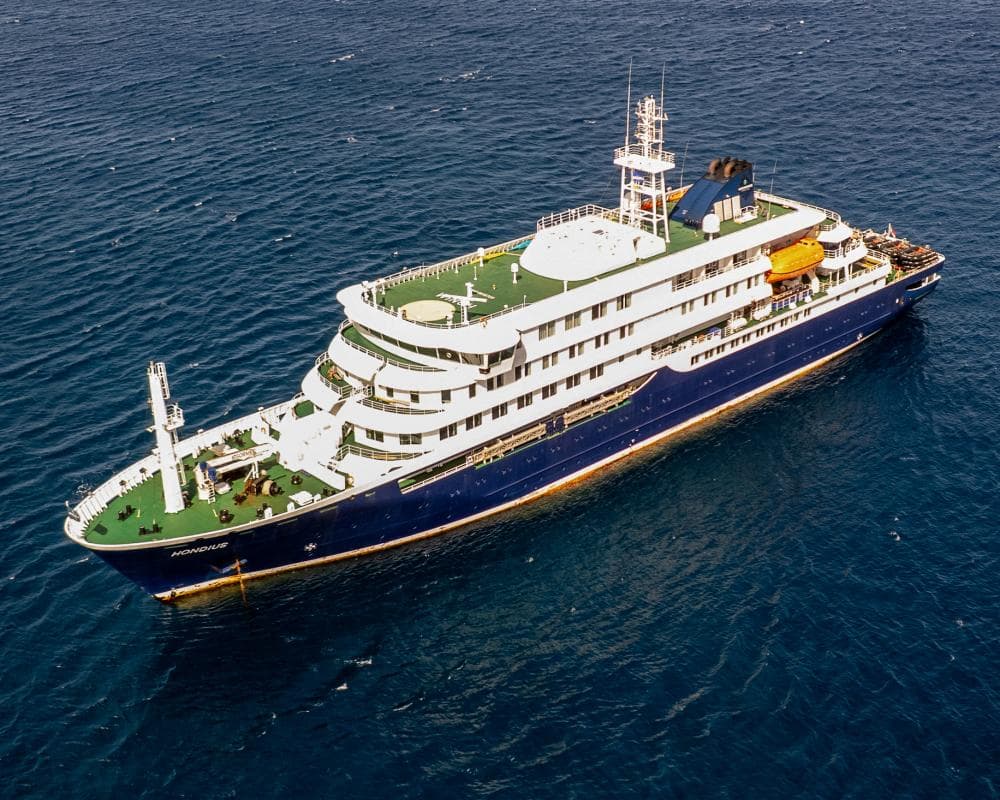
The outbreak was reported on the MV Hondius, which was travelling between Argentina and Cape Verde. According to several online ship-tracking sites, the MV Hondius was just off the port of Praia, the capital of Cape Verde, on Sunday night.
Two of those who died were a husband and wife aged 70 and 69 from the Netherlands.
The South African health ministry said the man fell ill onboard the ship and died on the island of Saint Helena, while his wife died at a hospital in Kempton Park, a city in South Africa.
A British man, 69, who became ill on the ship was taken to a private health facility in Johannesburg, according to the South African health ministry, which said he tested positive for hantavirus.
Hantavirus is usually caught through contact with urine or faeces from infected rodents.
Hantaviruses cause two serious syndromes, according to the US Centres for Disease Control and Prevention: hantavirus pulmonary syndrome, a severe disease that effects the lungs, and hemorrhagic fever with renal syndrome, a severe disease that affects the kidneys.
While rare, hantavirus infections could be spread between people, the WHO said. There was no specific treatment or cure, but early medical attention could increase the chance of survival.
“WHO is aware of and supporting a public health event involving a cruise vessel sailing in the Atlantic Ocean,” the organisation said. “Detailed investigations are ongoing, including further laboratory testing, and epidemiological investigations. Medical care and support are being provided to passengers and crew. Sequencing of the virus is also ongoing.”
The ship is operated by the Dutch tour company Oceanwide Expeditions, which said on Sunday evening that two crew members onboard require urgent medical care and the third fatality was still onboard the ship.
The company said local health authorities had assessed the two symptomatic individuals, but the ship did not have authorisation from Cape Verdean authorities to disembark people requiring medical care.
“The priority of Oceanwide Expeditions is to ensure that the two symptomatic individuals onboard receive adequate and expedited medical care,” a spokesperson said.
“We are in close contact with those directly affected and their families and are providing support where possible.
“Disembarkation and medical screening of all guests require coordination with local health authorities, and we are in close consultation with them.”
Dutch authorities have agreed to lead a joint effort in organising the repatriation of the two symptomatic individuals to the Netherlands, the cruise operator said, along with the body of the deceased individual.
The WHO said it was “facilitating coordination” between national authorities and the ship’s operators to organise the medical evacuation of two passengers with symptoms.
The MV Hondius, which can accommodate about 170 passengers and has 70 crew members, is listed as a polar cruise ship on the websites of several travel agencies.
One of the cruises offers an itinerary departing from Ushuaia in Argentina and sailing to Cape Verde, with stops in the islands of South Georgia and Saint Helena.
The UK’s foreign office said: “We are closely monitoring reports of a potential hantavirus outbreak on the cruise ship Hondius and stand ready to support British nationals if needed. We are in touch with the cruise company and local authorities.”