Loading...
Please wait for a bit
Please wait for a bit
Click any word to translate
Original article by Jonathan Yerushalmy
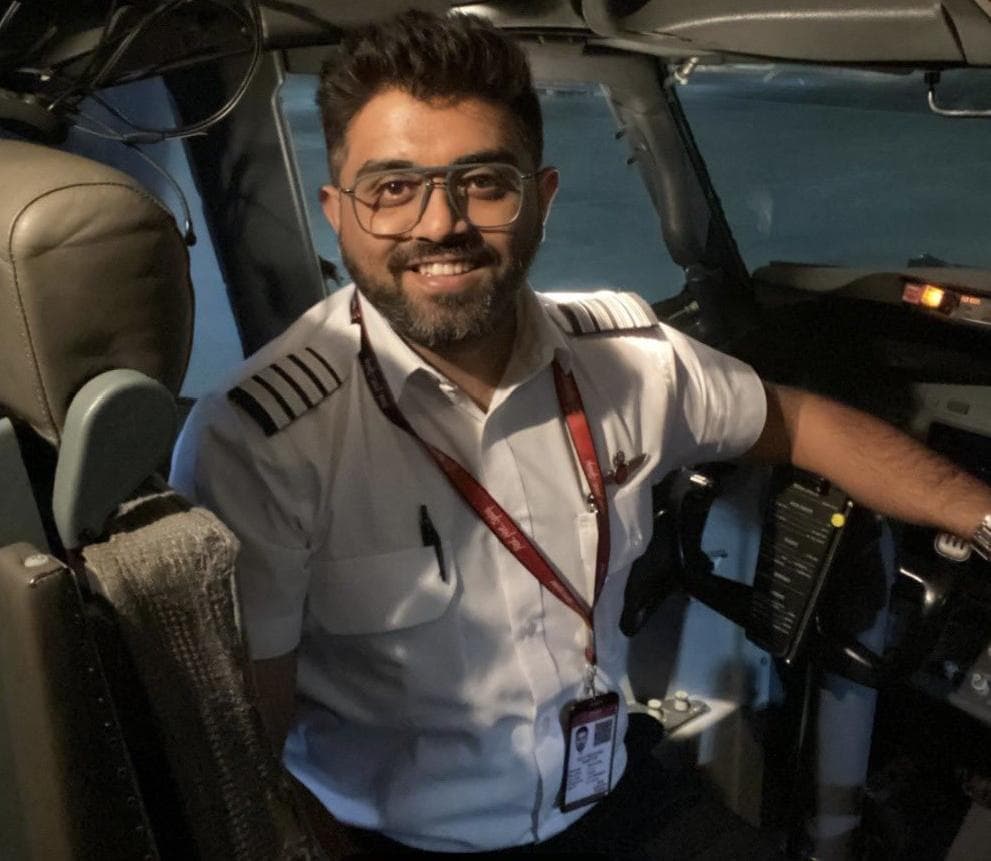
Smit Machchhar was lying on the floor of the flydubai flight deck, covered with blood, when he managed to click the release to open the cockpit door, allowing passengers and crew to gain entry, overpower his attacker and save 174 passengers on board.
Moments earlier, Machchhar’s fellow pilot had stabbed him, in an apparent effort to crash the plane which was travelling from Dubai to Tel Aviv. Machchhar, an Indian citizen from Mumbai, is being treated in a hospital in Saudi Arabia’s north-western city of Tabuk, where the plane landed safely.
Machchhar is just one of several people hailed as heroes, for managing to wrest control of the plane from the attacker who apparently attempted to crash the flight, according to Israeli officials, who also provided much of the detail on how events played out inside the plane.
In a post on X early on Thursday, Indian prime minister Narendra Modi lauded Machchhar a “hero”.
“In the face of the gravest danger and despite being seriously injured, he showed immense courage and an unwavering resolve to protect the lives of others. His valour helped save hundreds of lives and avert a great tragedy,” Modi said.
Earlier, Israeli prime minister Benjamin Netanyahu had been equally impressed by Machchhar’s actions. “Despite being stabbed and seriously injured, he fought back, resisted, opened the cockpit door, and enabled passengers and crew to overpower the attacker.”
The incident began with a struggle, when Machchhar’s fellow pilot – reportedly an Omani national – stabbed him and sent the jet plunging nearly 14,000ft (4,267 metres) in less than 30 seconds.
Soon after several passengers were able to enter the cockpit to help subdue the attacker.
“What made it difficult for us was [Machchhar] himself,” said Yaniv Hayoun, who was among those in the cockpit and whom Netanyahu described as a plumber. “He had been stabbed and was on the other side of the door.”
Hayoun later told Netanyahu that as people wrestled with the attacker, “I jumped back, grabbed the controls, and started pulling back the handles”, the way he had seen on television shows. Then other crew members took over.
Dr Shota Musaev, a dentist on board, was also among those who ran to the cockpit. He told CNN they found the attacker on the floor on top of the pilot, stabbing him. He then rushed to help Machchhar, “terrified” he was going to die.
“He was covered in cuts – his head, his hands – they were practically sliced open, almost severed in two … he had lost a lot of blood and was in bad shape.
“I think that if we had waited even a few more moments, we would have lost him; his blood pressure had plummeted, he suddenly lost consciousness, and there was blood everywhere,” he said.
Musaev told CNN he also helped subdue the attacker, recalling that he tied him up using headphone cords and plastic zipties.
Other crew members then stabilised the descent of the plane and began to land it safely in north-western Saudi Arabia. Among those who intervened was an off-duty British pilot, according to a passenger, Almog Itali, who said the plane was carrying a pair of relief pilots who were meant to fly the next flight.
“The relief pilots are European, one of them British, who entered [the cockpit] and pulled the aircraft up, pulled the yoke, stabilised the plane and landed us in Saudi Arabia,” Itali said in a clip posted by the BBC. Other reports suggested the off-duty pilots were from South Africa or New Zealand.
Indian media reported that Machchhar underwent surgery in Saudi Arabia, while Indian officials say he is in a stable condition. They say they have been in touch with his family – reportedly a wife and two children – who live in Dubai.
Aviation experts have expressed surprise the plane did not crash after a descent so extreme that most of the rudder was ripped off the tail. One passenger described the moment of the nosedive as like “massive turbulence … for 20 or 30 seconds.”
“That was a serious descent and strong aerodynamic forces on that rudder for that to happen. I’m just amazed the aircraft didn’t come apart,” said former United Airlines pilot and aviation safety expert Steve Arroyo.
“What saved them is there was enough altitude left for them to recover,” said Guzzetti, another aviation expert, who said it may not have been possible for the plane to level out if it had fallen below 10,000 feet.
The fact Machchhar was able to unlock the cockpit door, allowing other passengers to enter and take control of the aircraft, no doubt saved all the passengers on board. Philip Kean the chief executive of Mainland Air in New Zealand – where Machchhar trained for 18 months in 2008 and 2009 – said the pilot had shown leadership after being attacked in mid-air.
Calling Machchhar an above average pilot, Kean told New Zealand publication Stuff that pilots trained for all eventualities, but that managing it successfully when it happens in reality was a “whole different story”.