Madrid residents brace for noise and disruption from new F1 circuit
Click any word to translate
Original article by Sam Jones in Madrid
Opponents of Madrid’s newly constructed Formula One circuit have accused the regional authorities of putting profit before people’s wellbeing after tests for the inaugural Spanish Grand Prix at the track later this month yielded noise levels that were almost twice the legal decibel limit.
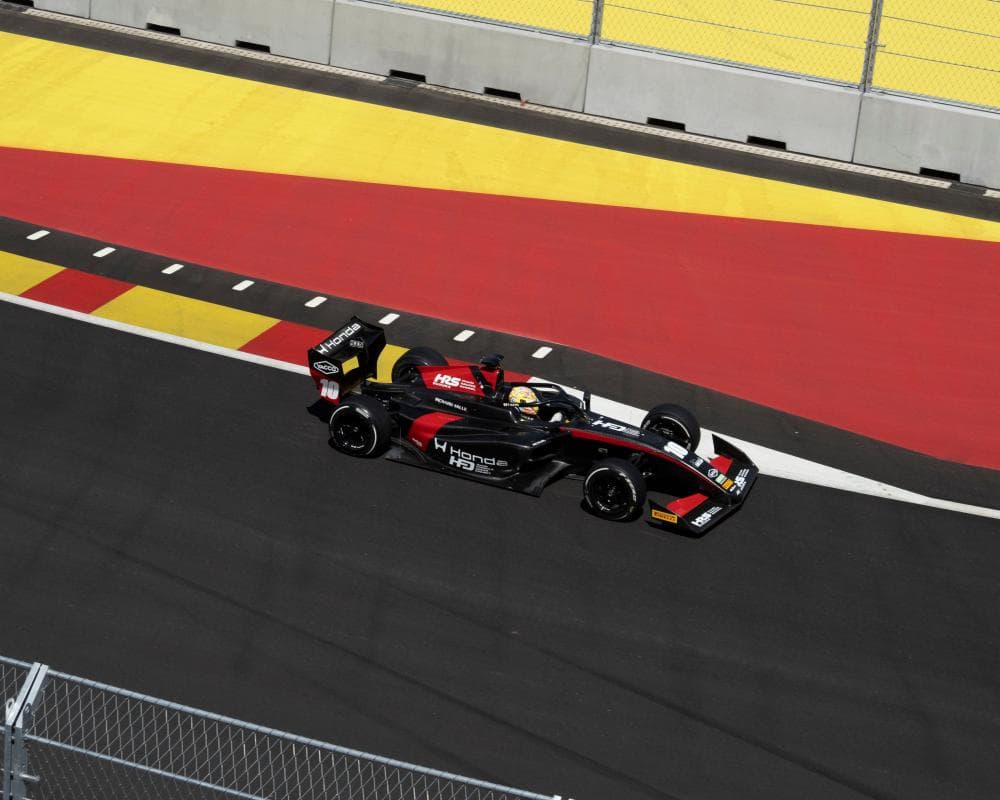
The regional government of Madrid and the city council are hoping that the 5.4km-long (3.3 miles) Madring circuit – which has been built in the north-east of the Spanish capital at a cost of €83m (£71m) – will attract visitors, boost the local economy and put the city firmly on the motor racing map. The Madring bills itself as “a perfectly connected circuit: just 20 minutes from the city centre”.
But recent track tests using Formula Three cars have worried local people who are taking legal action over the construction of the circuit and the noise it is expected to generate. The Stop F1 Madrid platform, which was formed a year ago, said neighbours had recorded average noise levels of 102.7 decibels during the tests, with peaks of between 107.7 and 109.1 decibels. The maximum noise level permitted in residential areas is 55 decibels.
“It’s not just about the dust and the noise,” said Antonio Ibáñez, a spokesperson. He said there had been complaints from people who argued it was impossible for them to work remotely during the tests, adding: “We’ve also spoken to people who have children with autism and they had to get them out of the area because of [all the distress].”
One of the group’s biggest worries is the huge numbers of people expected to descend on the area for the grand prix itself, putting an enormous strain on public transport and the local area. “An urban Formula One circuit is just a bad idea,” he said. “It’s a nonsense idea.”
Regional and city authorities have sought to reassure residents and are attempting to stress the economic benefits of the track. Borja Carabante, Madrid’s city councillor for urban planning, mobility and the environment, said measures, such as acoustic panels, would be put in place to minimise noise during the grand prix on 11-13 September.
He also said that the Formula Three cars used to test the track “make and emit more noise than Formula One cars, so there’ll be less noise on 13 September than there was during the tests”.
Carabante said the city council would work to ensure traffic disruption was kept to a minimum. But he called on the people of Madrid to celebrate the arrival of Formula One in the city: “We should be congratulating ourselves that Madrid is hosting such an important and significant event that will put us at the epicentre of great sporting events. It’s amazing news for all the people of Madrid and it’s putting Madrid on the map.”
The regional minister for housing, transport, and infrastructure, Jorge Rodrigo, said the event would be of huge economic benefit for Madrid, and well worth one weekend’s disruption. “It’s worth a little bit of sacrifice from all of us … given the profitability of this event for the Madrid region and the city of Madrid, and, above all, given how it’ll position us internationally.”
A spokesperson for the Madring said it was taking “all measures within our reach to minimise the disruption caused by the construction work and the event”, adding: “Protecting the wellbeing of local residents and reducing the environmental impact are a priority for the organisers, and we are therefore working continuously with the relevant authorities and various stakeholders to implement mitigation and improvement measures.”
But environmental groups have questioned the wisdom of building a grand prix circuit in a city where summer temperatures can exceed 40C (104F). According to Stop F1 Madrid , more than 700 trees have been felled or moved to make way for the track, while María Ángeles Nieto, a spokesperson for the Madrid Environmentalist platform, said a seasonal wetland that was home to amphibian species had been destroyed.
“Madrid is a city with significant temperature increases during the summer months – the entire city is a heat island,” said Nieto. “We’ve pointed out that this just exacerbates that heat island effect.”
Nieto said was “no justification whatsoever” for a track that would subject residents to “a living hell” for the duration of the grand prix and other possible events there.
“The people in charge of the city are prioritising the economic interests of Formula One over the wellbeing of the citizens in such an absolutely absurd and unnecessary way,” she said.