EU says US ‘still our biggest ally’ despite release of policy paper supporting Europe’s far-right – Europe live
Click any word to translate
Ukraine peace plan talks continue between Trump advisers and Ukrainian officials
Donald Trump’s advisers and Ukrainian officials said Friday that they will meet for a third day of talks as the US president pushes Kyiv and Moscow to agree to a US-mediated proposal to end nearly four years of war.
“Both parties agreed that real progress toward any agreement depends on Russia’s readiness to show serious commitment to long-term peace, including steps toward de-escalation and cessation of killings,” officials said in a statement released after a second day of meetings in Florida on Friday.
The talks between US special envoy Steve Witkoff, Trump’s son-in-law Jared Kushner and Rustem Umerov, Ukraine’s lead negotiator, follow discussions between Vladimir Putin and the US envoys at the Kremlin on Tuesday.
The Swedish navy encounters Russian submarines in the Baltic Sea on an “almost weekly” basis, its chief of operations has said, and is preparing for a further increase in the event of ceasefire or armistice in the Ukraine war.
Capt Marko Petkovic said Moscow was “continuously reinforcing” its presence in the region, and sightings of its vessels were a regular part of life for the Swedish navy. Its “very common”, he said, adding that the number of sightings had increased in recent years.
The Baltic Sea region is facing an increasing range of threats, including suspected hybrid attacks from drones, alleged sabotage of underwater infrastructure and a steady flow of ageing oil tankers in the form of shadow fleet ships carrying crude oil from Russia.
Read more here:
IAEA: Protective shield over Chornobyl is no longer blocking radiation
The protective shield over the Chornobyl disaster nuclear reactor in Ukraine has degraded enough after a drone strike earlier this year that it can no longer perform its main function of blocking radiation, the International Atomic Energy Agency (IAEA) announced.
An inspection last week revealed that the steel confinement structure, which was painstakingly built at a cost of €1.5bn ($1.75bn) next to the destroyed reactor, “had lost its primary safety functions,” said Rafael Grossi, the IAEA director general.
While some repairs had been carried out, “comprehensive restoration remains essential to prevent further degradation and ensure long-term nuclear safety,” Grossi said.
The February drone strike blew a hole in the structure, but the UN said then that radiation levels remained normal and stable and that there were no reports of radiation leaks. While Ukrainian authorities said the drone was Russian, Moscow denied it had attacked the plant.
Work on the structure was completed in 2019 by a Europe-led initiative. The 1986 Chornobyl explosion – which happened when Ukraine was under Moscow’s rule as part of the Soviet Union – had sent radiation across Europe.
Overnight strikes knock out power in Ukraine
Overnight Russian missile and drone strikes left parts of Ukraine without power on Saturday morning, Ukraine’s energy ministry said on Telegram.
The strikes hit energy infrastructure in the Kyiv, Chernihiv, Lviv, Odesa, Zaporizhia, Dnipropetrovsk, Mykolaiv and Kharkiv regions, according to the ministry.
Crews were working on Saturday to restore power in the Odesa, Chernihiv, Kyiv, Kharkiv, Dnipropetrovsk and Mykolaiv regions are without power as of this morning, with hourly outage schedules and capacity limitation schedules for industrial consumers and businesses in effect.
EU foreign policy chief says US is 'still our biggest ally’ after release of policy paper supporting Europe's far-right
Hello and welcome to our live coverage of Europe and the war in Ukraine.
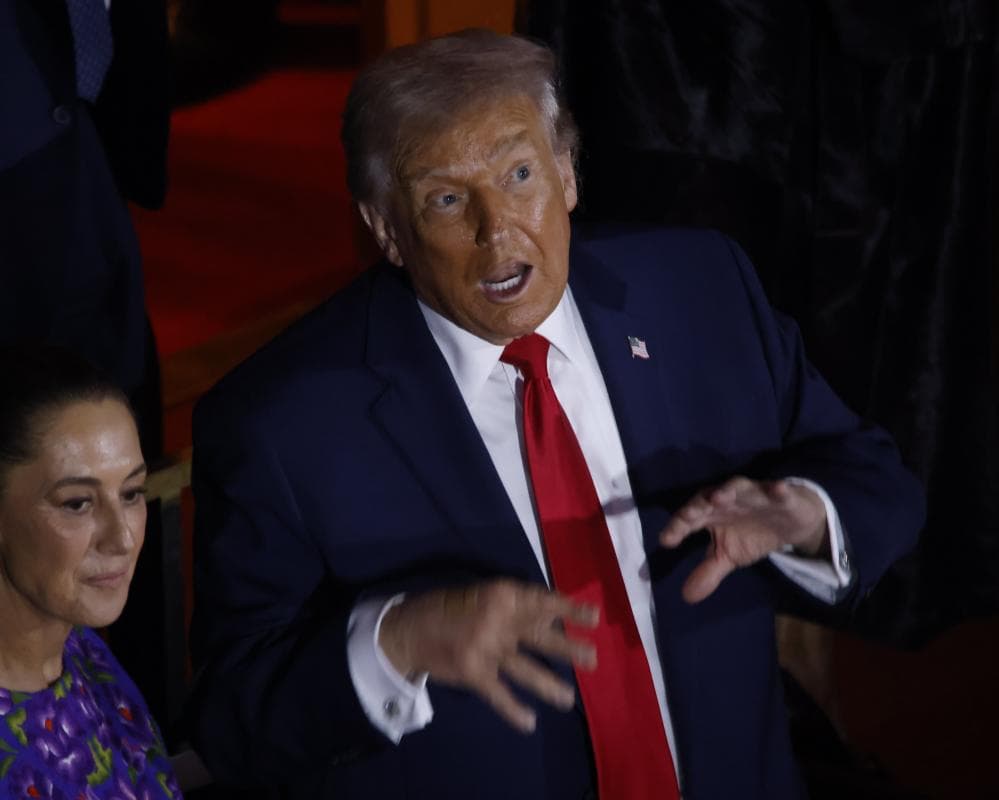
The Trump administration released a policy paper on Friday that made explicit Washington’s support for Europe’s nationalist far-right parties.
The 33-page US National Security Strategy, which includes a signed introduction from Donald Trump, appears to push the racist “great replacement” conspiracy theory, saying several countries risk becoming “majority non-European” and Europe faces “the real and stark prospect of civilizational erasure”.
Speaking at the Doha Forum, an annual diplomatic conference in Qatar’s capital on Saturday, EU foreign policy chief Kaja Kallas addressed the policy paper by reiterating that the “US is still our biggest ally,” AFP reports. “Of course, there’s a lot of criticism, but I think some of it is also true,” Kallas said.
Kallas continued: “I think we haven’t always seen eye to eye on different topics, but I think the overall principle is still there. We are the biggest allies, and we should stick together.”