Loading...
Please wait for a bit
Please wait for a bit
Click any word to translate
Original article by Jakub Krupa
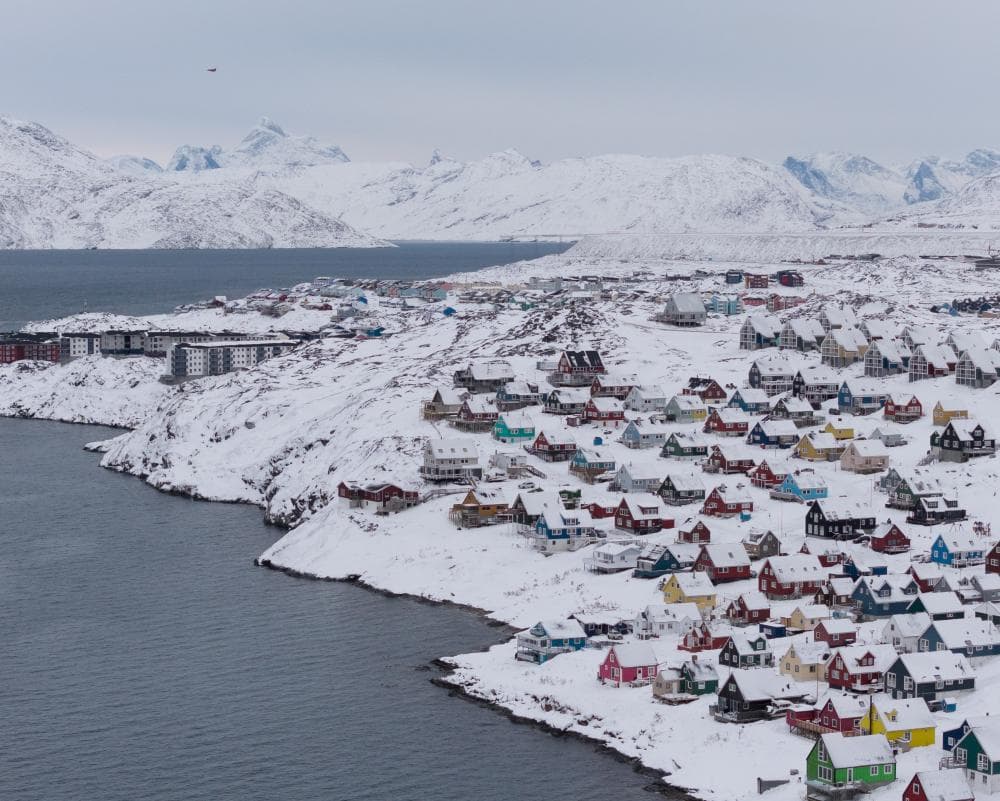
US president Donald Trump has doubled down on his rhetoric on getting control of Greenland, insisting that the US “needs Greenland for the purpose of national security.”
In a social media post, Trump claimed that “Nato should be leading the way for us to get it,” and “if we don’t, Russia or China will, and that is not going to happen!”
“Militarily, without the vast power of the United States, much of which I built during my first term, and am now bringing to a new and even higher level, Nato would not be an effective force or deterrent - not even close! They know that, and so do I.”
“Nato becomes far more formidable and effective with Greenland in the hands of the United States. Anything less than that is unacceptable,” he said.
His comments are likely to irk Danish and Greenlandic leaders just hours ahead of their crunch talks with vice-president JD Vance and US state secretary Marco Rubio at the White House.
Updated
If the sovereignty of a European country and ally was affected, the knock-on effects would be unprecedented, French president Emmanuel Macron said during a cabinet meeting, referring to the US president Donald Trump’s push to take control of the Arctic territory, Reuters reported.
“We do not underestimate statements on Greenland,” Macron said, quoted by French government spokesperson Maud Bregeon.
The European Commission president Ursula von der Leyen has backed Greenland amid growing interest from US president Donald Trump, saying the territory “belongs to its people” and insisting she was in contact with Denmark over the issue.
“Greenland belongs to its people, so it’s up to Denmark and Greenland, and only to them, to decide on matters that are concerning Denmark and Greenland. That’s point number one, that’s very important,” she said.
She added that the EU was in contact with the Danish government “also to listen to what their needs are.” She also stressed that Greenland was part of Nato.
“There is a strong, existing relationship between the European Union and the Greenlanders. For me it’s important that the Greenlanders know and they know this by the deeds, not only by the words, that we respect the wishes of the Greenlanders and their interests and that they can count on us,” she told a press conference in Brussels.
Meanwhile, a new poll shows that just 17% of Americans approve of president Donald Trump’s efforts to acquire Greenland, and substantial majorities of Democrats and Republicans oppose using military force to annex the island.
47% of respondents to the Reuters/Ipsos poll disapproved of US efforts to acquire Greenland, while 35% said they were unsure.
Only 4% of Americans – including just one in 10 Republicans and almost no Democrats – said it would be a “good idea” for the US to use military force to take possession of Greenland from Denmark, Reuters said.
66% of respondents, including 91% of Democrats and 40% of Republicans, said they were worried US efforts to acquire Greenland will damage the Nato alliance and US relationships with European allies.
Meanwhile, Poland’s president Karol Nawrocki declined to comment on the US ambitions for Greenland, saying it was a matter for the two countries to discuss between themselves.
Speaking to the BBC Radio 4 Today programme as part of his visit to the UK:
“I think that the discussion about Greenland should first of all remain the matter between the prime minister of Denmark and president Donald Trump.
On one hand, we are seeing the military aggression of the Russian Federation. On the other hand, we can see economic competition between the United States and China, and this is the context, the lens through which we are looking at Greenland.”
As a close Trump ally in Europe, he was asked if he was telling European leaders to not be worried about the US president’s ambitions, and he replied:
“I’m not able to predict the future.”
in Madrid
Spain’s foreign minister José Manuel Albares refused to be drawn on whether a US invasion of Greenland would spell the end of Nato, but told El País newspaper:
“We’ve made our position clear: like sovereignty, territorial integrity is part of international law. And this is not merely an intellectual construct; it’s the honourable way in which states relate to one another, cooperate, and move forward together peacefully.
If any ally believes that Arctic security is not sufficiently well protected, just as Spain raised the issue of the southern flank at the Nato summit in Madrid, there is no problem in discussing it and working together to address any security gaps that may exist.
But the territorial integrity of any state, especially if it is an EU partner … Denmark certainly has our full support.”
In other reactions, German defence minister Boris Pistorius said that any move by the US to take control of Greenland would be an unprecedented situation for Nato, echoing earlier warnings from the EU defence commissioner, Andrius Kubilius.
“The least we can say is that it would be a real unprecedented situation in the history of Nato and in the history of any defence alliance in the world,” he said at a press conference in Berlin yesterday.
Denmark will “strengthen” its military presence in Greenland after US criticism over its defence investment in the territory, the country’s defence minister Troels Lund Poulsen said.
In a statement to AFP news agency, Poulsen said:
“We will continue to strengthen our military presence in Greenland, but we will also have an even greater focus within Nato on more exercises and an increased Nato presence in the Arctic.”
He added that Denmark was involved in “an ongoing dialogue with its Allies about new and increased activities in 2026.”
Meanwhile, France has announced plans to open a consulate in Greenland next month, with the country’s foreign minister Jean-Noël Barrot saying it was meant to send “a political signal” amid US president Donald Trump’s growing interest in the territory.
Barrot told French RTL broadcaster that the decision to open the consulate was taken last summer, when president Emmanuel Macron visited Greenland in a show of support, AFP reported.
“For my part, I went there at the end of August to plan the consulate, which will open on 6 February,” he said.
“It’s a political signal that’s associated with a desire to be more present in Greenland, including in the scientific field.”
“Greenland does not want to be owned, governed... or integrated into the United States. Greenland has made the choice of Denmark, Nato, (European) Union,” he said.
The US president, Donald Trump, has sparked fresh concerns about the future of Greenland after he dismissed the territory’s prime minister’s defiant rejection of the US, saying “I don’t know anything about him, but this is going to be a big problem for him.”
Asked about Jens-Frederik Nielsen’s statement saying Greenland would choose Denmark over the US, Trump said:
“I disagree with him. I don’t know who he is. I don’t know anything about him. But, that’s going to be a big problem for him.”
His comments come hours before key talks in Washington between the Danish and Greenlandic foreign ministers and the US vice-president, JD Vance, and the US state secretary, Marco Rubio.
The growing tensions between the two historical allies also have very tangible effect on their relations, including on tourism.
According to the lastest data from travel industry group Rejs, the number of trips booked by Danish citizens to the US has dropped by half in 2025.
“We have never seen this before. It is completely extraordinary. We have never seen such a big drop in a major destination,” director Niels Amstrup said, quoted by DR.
I will bring you our coverage on the US meeting and European reactions to Greenland, as well as the latest updates on Ukraine and other key European issues.
It’s Wednesday, 14 January 2026, it’s Jakub Krupa here, and this is Europe Live.
Good morning.