Loading...
Please wait for a bit
Please wait for a bit
Click any word to translate
Original article by Aneesa Ahmed (now); Yohannes Lowe, Fran Singh and Adam Fulton (earlier)
A senior Hezbollah official has said that the group has not had any “direct contact” with US president Donald Trump.
Despite recent statements from the US leader suggesting otherwise, AFP reports that a senior official from the group claims that they did not have any direct contact with the president.
Senior Hezbollah official Mahmud Qomati told the agency in a written response that “there has been no direct contact between President Trump and Hezbollah officials.”
This comes after Trump told reporters last Wednesday that “we actually spoke with Hezbollah for the first time, ever.”
Two days earlier, after Israel threatened to again bomb Beirut’s southern suburbs, a Hezbollah stronghold, Trump said that “through highly placed Representatives, I had a very good call with Hezbollah.”
Qomati said that the president was “perhaps” referring to the fact that parliament speaker Nabih Berri’s adviser “communicates with the US ambassador and passes on messages”.
Washington considers Hezbollah a “terrorist” group, including both its military and political wings.
It has just gone past 14.50 pm in Tel Aviv and Beirut, and 15.20 pm in Tehran. Here is a summary of the key events so far today:
The US president, Donald Trump, told Iran and Israel to stop “shooting” after the two sides attacked each other’s territory for the first time since a fragile ceasefire took effect in April.
Trump then said that Israel and Iran were “looking to do an immediate ceasefire”.
Shortly afterwards, the Iranian military’s joint command said it was halting its offensive operations against Israel, but warned that if attacks continue, “including in southern Lebanon,” Iran will respond in “much more severe and crushing” ways than before.
The Israeli army said before this statement that it was preparing for at least several days of conflict with Iran and was operating in coordination with the US.
Iran launched waves of attacks on Israel on Monday, and Israel launched strikes on central and western Iran. Explosions were heard in the Iranian capital of Tehran – there were no immediate reports of casualties.
Iran’s Islamic Revolutionary Guards Corps (IRGC) said on Monday it launched a missile attack on a petrochemical plant in the northern Israeli city of Haifa in retaliation for Israeli strikes on the Karun petrochemical plant in Mahshahr, a city in Iran’s southwestern Khuzestan province.
Yemen’s Iran-aligned Houthi rebels also fired at Israel and warned they would target Israeli-affiliated ships in the Red Sea.
The escalation in conflict, which threatened to drag the region back into war, came after Israel attacked the southern suburbs of the Lebanese capital of Beirut on Sunday in what Tehran viewed as a violation of the US-Iran ceasefire.
Israel claimed it was targeting Hezbollah infrastructure after it said the Iranian-backed Lebanese militant group fired rockets at northern Israel.
The Israeli attack hit two apartments in two separate buildings, Lebanon’s state news agency reported, killing two people, according to a preliminary casualty count.
Updated
Iran’s armed forces have announced an end of military of operations against Israel, but have warned of harsher attacks if Israel resumes attacks on Lebanon, according to the Fars news agency. We have not been able to independently verify this report yet and Israel has not issued a comment in response.
The Khatam ol-Anbiya Central Headquarters was quoted as saying that “in support of the oppressed people of Lebanon” Iran gave a “painful response” to Israel after it attacked the southern suburbs of Beirut yesterday.
“Accordingly, a halt to the operations of the armed forces is announced; but it is emphasized that if the aggressions and evils continue, including in southern Lebanon, much more severe and crushing measures will be on the way.”
Updated
In a Truth Social post, Donald Trump said Israel and Iran are “looking to do an immediate ceasefire” and that “final negotiations on peace” are under way, without giving any further details.
He said the US blockade of Iranian ports – put in place to counter Iran’s effective closure of the strait of Hormuz – will remain in place until a final deal is secured. “Things should move quickly,” Trump added.
In an earlier Truth Social post, Trump said Israel and Iran must immediately stop “shooting”.
Updated
Israel has carried out nearly 3,500 airstrikes on Lebanon and hundreds of controlled explosions since the US announced a ceasefire for the country in mid April, Lebanon’s prime minister Nawaf Salam said.
Salam said Lebanon was striving to uphold the ceasefire but that the latest Iran-Israel had caused additional waves of displacement, straining Lebanon’s ability to host fleeing families.
At least 3,613 people have been killed in Israeli attacks on Lebanon since the start of the war on 2 March, according to the country’s health ministry. Israel’s renewed war on Lebanon was triggered in response to Hezbollah firing rockets at northern Israel after the US and Israel killed the former Iranian supreme leader in Tehran on 28 February.
More than 1 million people have already been displaced by the renewed Israeli war on Lebanon, triggering a major refugee and humanitarian crisis.
Over in the UK, British prime minister Keir Starmer has said it was “really important that all parties get back to a ceasefire” in the Middle East after Israel and Iran attacked each other’s territory for the first time since the April ceasefire came into effect.
The prime minister said:
I am deeply concerned about the resumption of violence. It is really important that all parties get back to a ceasefire.
There are serious negotiations going on, towards a lasting peace. It’s really important that we give them ever chance of success because this conflict is already having a huge impact across the world, including here in the United Kingdom.
So I say to all parties, we all have a responsibility to get back to that ceasefire and it’s really important we’re very clear about that.
Updated
Iranian media is reporting that the country’s air defences shot down a drone over Tehran earlier today. It followed reports of several explosions being heard in the capital.
Mohammad Esmaeil Tavakoli, head of emergency services in Tehran province, was quoted by the Mehr news agency as having said that there were no casualties so far, and that authorities were investigating “two explosions”.
An Israeli military official said Iran has fired nearly 30 missiles towards Israel since Sunday night, adding that Yemen’s Houthi rebels separately fired two missiles at the country.
Gaza’s health ministry said in its latest update that at least 9 people were killed and 43 others injured in Israeli attacks across the territory over the past day.
The health ministry says 970 people have been killed in Israeli attacks since the supposed ceasefire between Israel and Hamas came into effect in October 2025.
It says that 72,980 people, many of whom were women and children, have been killed in Israeli attacks across Gaza since October 2023, when Israel launched its assault on the territory following the Hamas-led attack on southern Israel on 7 October 2023, in which about 1,200 people were killed and 251 taken hostage.
The Lebanese presidency has a statement from the US ambassador to Lebanon, Michel Issa, after meeting with Lebanon’s president, Joseph Aoun.
It said they discussed the US mediated negotiations between Lebanon and Israel, with Issa praising the “effectiveness” and “high professionalism” of the Lebanese negotiating team.
He said Donald Trump follows developments in Lebanon extremely closely but acknowledged that negotiations may “take time” as all “issues” will probably not be resolved in a single meeting.
“What happened yesterday is a political message, and we in the United States have decided not to allow the confrontation to expand further,” Issa said, confirming that further negotiations are due to take place in Washington despite the fresh strikes.
“We have reached a point of no return; the ice has been broken, and we are continuing to help Lebanon emerge from its crisis.”
Hezbollah is not a party to the negotiations between Israel and the government of Lebanon. Despite being engaged in diplomacy with Lebanon, Israel is striking southern Lebanon and ordering mass evacuation orders on a near-daily basis.
Both Israel and Hezbollah have repeatedly violated the US-brokered April ceasefire, which is a ceasefire in name only, much like the ceasefire in Gaza and increasingly the ceasefire with Iran.
Hezbollah has fired rockets and drones into northern Israel and against Israeli troops in southern Lebanon as it rejects pushes for its disarmament and Israeli occupation of large areas of southern Lebanon.
Updated
In an extremely short post on his Truth Social platform, Donald Trump demanded Israel and Iran to “immediately stop shooting”.
Trump has leaned on Israel to stop its attacks on Lebanon to allow room for a deal to end the wider war with Iran. However, Israel launched strikes on the southern suburbs of Beirut yesterday, apparently ignoring the US president’s warning not to.
Benjamin Netanyahu, who is facing domestic political pressure to continue his war on Lebanon, particularly from far-right elements of his fragile coalition, is therefore derailing peace talks but escaping any serious reprimand for doing so from Washington. Netanyahu is trailing in the polls heading into a challenging re-election fight.
Updated
The Israeli army said it is preparing for at least several days of “fighting” with Iran, or a prolonged “campaign”, according to a military statement being carried by the Israeli newspaper Hareetz.
It said the strikes are only being carried out by Israel, but noted there is “full coordination” with US Central Command, as the US military has helped in the interception of missiles fired by Iran at Israel.
The Israeli military said Hezbollah has not joined the fighting with strikes against Israel, but stressed it is ready for the possibility it may do so.
Updated
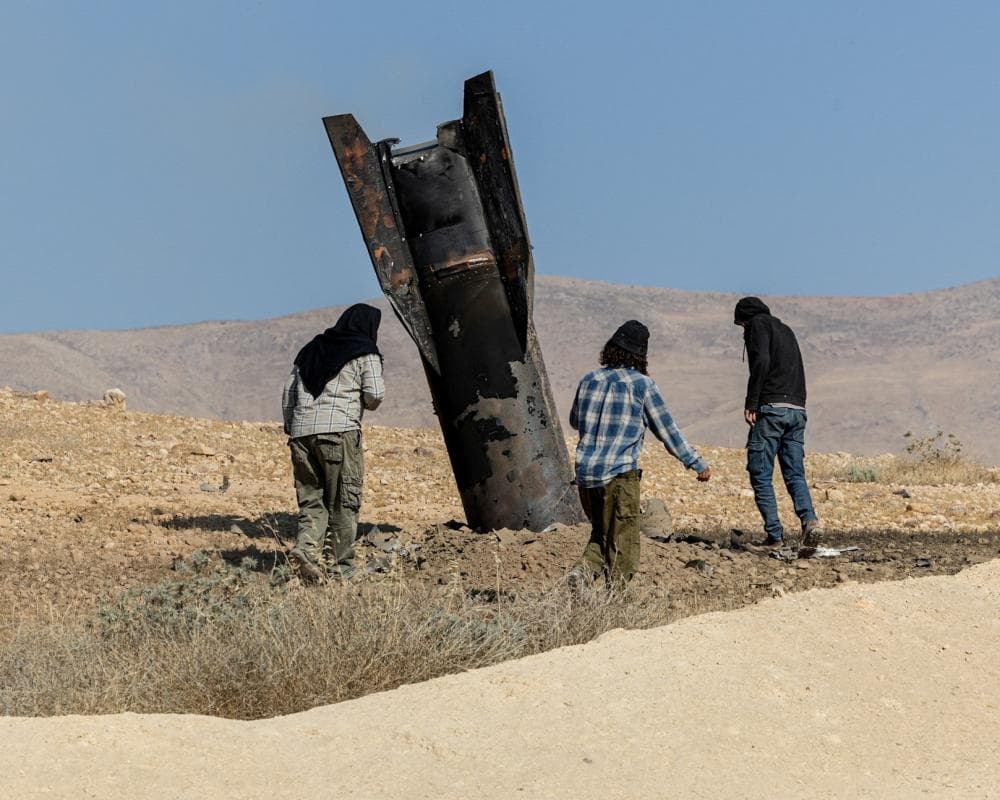
Here are some of the latest images sent to us over the newswires:
Updated
We are seeing reports of explosions being heard in the Iranian capital of Tehran. We don’t have many details yet but will provide updates as soon as more information comes in.
Updated
The IDF said in a post on X that dozens of air force fighter jets have “completed an extensive strike” on “strategic defence systems” in Iran. There has been no official comment from Iran on this claim.
Diplomatic activity is continuing as regional concerns about the further unravelling of the US-Iran ceasefire intensify. The Qatari prime minister and foreign minister, sheikh Mohammed bin Abdulrahman bin Jassim al-Thani, spoke with the Iranian foreign minister, Abbas Araghchi, earlier today, the Qatari foreign ministry said. During the call, they discussed US-Iran mediation efforts and the latest “developments” in Lebanon.
Iranian media is reporting that there were no immediate casualties following apparent Israeli strikes on the Karun petrochemical plant in Mahshahr, a city in Iran’s southwestern Khuzestan province.
According to the Fars news agency, Iran’s Revolutionary Guards said they responded to what they described as an American-Israeli strike on the Iranian petrochemical site by launching a missile attack on a similar plant in the northern Israeli city of Haifa.
“We warn you; by taking action against civilian targets and targeting oil industries, the Zionist enemy has started a dangerous game, the scope of which will encompass all energy targets in the region, and its consequences for the global economy are the responsibility of the main arsonist in this field, the United States,” the IRGC said.
Updated
Iran’s foreign ministry spokesperson, Esmail Baghaei, said the US holds direct responsibility for the recent ceasefire breaches, adding that Israel’s military actions cannot be separated from US policies.
“The actions of the Zionist entity within the region cannot be looked at in isolation from the United States,” Baghaei was quoted as having said at a press conference.
“No one believes that the Israeli regime would take any action without coordination with the United States,” he said. “The United States bears responsibility for the Israeli regime’s aggression, and it will also be responsible for the consequences of any escalation in tensions.”
Israel launched strikes on Beirut’s southern suburbs on Sunday in what Tehran viewed as a violation of the US-Iran ceasefire. Israel claimed it was targeting Hezbollah infrastructure after it said the Iranian-backed Lebanese militant group fired rockets at northern Israel. The Israeli attack hit two apartments in two separate buildings, Lebanon’s state news agency reported, killing two people.
Iran launched missiles at Israel on Sunday in response to the Israeli strikes and a fresh exchange of fire has been reported between the two sides today.
The latest exchange came even after the US president, Donald Trump, reportedly told the Israeli prime minister Benjamin Netanyahu to refrain from attacks on Iran. Netanyahu shows no signs of wanting to stop the war on Lebanon, which makes it hard to see how Trump can negotiate an end to the war on Iran as Tehran insists that the conflict can only end when attacks on “all fronts” have ceased.
Updated
In a post on Telegram, Israel’s ambulance service, Magen David Adom, said there are no known casualties from the latest Iranian attacks after sirens were heard across northern Israel and in the centre of the country. An MDA spokesperson said:
At this stage, no casualties are known. MDA medics and paramedics went out to scan the scene where a report was received. Update later if necessary.
Oil prices have continued to rise after Iran and Israel fired missiles at each other for the first time since the April ceasefire. You can track how much Brent crude has jumped by in our business live blog which has all the latest market reaction to the strikes:
The Israeli military said Monday that it had detected a new barrage of missiles launched from Iran, the sixth salvo since the latest flare-up in fighting began the previous day.
“A short while ago, the IDF identified missiles launched from Iran towards the territory of the State of Israel. Defensive systems are operating to intercept the threat,” the military said.
Updated
Yemen announced that it had joined the war for the first time since the 8 April ceasefire. The Houthi leadership fired missiles towards Jaffa Israel and said Israeli linked commercial shipping would be blocked entering the Red Sea, a decision that will unnerve other shipping.
Iranian officials had earlier suggested the revival of the blockade of Bab al-Mandab strait for Israeli linked shipping was being considered by the Houthi leadership.
In a statement Yemen’s Houthi leadership also known as Ansar Allah Yemen said “We declare a complete and absolute ban on maritime navigation for the Israeli enemy in the Red Sea and believe that any enemy movement from the moment this statement is announced will be a military target for our armed forces.
“We will respond to escalation with escalation, and our military operations will be increasingly coordinated with events, battles, and participation in the axis of jihad and resistance”.
The Houthis for internal reasons has been reluctant to join the US-Iran conflict preferring to hold talks with Saudi Arabia about reuniting Yemen.
Aliakbar Velayati adviser to Iran’s supreme leader Mojtaba Khamenei had earlier warned “today’s security of the Ban al-Mandab strait should not cause the enemy to make a miscalculation; the resistance rings have the power to close both waterways
“The choice is yours; stop the folly or enter into a regulated balance of the two straits”. The joint closure of the strait of Hormuz and Bab al-Mandab has the capacity to sabotage the flow of East West flow of commercial naval traffic.
Iranian officials admitted Israeli strikes hit the Karun Petrochemical Company in the Petrochemical Special Economic Zone.
Iran said the attacks did not result in any casualties, but “the extent of damage and possible injuries is under investigation.”
Abbas Araghchi the foreign minister through the night was in contact with fellow diplomats to explain Iran’s decision to restart its assault on Israel. He spoke with the Uk foreign minister Yvette Cooper and the Turkish foreign minister Hakan Fidan as well as the Saudi foreign minister
Updated
Iran’s state media is reporting that the capital Tehran’s Mehrabad airport has suspended all flights until further notice.
Israel and Iran continued to fire at each other on Monday while a missile reportedly targeted a part of Saudi Arabia housing a US military base. It’s the most serious escalation since a ceasefire began two months ago and now threatens to plunge the Middle East back into war.
Updated
Yemen’s Iran-aligned Houthi rebels have claimed an attack on Israel and say Israel-affiliated vessels would again be a target in the Red Sea, Associated Press reports.
The statement from Brig Gen Yahya Saree was broadcast on the Houthis’ al-Masirah satellite news channel on Monday.
It’s another new escalation as the nominal ceasefire in the Iran war is being challenged by crossfire between Israel and Iran.
The Houthi threat to target vessels again puts the Red Sea, the Gulf of Aden and the narrow Bab el-Mandeb Strait connected them in danger.
The Houthis during the Israel-Hamas war in the Gaza Strip killed at least nine mariners and sunk four ships across over 100 attacks. Those assaults upended shipping in the Red Sea , through which about $1 trillion of goods passed each year before the war.
Updated
The EU’s top diplomat has urged calm after Iran and Israel traded strikes, testing the fragile truce and threatening to drag the Middle East region back into war.
“Overnight, we have seen escalation again,” Kaja Kallas said on Monday.
I think the region does not need an escalation, but actually that parties sit down to a negotiation table and agree.”
Hello and welcome to our live coverage of the crisis in the Middle East.
Israel launched airstrikes early on Monday targeting central and western Iran in response to missile fire from Tehran, attacks that threatened to drag the wider Middle East back into a regional war.
Iranian state TV reported the sound of explosions being heard in the cities of Isfahan, Karaj, Tabriz and Tehran. A witness in Tehran described hearing at least one large blast somewhere to the west of the capital.
Iran closed the airspace around Tehran’s Imam Khomeini international airport – the main airfield in the country – after the Israeli attack.
Multiple explosions were heard over Jerusalem later on Monday as Israel said a new wave of Iranian missiles was incoming. The Israeli military said it “identified missiles launched from Iran” and was working to intercept the threat.
Iran’s paramilitary Revolutionary Guards said Israel used air-launched ballistic missiles in its attack on Iran.
The Israeli military at dawn in Iran issued a short statement as its strikes started, saying: “A short while ago, the Israeli air force struck military targets belonging to the Iranian terror regime in western and central Iran.” It did not provide further details.
US officials said Donald Trump earlier spoke with Benjamin Netanyahu and urged the Israeli prime minister not to immediately retaliate over Iran’s missile launches against Israel, which upended the fragile ceasefire in place since April.
We will bring you all the latest developments here. Meanwhile:
Iran’s attacks appeared to be in retaliation for Israel strikes on Beirut’s Dahiyeh southern suburb area targeting Hezbollah infrastructure despite the truce agreement with Lebanon. Two people were killed and 20 wounded in Beirut, the Lebanon health ministry said.
A missile was launched from Yemen towards Israeli territory on Monday, the Israeli military said, adding its aerial defence systems were operating to intercept the threat. Israel’s rescue services say there were no reports of casualties or impacts.
Oil prices jumped more than 3% after Iran’s strikes, with the price of Brent crude – the international benchmark – rising 3.29% to $96.15 a barrel in early trading on Monday.
Iran’s barrage was the first since the ceasefire took effect in early April. Iran’s parliament speaker, Mohammad-Bagher Ghalibaf, said US bases and assets in the region were now “legitimate targets”.
The strait of Hormuz will be opened but under new conditions to be set by Iran and Oman, including a transit fee, Iran’s ambassador to Moscow, Kazem Jalali, told the Russian newspaper Izvestia – a position Trump strongly opposes.
Trump said Netanyahu would have no choice but to accept whatever deal the US negotiated with Iran because “I call the shots”, the Financial Times reported. “He won’t have any choice,” Trump said. “I call the shots. I call all the shots. He [Netanyahu] doesn’t call the shots.”
Updated