Loading...
Please wait for a bit
Please wait for a bit
Click any word to translate
Original article by William Christou and agencies
The United Arab Emirates has said it will withdraw its remaining forces in Yemen after tensions with Saudi Arabia escalated over a sweeping offensive by UAE-backed separatists.
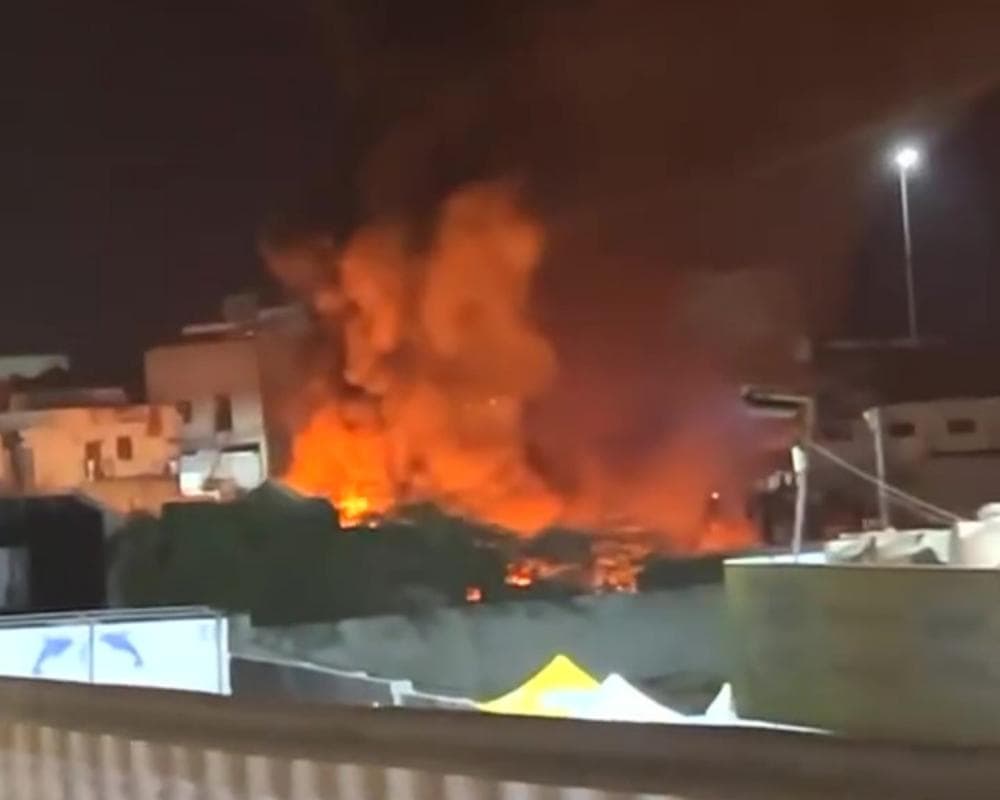
The Emirati defence ministry announced the withdrawal on Tuesday, hours after Saudi Arabia bombed what it said was a shipment of weapons for Yemeni separatists that had arrived from the UAE.
The airstrike was the most significant escalation to date in a widening rift between the two Gulf monarchies, which have both been seeking to gain an advantage in Yemen’s many-sided civil war.
The two countries back different groups that are loosely aligned against the Iran-backed Houthi rebels. The groups compete among themselves in the territories they control.
Saudi Arabia said the attack on the port city of Mukalla had targeted a weapons shipment from the UAE for the Southern Transitional Council (STC), which is seeking to restore South Yemen as an independent state, as it was between 1967 and 1990.
The UAE said that the shipment had not contained any weapons and was meant for UAE forces rather than any Yemeni groups.
But the strike by Saudi Arabia was seen as a shot across the bows after the STC made unprecedented territorial gains, seizing most of the resource-rich Hadhramaut province and much of neighbouring Mahrah, angering Riyadh.
Some of the territorial gains came at the expense of Saudi-backed forces in the country and left UAE-supported groups in control of most of southern Yemen, including key port cities, oil facilities and islands. Saudi troops withdrew from their bases in Aden after STC forces seized the presidential palace there – a move that Saudi Arabia said was part of a “repositioning strategy”.
The strikes will ratchet up tension between Abu Dhabi and Riyadh as competition between the two heats up in the Red Sea area.
Tuesday’s attack was followed by measures announced by the chair of Yemen’s Presidential Leadership Council, Rashad al-Alimi, a Saudi-aligned figure who chairs the internationally recognised government of Yemen. Al-Alimi ordered all UAE military forces to withdraw from Yemen within 24 hours, a 90-day state of emergency, and the blockade of all land and sea ports for 72 hours.
But an STC spokesperson dismissed calls for the group to withdraw, saying the separatists would hold their territory.
“There is no thinking about withdrawal. It is unreasonable for the landowner to be asked to leave his own land. The situation requires staying and reinforcing,” Anwar Al-Tamimi told AFP.
“We are in a defensive position, and any movement toward our forces will be responded to by our forces,” he added.
Analysts describe the STC and other UAE-backed groups as the strongest factions militarily within the anti-Houthi coalition, so it remains to be seen how much support Saudi Arabia is willing to lend its allies in Yemen to fight the group.
As many as 20,000 Saudi-backed forces have reportedly gathered on the border of Yemen.
The UN secretary general, António Guterres, said the resumption of full-scale fighting in Yemen could destabilise the entire Red Sea area, and urged a de-escalation between all parties.
The war in Yemen has killed an estimated 377,000 people, according to the UN, and nearly half of the population faces hunger due to the continuing civil war.
A military statement carried by the state-run Saudi Press Agency announced Tuesday’s strikes, which it said came after ships arrived there from Fujairah, a port city on the UAE’s eastern coast.
“The ships’ crew had the disabled tracking devices aboard the vessels, and unloaded a large amount of weapons and combat vehicles in support of the STC forces,” it said.
“Considering that the aforementioned weapons constitute an imminent threat, and an escalation that threatens peace and stability, the Coalition Air Force has conducted this morning a limited airstrike that targeted weapons and military vehicles offloaded from the two vessels in Mukalla.”
The STC’s AIC satellite news channel acknowledged the strikes, without providing details.
The attack is likely to have targeted a ship identified by analysts as the Greenland, a roll-on, roll-off vessel flagged out of St Kitts. Tracking data showed the vessel had been in Fujairah on 22 December and arrived in Mukalla on Sunday. The second vessel could not be immediately identified.
Mohammed al-Basha, a Yemen expert and the founder of the Basha Report, a risk advisory firm, cited social media videos that purported to show new armoured vehicles rolling through Mukalla after the ship’s arrival. The ship’s owners, based in Dubai, could not be immediately reached.
“I expect a calibrated escalation from both sides. The UAE-backed STC is likely to respond by consolidating control,” al-Basha said. “At the same time, the flow of weapons from the UAE to the STC is set to be curtailed following the port attack, particularly as Saudi Arabia controls the airspace.”
Footage later aired by Saudi state television, which appeared to be filmed by a surveillance aircraft, purportedly showed the armoured vehicles moving through Mukalla to a staging area. The types of vehicles corresponded to the social media footage.
Mukalla is in Yemen’s Hadhramaut governorate, which the STC had seized in recent days. The port city is 480km north-east of Aden, which has been the seat of power for anti-Houthi forces in Yemen after the rebels seized the capital, Sana’a, in 2014.
The strike in Mukalla comes after Saudi Arabia targeted the council in airstrikes on Friday, which analysts described as a warning for the separatists to halt their advance and leave the governorates of Hadhramaut and Mahra.
Those aligned with the council have increasingly flown the flag of South Yemen. Demonstrators have been rallying for days to support political forces calling for South Yemen to secede again.
The actions by the separatists have put pressure on the relationship between Saudi Arabia and the UAE, which maintain close relations and are members of the Opec oil cartel but also have competed for influence and international business in recent years.
UAE support for the Rapid Support Forces (RSF) in Sudan has reportedly angered Saudi Arabia, after the RSF committed mass atrocities in the Sudanese city of El Fasher. The two are also at odds over Somaliland, a breakaway region of Somalia where the UAE has a military base and airstrip.
The UAE notably did not join Saudi Arabia and 20 other countries and Islamic organisations in issuing a statement condemning Israel’s recognition of Somaliland on Friday.
The Associated Press contributed to this report