Loading...
Please wait for a bit
Please wait for a bit
Click any word to translate
Original article by Dan Sabbagh in Jerusalem and Hugo Lowell in Washington
One US service member has been rescued after a US F-15E Strike Eagle fighter was shot down over Iran, prompting a frantic effort to locate its two-strong crew, in the first such incident since the start of the five-week long-war.
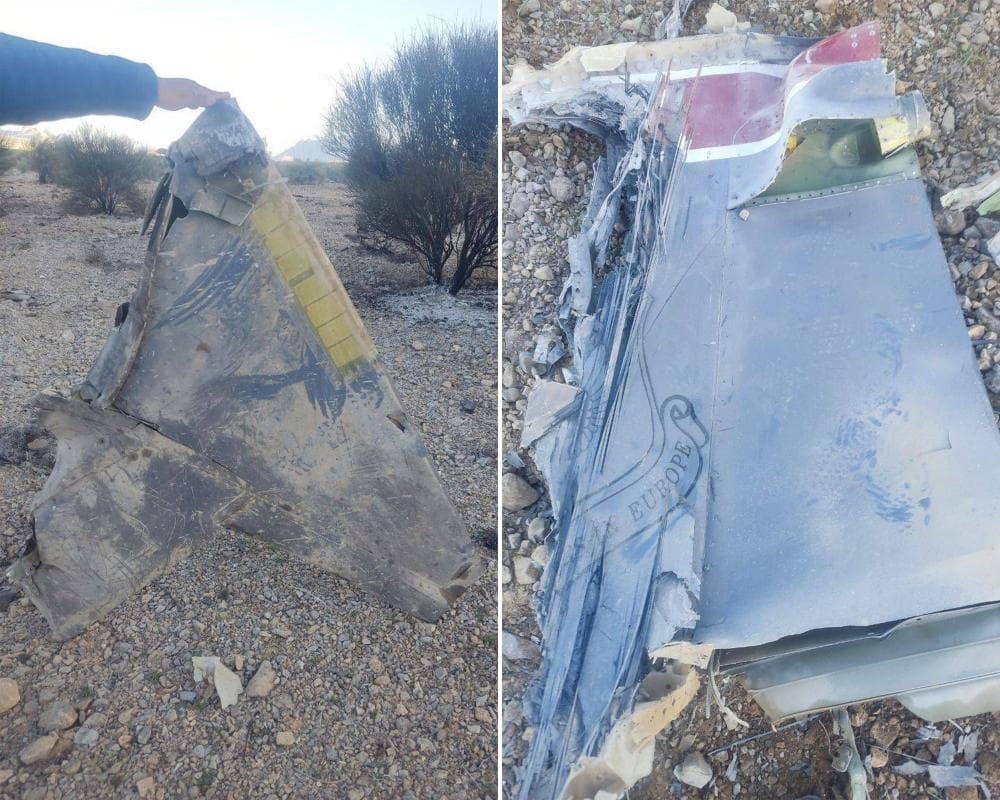
US officials familiar with the situation said one crew member was still missing late on Friday, after Iranian state media released images of a tail fin and other debris accompanied by an initial claim that an advanced US F-35 had been hit by a new air defence system over central Iran.
Aviation experts said the wreckage pictured was in fact from a F-15E, from the US air force’s 494th squadron, based at RAF Lakenheath in the UK, though it could not at first be confirmed when and where the pictures were taken. Markings on the wreckage appeared to match those on the tips of the tail fins of Strike Eagles normally based in the UK.
US officials later confirmed off the record that an F-15E had been brought down and the Pentagon was scrambling to find the crew before the Iranians. There was no official comment from the US military about the incident.
The White House press secretary, Karoline Leavitt, said the US president, Donald Trump, had been briefed but she did not offer any additional information.
Details of the rescue mission were few but it is likely to have been a high-risk operation with rescue aircraft potentially exposed to fire from the ground. The status of the second crew member was unclear, with rescue efforts continuing.
Subsequent footage filmed in Iran showed a US C-130 Hercules and HH-60 Pavehawk helicopters flying low and at one point refuelling together during their rescue operation – while an Iranian businessman offered to pay a reward worth $60,000 (£45,000) to anyone capturing the crew members alive.
Justin Bronk, an aviation expert from the Royal United Services Institute (Rusi), said the use of the specialist helicopters “suggested a combat search and rescue mission is under way to locate and extract the two aircrew from the F-15E”.
The presenter on an Iranian TV channel urged residents to hand over any “enemy pilot” to police and promised a reward for anyone who did. That channel is based in Kohgilouyeh and Boyer-Ahmad province, a mountainous region in the south-west of the country.
The Iranian parliament speaker, Mohammad-Bagher Ghalibaf , ridiculed the US, posting on social media: “After defeating Iran 37 times in a row, this brilliant no-strategy war they started has now been downgraded from ‘regime change’ to: ‘Hey! Can anyone find our pilots? Please?’”
No US troops have so far been taken prisoner by Iran. A total of 13 American service personnel have been killed and 300 have been wounded during a campaign in which more than 12,300 targets in Iran have been bombed by the US alone.
A social media account claiming to be linked to Iran’s Revolutionary Guards posted a picture of an ejector seat in a desert landscape, which appeared to be consistent with the ACES II type used in F-15Es. Bronk said: “If genuine, it would suggest that at least one of the two aircrew did eject safely.”
Iran’s Tasnim news agency reported that the pilot of the jet had been taken into custody, contradicting Tehran’s initial claim that the pilot had probably died in the incident. But nothing then emerged to verify the revised Iranian statement.
Overnight, the US Central Command, which is leading the attack on Iran, had denied Iranian claims that another F-35 jet had been downed over Qeshm Island in the strait of Hormuz. “All US fighter aircraft are accounted for,” it said at the time.
Up to now no US fighter jets had been lost over Iran during the five-week-long conflict, though three F-15Es were shot down by a Kuwaiti air defence system in a dramatic friendly fire incident on 1 March.
The total cost to the US air force of lost and damaged aircraft has been roughly estimated at more than $3bn by the specialist news site Airforce Technology, which also includes 16 uncrewed Reaper drones. An F-15E cost $31m when delivered in the late 1990s; newer models cost closer to $100m.
Meanwhile, powerful blasts rocked northern Tehran, as Israel said it had launched a new wave of strikes in the Iranian capital and Beirut.
Late on Thursday, Trump reiterated his threat to bomb Iran’s infrastructure, hours after he claimed credit for an attack on a newly built 136-metre-high (446ft) suspension bridge between Tehran and Karaj that killed eight people and injured 95.
“Our Military, the greatest and most powerful (by far!) anywhere in the World, hasn’t even started destroying what’s left in Iran. Bridges next, then Electric Power Plants!” he posted on social media, repeating a threat to destroy Iran’s electricity network.
Fresh footage on Friday showed that the $400m bridge on a highway between the Iranian capital and a city to the north-west had been severed in three places by the bombing, increasing the cost of its eventual repair.
More than 100 international law experts signed a joint statement on the Just Security website warning that statements made by Trump and other senior US officials and the conduct of US forces “raise serious concerns about violations of international human rights law and international humanitarian law, including potential war crimes”.
A particular concern, they said, was threats made by the US to Iran’s energy infrastructure. “International law protects from attack objects indispensable to the survival of civilians, and the attacks threatened by Trump, if implemented, could entail war crimes.”
A power and desalination plant in Kuwait was damaged in an attack on Friday, though Iran blamed Israel for the attack. The Mina al-Ahmadi refinery in the Gulf country was also closed after a drone strike from Iran, while the UK announced it had agreed to send a counter drone team to help the country in its defence.
Israeli media reported that the US had told Israel it did not want see Iran’s new supreme leader Mojtaba Khamenei killed, because Americans want to have at least one senior political figure available who could negotiate a peace agreement.
Iran’s regime, however, has so far shown little desire to stop fighting despite being on the receiving end of intense bombing. Sirens sounded repeatedly in Israel, as missile attacks from Iran and Lebanon continued but casualty numbers were small, with 12 people treated for physical injured by the country’s emergency medical service in the past 24 hours.
Israel also carried out fresh strikes on south Beirut after issuing an evacuation order for the area which has largely been emptied of residents amid repeated raids.