Loading...
Please wait for a bit
Please wait for a bit
Click any word to translate
Original article by Miranda Bryant Nordic correspondent
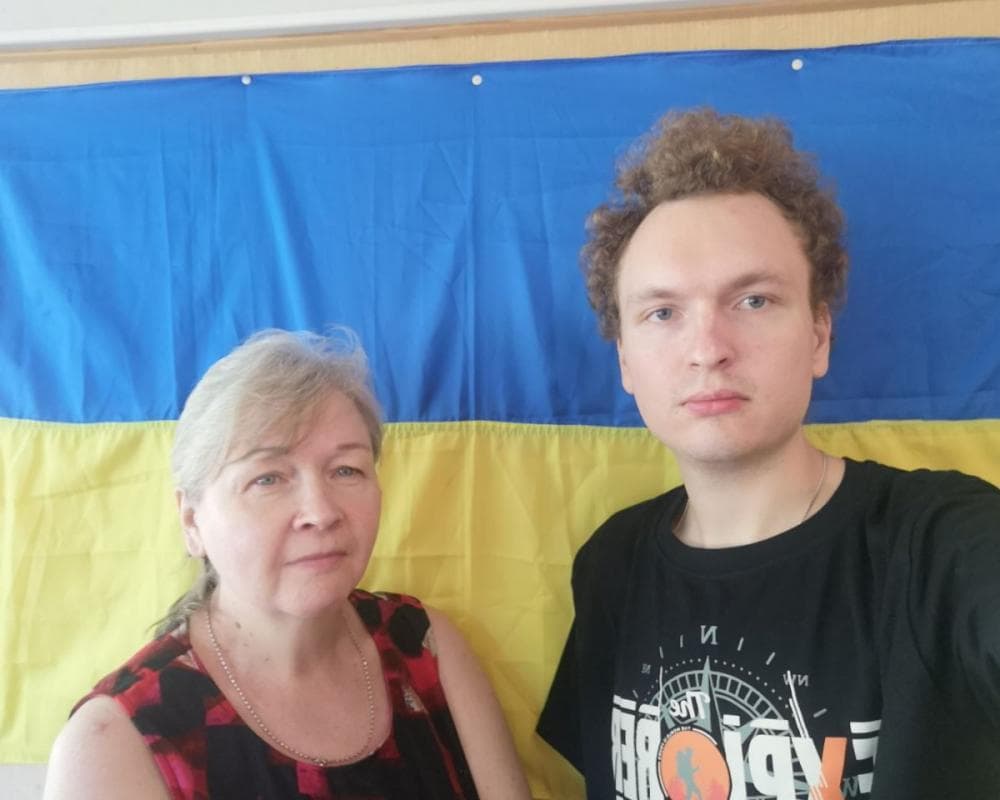
A Russian family faces deportation from Finland after repeatedly being denied asylum – despite the threat of arrest, imprisonment and potential torture for their pro-Ukrainian activism.
Nikita and Olga Belov fled their homeland in 2022 after attracting the attention of Russian authorities – including military summons, threatening messages and attempts to locate them – after expressing opposition to the full-scale invasion of Ukraine.
Nikita, 25, left his engineering job at a research institute in Moscow specialising in metallurgical technologies after finding out the work he was doing was connected to the Russian war effort.
Since arriving in Finland on visas, Nikita and his mother, Olga, 55, a nurse anaesthetist, have been vocal supporters of Ukraine and public in their active support and coordination of aid sent to the country and its armed forces. But the Finnish immigration service told the mother and son that despite this they face “no real risk” if they return to Russia.
In April, they were detained by Finnish authorities pending deportation. They were later released after a court intervention but are now awaiting a decision that could result in them being deported within weeks.
The Belov case is understood to be one of many of Russians being denied asylum in neighbouring Finland where legal experts deem their future risk and human rights have not been sufficiently assessed.
Between February 2022 and June 2026, the Finnish immigration service deported 1,039 Russians according to official statistics: the most of any nationality. During the same period, 1,109 of 1,342 Russians were refused entry to Finland in connection with a negative asylum application.
Since Russia’s 2022 full-scale invasion of Ukraine, Finland’s relationship with its neighbour has shifted drastically. Previously, Finland was a popular tourism destination for Russians and there were several well-used border crossings. It has since indefinitely closed its entire border, accusing Moscow of directing asylum seekers to Finland in a “hybrid operation”.
Russia has also expanded its military bases on the border, while Nato – which Finland joined in 2023 – has conducted training exercises in the country.
Nikita said his problems in Russia started when he realised that his boss had lied when he had told him that the project he was working on was not linked to the war effort. When he tried to come off the project, he said his boss threatened him with arrest or being sent to the frontline.
“After that I realised I cannot leave this job without consequences and that we had to think about the situation,” Nikita said. His mother, he said, was then called by the military to ask about him and their house was visited by police. They soon came to the conclusion that they had no option but to leave Russia. “Now we realise if we come back we will be arrested immediately and go to jail and be tortured,” Nikita said.
In Finland they have volunteered at their local Ukraine centre and contributed to humanitarian support, including help for first aid, food, clothes, Starlink equipment and a 3D printer, for which they received a video thank you message from Ukrainian soldiers.
“We try to adapt, try to support Ukraine, try to state our opinion, because it is very important to help Ukraine. Help them strike back,” he said.
The mother and son first applied for asylum in Finland in 2022 but it was refused, after which they unsuccessfully appealed. This year they applied again and were refused and were sent a deportation order. They were then placed in a detention centre awaiting deportation but after a court intervention were allowed to go home before a final decision. “There were all bad things in our minds. It was like the start of torture because it was a totally traumatic experience,” Nikita said. “At the time we really tried to prepare for our death.”
Since then they have suffered with their mental health and undergone panic attacks as they wait for the decision of the court.
Their lawyer, who requested not to be named for security reasons, said the Belovs are very likely to be at risk if they are deported to Russia. Nikita’s work history will also put them at risk, the lawyer said. In a previous role he said he had access to confidential government information.
While it has long been difficult to get asylum in Finland, the lawyer said that recent changes on the border and to asylum procedure, including reduced access to legal aid, has made it even harder. “It’s even more difficult to get refugee status, even with clear political opinion showing. We really have to fight these cases to get the status that was earlier easier to get.”
The political activist and Putin critic Bill Browder, who is the head of the Global Magnitsky Justice Campaign, said the case is “a defining test of Europe’s commitment to protecting those who have risked everything to oppose Putin’s war”.
Browder, whose friend and lawyer Sergei Magnitsky died at the hands of Putin’s regime, added: “If people who refused to support aggression, openly opposed the regime, and now face persecution are denied protection, it could create a dangerous precedent that discourages others from taking a stand against authoritarianism.”
A Finnish immigration service spokesperson said it could not comment on individual cases.
Antti Lehtinen, the director of the department for international protection, which is part of the Finnish immigration service, added: “The situation of each applicant is assessed individually, taking into account their personal circumstances.
“For example, opposition to the war in Ukraine and related activities may constitute grounds for persecution based on political opinion. If we assess that a person’s political opinion or activities place them at risk of persecution or serious harm in Russia, they will be granted international protection.”