Loading...
Please wait for a bit
Please wait for a bit
Click any word to translate
Original article by Tiago Rogero South America correspondent
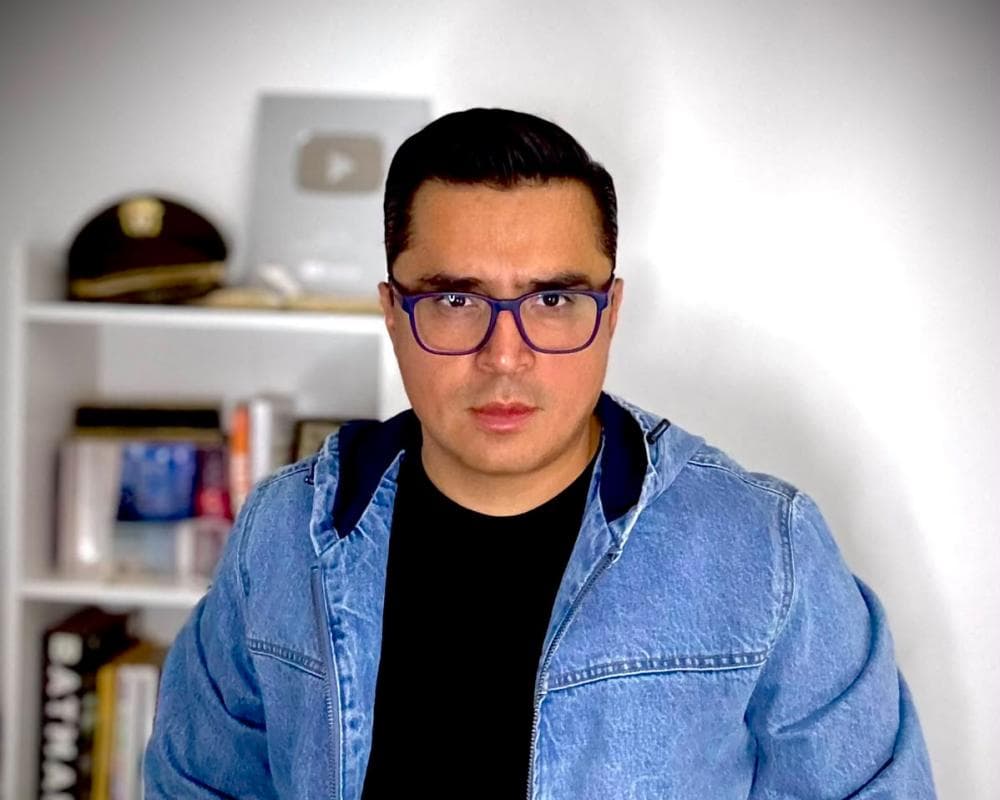
In the week before Colombia’s presidential election, Beto Coral, a well-known activist living in the United States, travelled to Florida to persuade fellow Colombians not to vote for the far-right candidate Abelardo de la Espriella.
Coral held banners outside polling stations in Miami warning that the millionaire lawyer, whose candidacy was endorsed by Donald Trump, would “help deport all of you”.
The following morning the US secretary of state, Marco Rubio, issued a memo to the Department of Homeland Security (DHS) alleging that the activist had used his presence in the country “to conduct political activity” against a Colombian presidential candidate, and that DHS could take steps to “facilitate his departure”.
Hours later, Coral was arrested.
He said that, over the following 30 days in DHS detention, he was assaulted, deprived of food and water, and held in solitary confinement before securing his voluntary departure back to Colombia in mid-July, after more than 10 years living in the US.
Although other immigrants have previously been detained in the US over their political activism – most notably the Palestinian student Mahmoud Khalil for protesting against the war in Gaza – Coral’s case is being seen as the first involving remarks about a foreign election.
“They detained me simply because I protested against a Trump-backed candidate,” said the 40-year-old activist, whose full name is Franklin Humberto Coral Garrido.
Coral, who has no criminal record, alleges that his detention resulted from a request by De la Espriella, who went on to win the election and was sworn in earlier this month to replace the leftwing president Gustavo Petro, with whom Trump had repeatedly clashed.
In early June the US deputy secretary of state, Christopher Landau, wrote on social media about Colombia’s election that those “tempted to undermine or manipulate the democratic process” were putting their visas at risk. “That’s why they call me El Quitavisas (the visa taker)”, he added.
De la Espriella replied: “I have the list, dear deputy secretary.”
On the morning of 16 June, the same day Rubio issued the memo, De la Espriella posted: “There will be good news for Colombia and for patriotic Colombians abroad,” alongside an AI-generated image of “El Quitavisas” projected into the sky. That afternoon, Coral was arrested.
“De la Espriella knew that I was going to be arrested and announced it on X,” said Coral.
The US state department and De la Espriella did not respond to requests for comment.
Colombia’s new president already knew the activist from his years as a lawyer. De la Espriella represented the former president Álvaro Uribe Vélez in a defamation lawsuit filed in Florida against Coral after the activist accused him of leading paramilitary groups. Coral lost the case and was ordered to issue a public apology.
Last May, Coral filed a complaint with the FBI alleging that De la Espriella had secretly recorded a telephone conversation between them and attempted to blackmail him with it. In his memo, Rubio cited the activist’s alleged “use of US courts to target a Colombian presidential candidate” as one of the political activities he claimed Coral had carried out “on behalf of the Petro government”.
Coral entered the US on a tourist visa in December 2015 and applied for political asylum in March 2016, saying he had received death threats in Colombia after investigating the death of his father, Humberto Coral Caballero. A police captain who took part in the US-backed operation that brought down the notorious drug lord Pablo Escobar in 1993, Caballero was murdered months later.
“I had been waiting for a decision on my asylum application since 2016, but I always had legal status and a work permit,” said Coral, who, besides his work as an activist and YouTuber, held “the kinds of jobs immigrants usually have in the US: I drove for Uber, worked in construction, was a cook, a waiter, a baker”.
On the day of his arrest, he was returning from the supermarket with his 12-year-old son.
He was later transferred six times between detention facilities across four states. “Those journeys were extremely long, and the agents wouldn’t give me water or food,” said Coral, who estimates that he spent “24 of the 30 days” in solitary confinement. “ICE officers shoved me, threw me against the wall and kicked me in the legs,” he added.
A DHS spokesperson did not respond to questions about the mistreatment Coral said he suffered, instead sending a statement describing him as “an illegal alien” who “in violation of our nation’s laws, overstayed his visa for 10 years”.
Nine Democratic members of Congress sent Rubio a letter on 23 June demanding Coral’s immediate release, arguing that the US government had violated his human rights, including his right to free speech. He was released only after his lawyer, Elizabeth Shaw, secured an agreement allowing him to leave the country voluntarily.
In her filing, Shaw argued that Coral had been detained despite facing no immigration charges. She sought his release before De la Espriella’s inauguration, arguing that the incoming government posed “an open, real, and substantial threat” to his life.
After briefly returning to Colombia – where he warned Petro that “he could be the next” to be arrested by the US – Coral has since left the country.
He said he does not know where he will live next, but even though in theory he could still try to return to the US, as he was not deported, it will not be there – because it is “the worst place in the world for any immigrant”.
“I find it paradoxical that Rubio is a Latino, the son of immigrants who came from Cuba in search of a better future for him, and now he persecutes, mistreats, detains and deports an immigrant who entered the country legally,” he said.