Loading...
Please wait for a bit
Please wait for a bit
Click any word to translate
Original article by William Christou
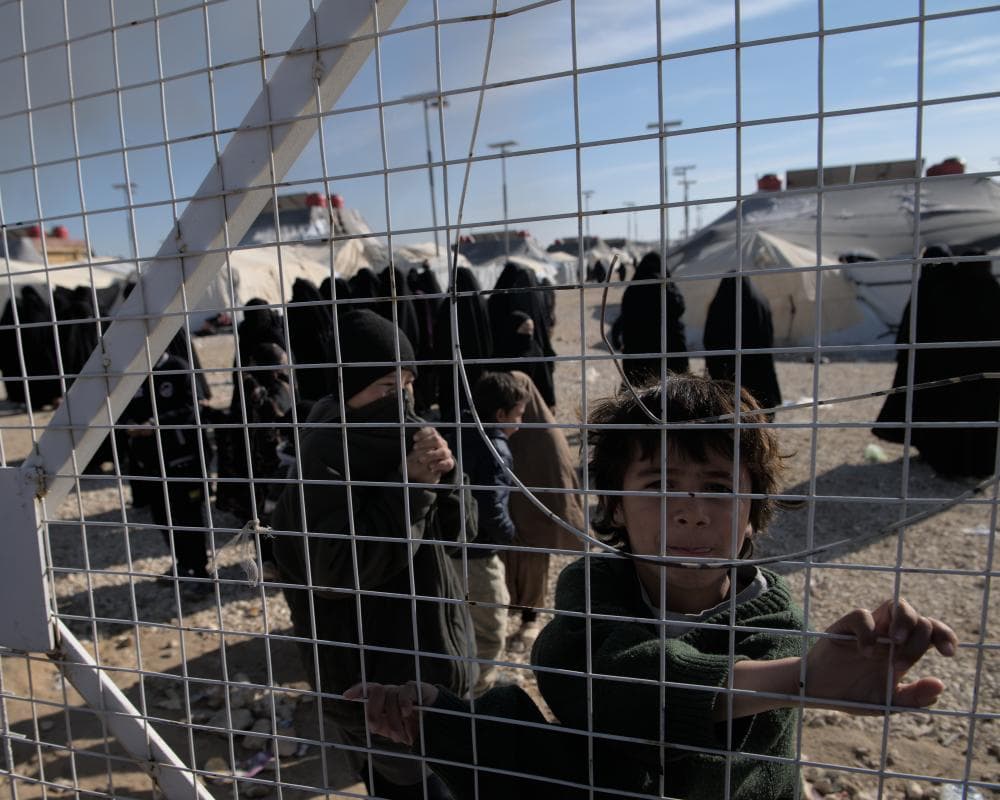
Humanitarians warned for years that the camps in north-east Syria holding tens of thousands of family members of suspected Islamic State (IS) fighters would have to be dealt with. Calling them a “ticking time bomb”, relief groups said the women and children could not just be left to rot in squalid desert camps indefinitely, because eventually they would come home.
Despite the warnings, most states ignored the problem, refusing to repatriate their citizens. At least 8,000 women and children from more than 40 countries have been stranded in the camps of north-east Syria since 2019.
This week, they started to come home. Belgian authorities reported a woman charged in absentia for IS membership had made her way from Turkey to Belgium. An Albanian woman, kidnapped as a child by her father and taken to Syria, managed to smuggle herself to Turkey, where she requested travel documents.
Thousands more non-Syrian women and children are distributed across the country, their whereabouts mostly unknown. Most of them were residents of al-Hawl camp, once the world’s largest prison camp, which housed about 25,000 family members of suspected IS fighters, 6,000 of whom were foreigners.
Security analysts have said the camp became a hotbed for extremist ideology, and that by keeping IS-affiliated women and children in such close quarters, a new generation of IS members was being raised. Humanitarians raised the alarm about what they called life-threatening living conditions, under which residents died of asphyxiation each winter as they tried to escape the cold by burning coal in their tents.
Since Damascus took over al-Hawl as part of its wresting of territory from the Kurdish-led Syrian Democratic Forces (SDF) last month, the camp has slowly emptied. Smugglers, foreign fighters and family members have come to the camp each night to retrieve residents, most of whom were taken to Idlib, a province in north-west Syria where many former Islamist fighters live.
Frustrated by their governments’ lack of action, family members have begun to organise the return of people formerly held in detention facilities. The Belgian and Albanian women smuggled themselves out of Syria into Turkey without the coordination of their governments.
On Monday, relatives of 34 Australian women and children organised a convoy of minibuses from al-Roj camp in north-east Syria, where the SDF is holding more than 2,000 families of suspected IS fighters. They set off for Damascus, seemingly without the backing of Canberra, with the aim of boarding flights back to Australia.
They were turned back en route, apparently for not coordinating with Damascus in advance, but Syrian officials say their return has only been briefly delayed.
Damascus, unlike the SDF, seem unwilling to play prison warden in perpetuity. A humanitarian who met interior ministry officials shortly before Damascus took over al-Hawl last month said they approached the camp as a child protection rather than a security issue.
A new camp Damascus has set up to house al-Hawl residents who do not want to leave has wifi and an open door – a far cry from the Humvees with mounted machine guns the SDF maintained outside al-Hawl’s barbed-wire fences for years.
Governments seem to have lost their chance to manage the repatriation of their citizens – some of whom are said to be affiliated to IS – and instead now face a disorganised, chaotic process of returns which experts say place citizens and countries in danger.
The prospect of thousands of women and children roaming Syria opens the door to renewed recruitment into extremist organisations such as IS, or trafficking and exploitation. A foreign woman from a country who escaped al-Hawl to Idlib last year was promptly kidnapped and had to be freed via ransom. Her family have not heard from her since.
Many of the women have no desire to stay in Syria after years of horrific detention, as explained by more than a dozen during a recent Guardian visit to al-Hawl, and will seek to return to their home countries.
Dealing with their repatriation will be much more of a challenge for home governments now than it was before, when the families were concentrated in camps.
Pressure is growing to release those women and children still held in al-Roj, where mostly European and Russian women are housed. That is where Shamima Begum, the UK-born woman who traveled to Syria at the age of 15 after chatting to a man there, lives.
Governments such as the UK’s have refused for years to repatriate their citizens from al-Roj and other camps, preferring to kick the can down the road, and in Begum’s case strip her of her citizenship. Over the last month however, the room for further delay seems to be quickly narrowing.