Loading...
Please wait for a bit
Please wait for a bit
Click any word to translate
Original article by Chris Osuh Community affairs correspondent
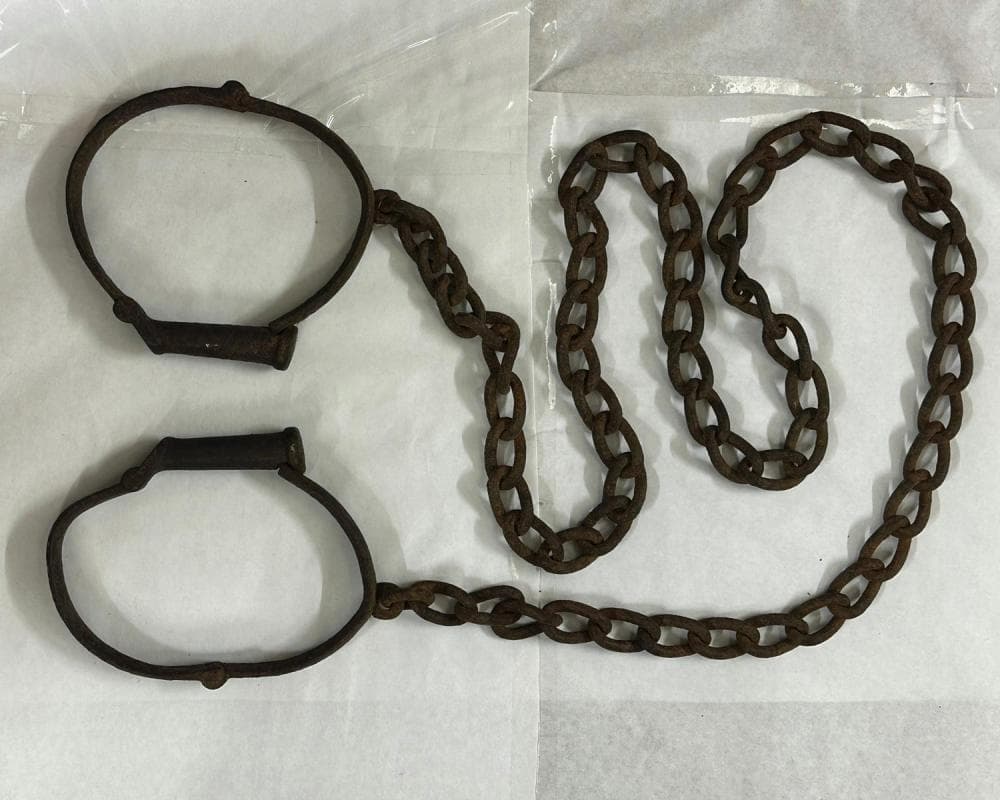
An antiques auction selling chains linked to the enslavement of African people in Zanzibar has been accused of “profiting from slavery”.
Neck irons dated to the Omani-Arab dominated trade in enslaved people in east Africa, which ended after African resistance and British pressure in the late 19th century, will go on sale this weekend in Scotland.
The auctioneer Marcus Salter, of Cheeky Auctions in Tain, Ross, said he wanted to ensure history was confronted with the sale of the “sensitive artefact” and did not wish to offend.
But the Labour MP Bell Ribeiro-Addy, who chairs the all-party parliamentary group for Afrikan reparations, said trading in such items meant people were “continuing to profit from the slave trade”.
Nigel Murray, a retired lawyer in the Scottish Highlands, contacted the Guardian after he saw the chains promoted on Facebook and said “he was never going to buy anything more” from Cheeky Auctions.
The shackles, dated to 1780 and valued at about £1,000, are among objects listed in the auction, called “Challenging History”.
Salter said he was selling the chains for a dealer whose father had owned them for 50 years, adding: “No matter what happens there’s going to be money made out of it from somewhere.”
He claimed if the item was donated to a museum, it could be “put into storage and never seen again”, and that slavery-linked mahogany was sold and used without controversy.
“I think it’s important not to upset and offend, but shock people into learning the whole truth,” Salter said. “There are certain things we’re not allowed to sell at auction. We had to check with the platform we’re selling with that we could do this. They consider the slave chains to be a historical artefact, therefore we can.
“We’ve had people we’ve never met say they’re boycotting us. We’ve had people who educated us and we educated them. There have been others who just disagree and never want to come in.”
In 2024, the Antiques Roadshow expert Ronnie Archer-Morgan refused to value an ivory bangle linked to enslavement.
Ribeiro-Addy said of the chains: “If they were to be put in a museum I would understand, but buying and selling them like oddities is the same thing that people do when it comes to human remains – treating them as collector’s items, something to be fetishised rather than items that should be looked at in horror.
“Why are you selling it for profit? Unless you’re trying to re-enact the history of enslavement by profiting from something used to inflict pain and oppression. We’ve got people trying give valid reasons for continuing to profit from the slave trade – that’s all it sounds like to me.”
Murray said the auction was “vile”, adding: “An auction is the way enslaved people were sold, and here you are auctioning these chains off.
“[Descendants of plantation owners] have millions of pounds gained from slavery, to see people making more money out of it just made me feel very angry.”
Caecilia Dance, an associate at London law firm Wedlake Bell, has advised on the restitution of Nazi-looted art. Dance said she could not comment on the auction, but that there was “no specific law against” trading objects linked to slavery.
She added that “public interest stewardship” – donation, sale, or long-term loan to a museum with relationships with affected communities – would be the “ideal management pathway” for an item linked to slavery.
Dance said: “It’s reached a point in the art trade where if there’s any sign an item might have been looted in the Nazi period, no one wants to buy it.
“It’s probably only a matter of time that that ethical framework extends to objects associated with enslavement because you risk commodifying trauma, even if the sale is completely lawful. Public opinion is definitely turning in favour of restitution.”