Loading...
Please wait for a bit
Please wait for a bit
Click any word to translate
Original article by Rory Carroll
It was the fever dream of the revolution, a dark fantasy spun so many times – each version wilder than the last – until it almost became a joke: the Yankees are coming.
Hugo Chávez, who ruled Venezuela from 1999 to 2013, conjured the scenario again and again, warning that the US president and his henchmen in the CIA and Pentagon were mobilising forces to strike.
Spies, saboteurs, assassins, special forces, mercenaries, missiles, poison, submarines, fighter planes – the empire would stop at nothing to smite Venezuela’s Bolivarian revolution and overthrow its leader.
“Would it be so strange that they’ve invented the technology to spread cancer and we won’t know about it for 50 years?” Chávez said in 2011, when he was being treated for cancer. He evoked US submarines prowling off Caribbean beaches and airborne troops attacking Caracas.
It was, in large part, theatre. A confection of claims to justify authoritarian rule, burnish anti-imperialism credentials and delegitimise opponents. Over time, even some supporters rolled their eyes at tales of the Yankee bogeyman.
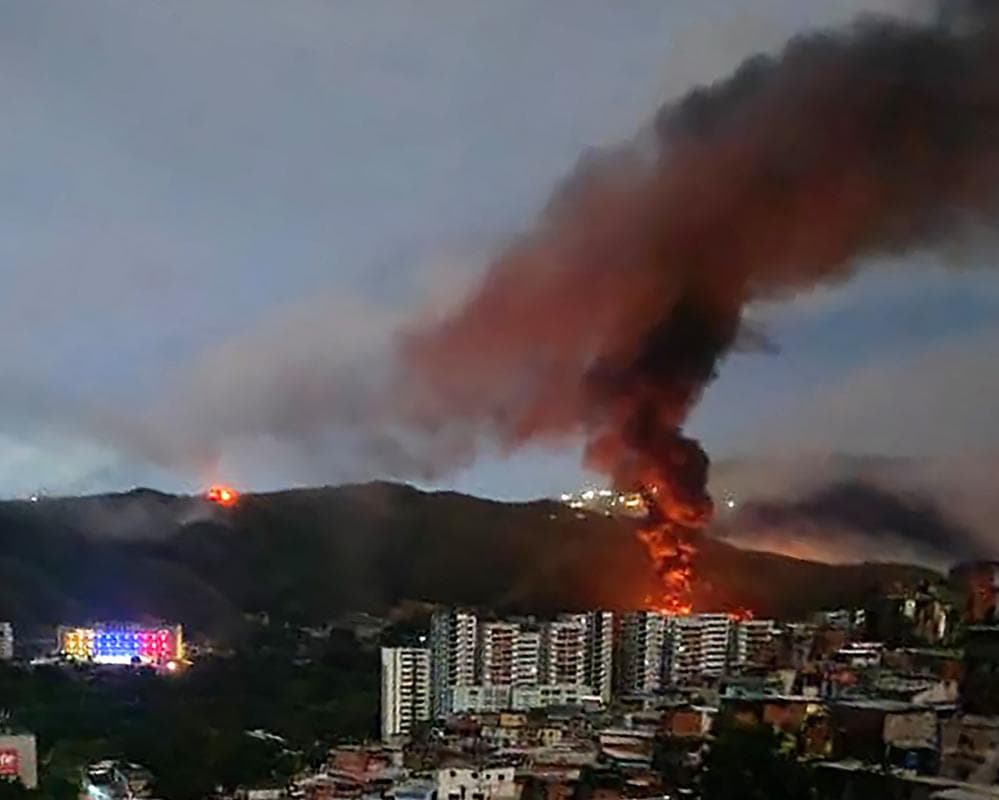
Yet now, 13 years after an ailing Chávez passed power to his protege, Nicolás Maduro, the fever dream is real. On Saturday US forces bombed Caracas and seized Maduro and his wife, Cilia Flores – the “empire” of Chávez’s rhetoric made manifest. No UN mandate, no congressional approval, just raw military power.
Amid the shock and uncertainty about what happens next there is a surreal twist. For years Chavismo – the ideology bequeathed by the late president – exaggerated the US threat in order to cry wolf. When the wolf showed up he turned out to be an American version of Chávez.
Donald Trump’s populist authoritarianism echoes the Venezuelan strongman: both masters of thunder and dazzle who polarised voters, intimidated opponents and hijacked institutions. The real estate mogul obviously differs in myriad ways from an army officer who embraced socialism – but his ability to tap grievances, break norms, suck up all the oxygen and turn power into a TV show are pure Chávez.
It transcends irony that Trump’s greatest spectacle is the operation to abduct Chavismo’s heir. As international law lies in shreds, and Venezuelans swing between hope and dread, history has completed a bizarre circularity.
In 2002 George W Bush’s administration tacitly backed a coup that briefly ousted Chávez – a move that elicited comparisons to the cold war era, when the CIA toppled leftist leaders across Latin America.
Chávez, backed by barrio-dwellers and the military, regained power, won fresh electoral mandates and spent the rest of his reign taunting Bush as a donkey, a cowboy, a devil. After the 2003 US invasion of Iraq – justified by false claims about Saddam Hussein’s weapons arsenal – many around the world agreed with Chávez that the US president was indeed more dangerous than a monkey with a razor blade.
Chávez made repeated claims of US plots against him. Given CIA efforts to kill Fidel Castro and US military interventions in Grenada in 1983 and Panama in 1989, and Bush’s post 9/11 overreach, a strike against Venezuela was plausible. But none came. The US continued to buy Venezuela’s oil and sat back while Chávez hollowed out his economy.
Maduro, taking the reins in 2013, continued the fiction of an imminent US military threat. With the economy cratering and voters rebelling, Maduro needed to rig and steal elections to stay in power – and a Yankee bogeyman was more useful than ever. The dictator talked up limited sanctions by the Obama and Biden administrations as a blockade.
In recent months Trump deployed his own distortions and fabrications. He accused Maduro of heading a “narco-terrorist” cartel that was “flooding” the US with drugs – an extrapolation of Venezuela’s role as a conduit for Colombian cocaine, which mostly goes to Europe. Trump also accused Venezuela of a role in his debunked claim that Joe Biden stole the 2020 US presidential election.
On Saturday Trump claimed a victory for the ages. “This was one of the most stunning, effective, and powerful displays of American military might and competence in American history. No nation in the world could achieve what America achieved.”
The US raiders cut the power supply to Caracas thanks “to a certain expertise that we have”, paving the way for a flawless operation that evicted a tyrant, Trump said.
In his mausoleum, Chávez must have spun. He used to blame power cuts – the result of a crumbling energy grid – on CIA saboteurs. He used to say the gringo superpower wished to reimpose the 19th-century Monroe doctrine of US pre-eminence in the hemisphere, and here was Trump declaring a “Donroe doctrine” of “dominance”.
That extends to the US running Venezuela for an indefinite period, said Trump. “We’re going to run the country until such time as we can do a safe, proper and judicious transition.” He added: “We’re going to have our very large United States oil companies, the biggest anywhere in the world, go in, spend billions of dollars, fix the badly broken infrastructure, the oil infrastructure, and start making money for the country.”
Trump clouded the picture by saying the US would cooperate with Delcy Rodríguez, a Chavista who was Maduro’s vice-president and has reportedly been sworn in as president.
Venezuelans, including the millions who have fled, are about to find out if they have woken from a fever dream or slipped deeper into nightmare.
* Rory Carroll was based in Caracas as the Guardian’s Latin America correspondent from 2006 to 2012 and is the author of Comandante: Hugo Chávez’s Venezuela.