Loading...
Please wait for a bit
Please wait for a bit
Click any word to translate
Original article by Jason Burke in Jerusalem
Iran threatened on Saturday to further escalate the war raging in the Middle East by targeting any facility in the region with US ties, after Donald Trump predicted “many countries” would send warships to support a US bid to reopen by force the strait of Hormuz, a critical waterway closed to virtually all maritime traffic by Tehran since the beginning of the war.
Iran has responded to the joint US-Israeli offensive, which is entering its third week, with daily attacks on oil and other infrastructure around the Gulf region, as well as against Israel.
Both continued on Saturday with salvoes fired by Iran at Israel and a barrage of ballistic missiles directed at the United Arab Emirates.
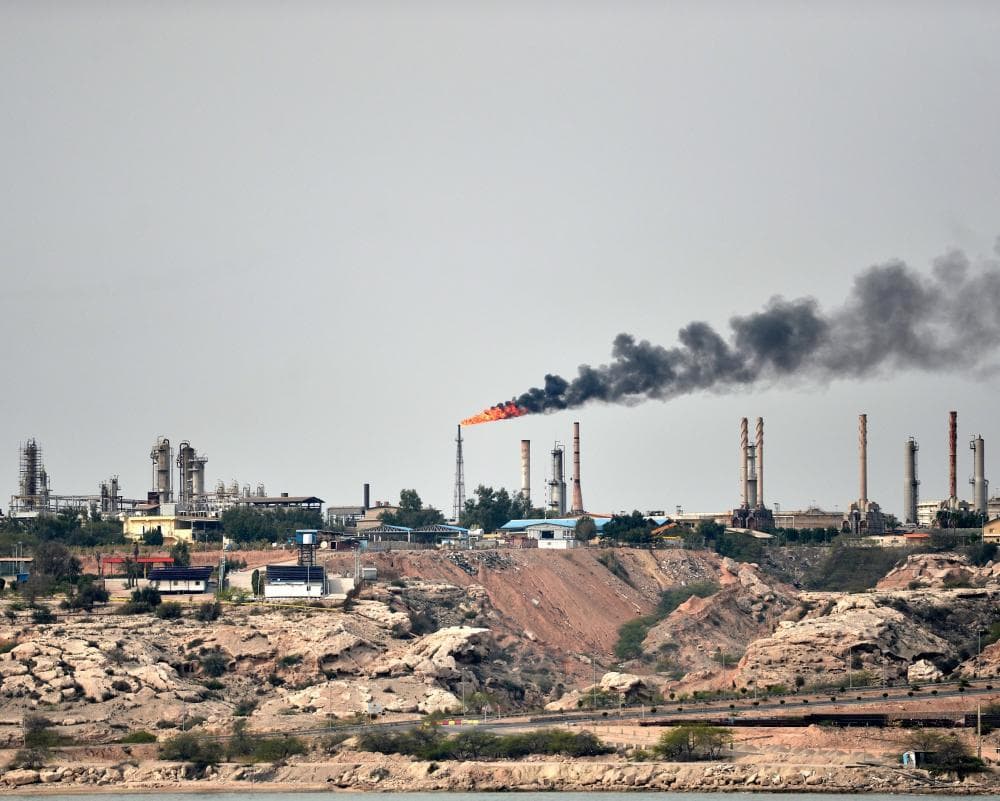
Some oil-loading operations have been suspended in the UAE’s Fujairah emirate, a global ship-refuelling hub, industry and trade sources said on Saturday, with TV footage showing plumes of dark smoke rising into the air. An Iranian military spokesperson called on people in the UAE to evacuate ports, docks, and “American hideouts”, saying US forces had targeted Iranian islands from those areas.
US planes bombed Iran’s main oil export hub, Kharg Island, on Friday and continued to launch waves of attacks in Iran on Saturday. Israeli warplanes also launched dozens of raids.
At least 15 people were killed when an airstrike hit a refrigerator and heater factory in the central Iranian city of Isfahan, the semi-official Fars news agency said on Saturday. The Israeli air force said it was seeking to degrade Iran’s ability to launch missiles and also targeting the security forces of the regime.
In the latest flurry of social media posts, Trump wrote on Saturday on Truth Social that “many countries, especially those who are affected by Iran’s attempted closure of the Hormuz Strait, will be sending War Ships, in conjunction with the United States of America, to keep the Strait open and safe.”
The US president, seemingly in an attempt to bolster domestic and international support for the war, added: “Hopefully China, France, Japan, South Korea, the UK, and others, that are affected by this artificial constraint, will send Ships to the area.”
The US has yet to present a coherent strategy to reopen the strait of Hormuz which usually carries a fifth of global supplies of crude oil and liquefied fossil gas.
On Friday Trump said that US forces “obliterated” military targets in the raid on the Kharg island and warned that crucial oil infrastructure there could be next.
“For reasons of decency, I have chosen NOT to wipe out the Oil Infrastructure on the Island,” Trump wrote on social media. “However, should Iran, or anyone else, do anything to interfere with the Free and Safe Passage of Ships through the strait of Hormuz, I will immediately reconsider this decision.”
Last week, Trump called the leaders of Iran “deranged scumbags” and said it was an honour to kill them. Pete Hegseth, the US defence secretary, told a press conference in Washington that Iranian leaders were “desperate and hiding, they’ve gone underground”.
Hegseth also said that Mojtaba Khamenei, Iran’s new Supreme Leader, was wounded and probably disfigured. Iranian officials have admitted Khamenei was hurt in the Israeli strike which opened the conflict but say that the 56 year old’s injuries are not serious.
The flow of oil and gas from Iran and the Gulf has moved centre stage in the ongoing conflict in recent days.
Kharg lies about 15 miles (25km) off Iran’s coastline and is the main facility for exporting the country’s oil. Iran has effectively closed the narrow strait of Hormuz, sending oil prices surging and raising the prospect of major damage to economies worldwide.
Ebrahim Zolfaghari, spokesperson for Iran’s joint military command, warned of attacks on “all oil, economic and energy infrastructures belonging to oil companies across the region that have American shares or cooperate with America”, while Iran’s foreign minister, Abbas Araghchi, called on Saturday for neighbouring countries to expel US forces from the Middle East.
The US security umbrella in the region “has proven to be full of holes and inviting rather than deterring trouble”, the top diplomat posted on X, adding that Iran called on its neighbours “to expel foreign aggressors”.
Iran’s strategy of hurting US allies in a bid to force Trump to halt the offensive appears to have had little concrete success so far, though its efforts to cause economic pain across the world may be having greater impact.
Tehran is taking “the global economy hostage” as a means of “putting pressure on Trump”, said Ali Vaez, Iran project director at International Crisis Group.
“The regime seems pretty intact, despite the fact that it has lost some very senior leaders,” and that allows Tehran to roll out a “three-part strategy”, Vaez said. “First, ensure survival. Second, keep enough retaliatory capacity to be able to stay in the fight. And then third was to prolong the conflict” so that “you can end it on your terms”.
Meanwhile, the US embassy in Baghdad said Americans should leave Iraq immediately, after an overnight missile attack on the embassy building.
In an alert on social media, the embassy warned of Iran-aligned terrorist militia groups along with the risk of missiles, drones and rockets in Iraqi airspace.
Between 1,400 and 1,800 people are reported to have been killed in Iran, where residents report relentless bombing. Thirteen have been killed in Israel, and about 20 in total in the Gulf.
Trump has declined to publicly give an end date for the conflict, telling reporters: “It’ll be as long as it’s necessary.”
Analysts have suggested that Trump will seek to end the conflict soon to prevent a full blown global economic crisis and soaring fuel prices causing discontent among US voters. Trump’s comments on Saturday marked the first time he has publicly suggested the US may not be able to reopen the strait of Hormuz on its own, and without international support.
Experts told the Guardian earlier this week that military actions directed toward Kharg would lead to a further dramatic increase in oil prices, already surging since the war began on 28 February.
“We may see the $120 (£90) a barrel price we saw on Monday heading to $150 if Kharg were attacked,” said Neil Quilliam of the Chatham House thinktank. “It’s too vital for global energy markets.”
In Lebanon, the humanitarian crisis deepened, with more than 800 people killed and 850,000 displaced, as Israel launched waves of strikes against Hezbollah and warned there would be no letup. Lebanon’s health ministry says 31 paramedics have been killed by Israeli strikes. Israeli officials accused Hezbollah of using civilian ambulances to transport weapons and fighters, without credible evidence.
Concerns that the US may seize Kharg rose when officials in Washington said that 2,500 more marines and the amphibious assault ship USS Tripoli had been ordered to the Middle East.
Marine expeditionary units are able to conduct amphibious landings, but they also specialise in bolstering security at embassies, evacuating civilians and disaster relief. The deployment does not necessarily indicate that a ground operation is imminent or will take place.
US forces have suffered casualties, including the deaths of all six crew members aboard a refuelling aircraft that crashed in western Iraq.