Loading...
Please wait for a bit
Please wait for a bit
Click any word to translate
Original article by Helena Smith in Nicosia
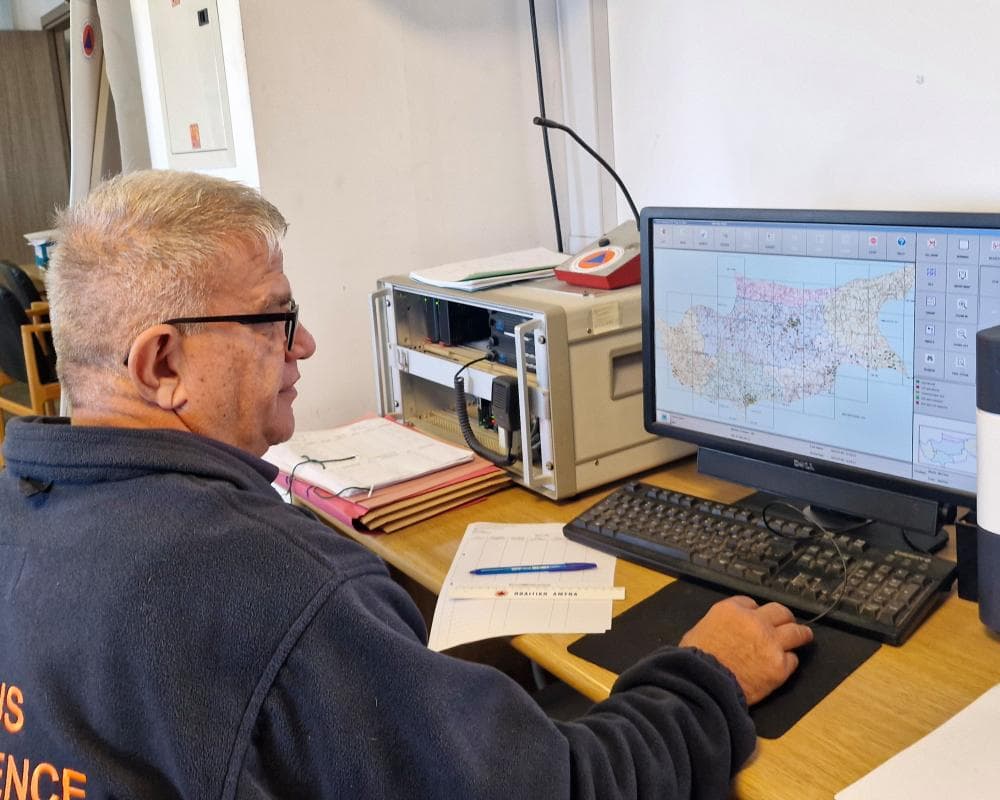
At 12.33pm on 2 March, Valentinos Pangalos was ordered to activate sirens at Paphos international airport in Cyprus. An emergency had been declared. A suspicious object – thought to be a drone packed with explosives – had been detected heading towards the facility. Barely 12 hours earlier, an Iranian-made, Shahed-type drone had smashed into a hangar at RAF Akrotiri, raising the alarm further. The airport needed to be evacuated immediately.
“In 24 years of doing this job I’d never been asked to do anything like it,” said Pangalos, among the longest-serving officers at the island’s civil defence force. “To receive such an order, so abruptly, was intense.”
But, he said, it was just the beginning.
The US-led aerial bombardment of Iran, and the retaliatory attacks that have followed, has put the eastern Mediterranean island on alert – and at the forefront of security concerns – in a way not experienced since 1974, when a coup aimed at union with Greece led to Turkish forces invading and occupying its north.
Officials say phones in the civil defence force’s cramped operations room have been ringing off the hook for days, amid initial reports of other attempted drone strikes from Lebanon – barely 150 miles away.
“People have felt very scared. They’ve been panicking since the drone attack,” said Pangalos, now forced to spend long nights and days in the force’s shabby headquarters on the outskirts of Nicosia. Older Cypriots with memories of the invasion, and the traumatic displacement of refugees that followed, are among those most loudly voicing fears.
“At all hours we’ve been receiving calls, especially from the elderly, asking where the nearest refuge is and what they should do,” Pangalos said. “Unfortunately, there aren’t many of us here because we’re so understaffed.”
Behind her file-covered desk, the civil defence’s chief officer, Maria Papa, concedes that the emergency caught Cypriot authorities off guard.
“This security crisis has exposed just how ill-prepared we are,” she sighed. “Improvement is needed all round, starting with shelters, our staff being increased and the building we are standing in. I’ve been requesting changes for years.”
Pinboards in the foyers of apartment blocks have begun to fill with lists of nearby neighbourhood refuges, for residents to only discover that many are pokey garages or dilapidated cellars in dank, unkempt buildings. The interior minister announced this week that about 480 of the 2,480 bomb shelters listed with authorities were unsuitable, inaccessible, private or did not exist at all.
Papa is leaving her post in the civil defence within days, and local media outlets claim this is directly related to the dismal state of the country’s shelters.
Faced with the stark reality, President Nikos Christodoulides admitted action was overdue.
“We’re not at all happy with the state of the shelters,” he told reporters after it was announced that no more than 45% of the 1 million people living in Cyprus could be accommodated in the bunkers currently available. “I’m not going to embellish the situation, especially in a country where 52 years ago we had an invasion and occupation,” he said, referring to the presence of 35,000 troops in the country’s breakaway Turkish-held north. “The first thing that should have happened was [the construction] of shelters.”
Christodoulides subsequently announced that a national coordinator would be appointed “based on European standards” to more effectively respond to crisis incidents. Legislation has also been drafted to give constructors incentives to build bunkers in apartment blocks to make up for the shortfall. “To date, we’ve asked people to make shelters available out of the goodness of their heart,” Papa said. “It’s been entirely voluntary.”
As cries of state incompetency have grown, so too have demands for change.
In the coming weeks, Papa said Israeli civil protection experts would be visiting as authorities look towards Israel, home to some of the toughest civil defence laws in the world, and elsewhere, for best practices. Enhanced early warning systems are also being worked on.
“We mustn’t forget that Cyprus is actually very safe,” said Papa. “It’s the British bases that have been targeted but we are also up against a siege mentality, the result of 1974.”
Some even say that the sight of European warships and fighter jets forming a protective cordon around the island, at the request of Nicosia, has reinforced worries that the island is being dragged into the wider conflict with Iran.
“I won’t hide it, I’m scared,” said Yiota Andreou, 67, who runs a pastry shop in Nicosia and lives within view of the US embassy.
“Why are all these ships here, if we are as safe as they say? It’s terrible that shelters are in this state, that governments have turned a blind eye, wasted money and not cared at all about us.”
Stefanos Stefanou, who heads the island’s main opposition, the leftwing AKEL, told the Guardian it was now vital there were “effective and fast solutions” to improve a civil protection system that frequently had let the country down. “It’s clearly not working,” he said, citing deadly forest fires last summer where civil defence units were also caught off-guard.
“People fear what they perceive and in Paphos, and the areas around the British bases, where sirens have been sounding, there’s been a lot of panic, people rushing to supermarkets to buy food, incredible scenes. The time has come for solutions that will allow everyone to feel safe.”