Loading...
Please wait for a bit
Please wait for a bit
Click any word to translate
Original article by Kim Willsher
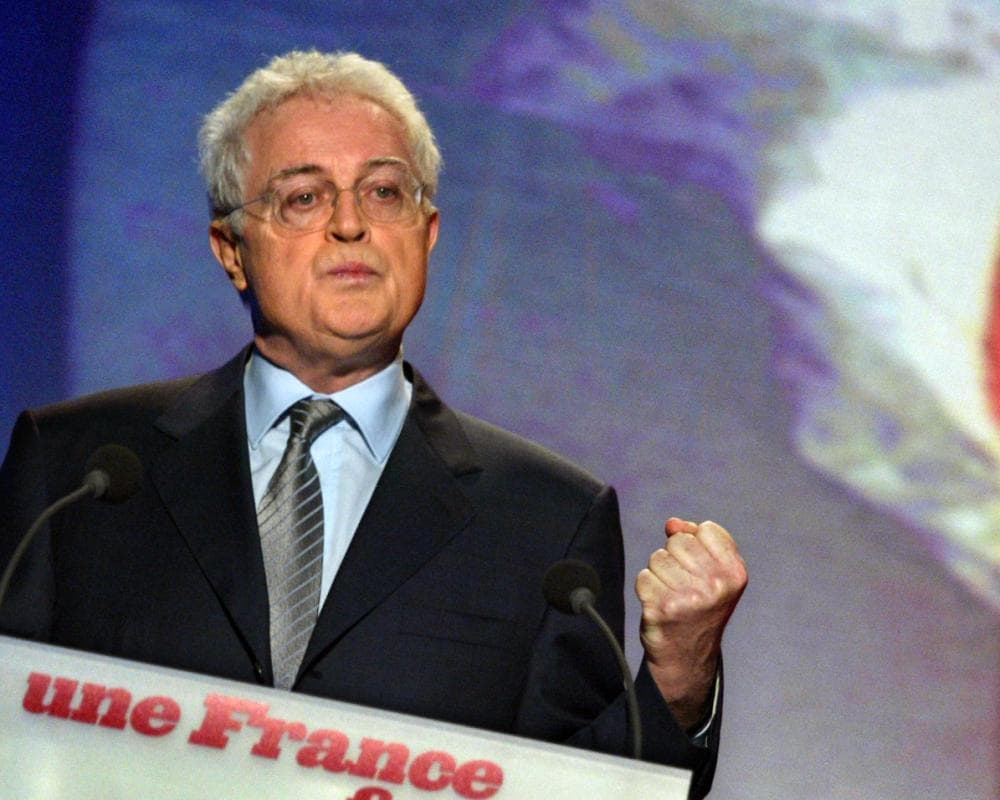
In the run-up to the first round of the French presidential election of April 2002, the Socialist party leader and prime minister Lionel Jospin, who has died aged 88, was a firm favourite to become the next leader of France. According to every opinion poll, Jospin would face Jacques Chirac, seeking re-election, in the second round vote and the two candidates were neck and neck.
It would be hard to overestimate the stupefaction and political earthquake when, at precisely 8pm on Sunday 21 April, the results of the first round were announced: Jospin had been knocked into third place by the far-right National Front leader Jean-Marie Le Pen and thus was out of the race.
Outside the Socialist party’s headquarters in central Paris shocked supporters gathered in tears to hear Jospin declare it was “a bolt from the blue” and announce he would leave politics. “I take full responsibility for this defeat and I am drawing the necessary conclusions by stepping down from political life,” he told the crowd.
The man who, as prime minister between 1997 and 2002, had introduced the 35-hour working week, universal health cover and the civil partnership for couples, disappeared into political exile.
Jospin was born to a Protestant family in the town of Meudon, south-west of Paris. He was one of the four children of Robert Jospin, a teacher and member of the French section of the Workers’ International (SFIO), and his second wife, Mireille (nee Dandieu), a midwife, who is said to have used books by Voltaire to raise up her bed for his birth.
Robert was expelled from the SFIO in 1945 after accepting a post as municipal councillor under France’s collaborationist Vichy regime. As a youngster, Lionel had a stormy relationship with his father, whom he recalled as a “rigorous figure” who liked a political argument over Sunday lunch. Relations between father and son remained tense right up until Robert’s death in 1990, though Jospin admitted the previous year: “Being the son of such a debater gave me confidence.”
After passing his baccalauréat at the Lycée Janson-de-Sailly in Paris in 1955, Jospin studied at the Institute of Political Studies (Sciences Po) before taking the entrance exam for the École Nationale d’Administration, then a hothouse for France’s political class. He failed, but in 1961, after completing military service, first as an officer cadet at the Cavalry School in Saumur, then as a tank officer in Trier, Germany, he applied again and was admitted.
His first job on graduation was as a secretary at the foreign affairs ministry. Unbeknown to his superiors, he had also joined the International Communist Organisation, a Trotskyist movement. His membership, under the pseudonym Michel, was a closely guarded secret for 30 years.
Leaving the foreign ministry after the student uprising of May 1968, Jospin joined the Socialist party, and spent the next decade teaching economics at Paris-Sceaux Technical University. He became an MP in June 1981, representing first Paris and later the Haute-Garonne.
Throughout the 1970s, Jospin rose through the Socialist party and he played a part in the campaign that saw François Mitterrand elected president in 1981. For reasons that still mystify many in French political circles, Mitterrand had taken a shine to the young politician, who succeeded him as the party’s first secretary (its leader) that January.
Jospin also served as a member of the European parliament and, after Mitterrand’s re-election in 1988, was appointed education minister. But amid bitter division and internal rivalries within the Socialist party, and after losing his parliamentary seat in 1993, Jospin stepped down as party leader and at one point considered retiring from political life when his request for an ambassador’s post was refused. His disillusion with politics did not last long.
In 1995 Jospin made his first bid to become president, and was beaten by Chirac in a surprisingly close race. Two years later he led a leftwing coalition that included communists and ecologists to victory in the general election and was named prime minister. He formed a government in opposition to the president – a situation known in France as a “cohabitation” – that in 2000 introduced the 35-hour working week. In 2002, he oversaw France dropping the franc and the introduction of the European currency, the euro.
Le Monde recalls that Jospin boasted of leading the “most leftwing government in Europe” and told Tony Blair in London that the UK’s third way policies were not exportable. “The economy must serve people, not the other way around … yes to the market economy, no to the market society” was a mantra.
In February 2002, Jospin sent a fax to the news agency Agence France Presse announcing he would stand in the presidential election that year. His first mistake was failing to unite factions on the left who then proposed their own candidates, which journalists blamed on Jospin’s unreasonable “pride”. As a result, voters faced a bewildering choice of 18 candidates. Jospin also made personal attacks on Chirac, calling him “old, worn-out and tired”, and this did not go down well with left- or rightwing voters. Election day was during the school holidays, leading to high abstention.
It took four days after he was knocked out of the running for Jospin to advise leftwing voters to “refuse the far right” in the subsequent presidential race, but without mentioning Chirac, and his political exile began. Friends and family knew not to mention the 2002 election.
His defeat remains a political trauma for France and marked the first step towards political recognition for the far-right National Front, now National Rally, which had previously been thought unelectable.
In 2014, Jospin was made a member of France’s constitutional council, a post he held until 2019, but he remained out of the day-to-day scrum of French politics.
He is survived by his second wife, Sylviane Agacinski, a philosopher, whom he married in 1994, and her son, Daniel; and by a son, Hugo, and daughter, Eva, from his first marriage, to Élisabeth Dannenmüller, which ended in divorce.
• Lionel Robert Jospin, politician, born 12 July 1937; died 22 March 2026