UK imposes sanctions on four RSF officers for ‘heinous’ mass killings in Sudan
Click any word to translate
Original article by Patrick Wintour and Mark Townsend
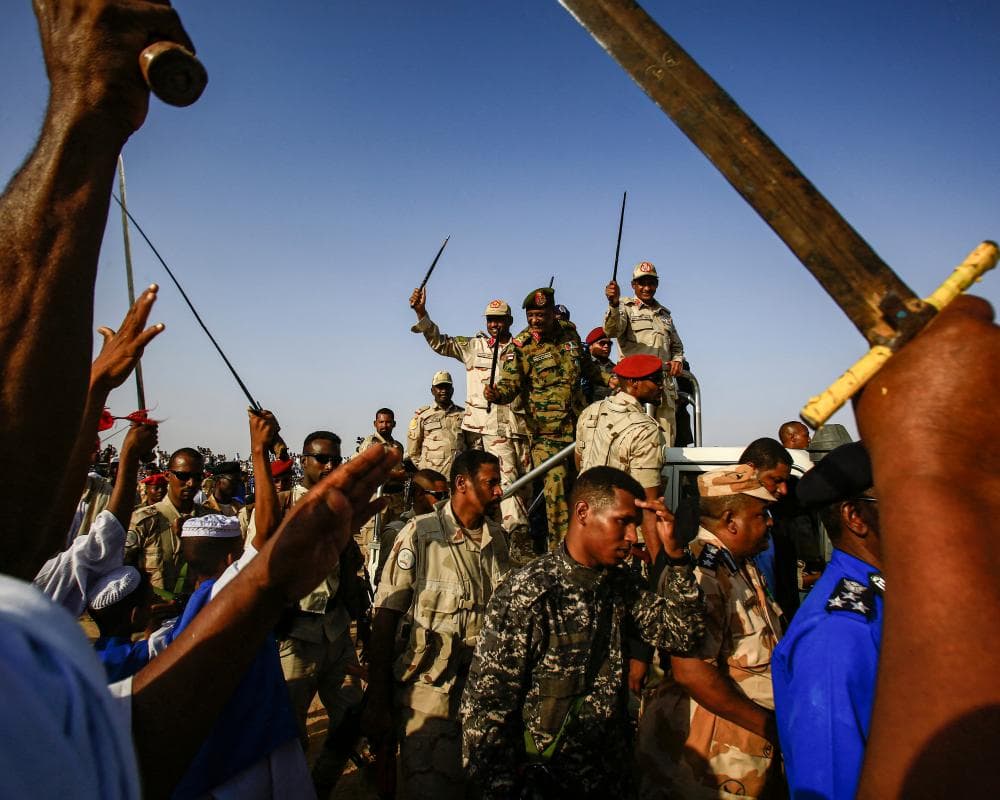
The UK has placed sanctions on four senior commanders of Sudan’s paramilitary Rapid Support Forces suspected of involvement in “heinous” violence against civilians in the city of El Fasher, but decided not to take any action against their key military and diplomatic backer, the United Arab Emirates, or their chief commander.
British officials suggested they preferred to use their leverage with the UAE and the RSF commander, Mohamed Hamdan Dagalo, known as Hemedti, privately, but admitted there was little sign of a ceasefire in Sudan’s near three-year civil war.
They also expressed fears that the war may spread to South Sudan and Eritrea. There were also concerns among diplomats that rivalries between the UAE and Saudi Arabia, on display in the south of Yemen, could lead to a deepening of the conflict in Sudan.
The UK estimates there are as many as 26 possible arms supply routes into Sudan with 10 countries of origin. Saudi Arabia and Egypt have broadly supported the army, while the RSF has been backed by the UAE, a position the Gulf state denies despite evidence compiled by the UN, independent experts and reporters. In south Yemen, the UAE is backing a separatist movement, the Southern Transitional Council, which is opposed by Saudi Arabia.
The war between the army and the RSF, which erupted in April 2023, has caused what the UN has described as the world’s worst humanitarian crisis. Communities in the Darfur region are facing famine and malnutrition after an 18-month RSF siege around El Fasher, which fell to the group on 26 October.
Those targeted with sanctions include Abdul Rahim Hamdan Dagalo, the RSF’s deputy leader and brother of Hemedti, as well as three other commanders, all of whom now face asset freezes and travel bans. Officials indicated the threshold of evidence needed to place sanctions had been met partly because some of the commanders posted videos glorifying the killings on social media.
The four individuals under UK sanctions faced the same punishment by the EU last week, and the measures underline the extent to which sanctions are as much a statement of diplomatic leverage and disapproval as an objective assessment of those most responsible for the conflict.
The other RSF leaders placed under sanctions are: Gedo Hamdan Ahmed, the RSF’s commander for North Darfur; Al-Fateh Abdullah Idris, brigadier general of the RSF; and Tijani Ibrahim Moussa Mohamed, an RSF field commander.
The UK hinted strongly that it may take further action against the RSF in the near future, but this may depend on how the RSF seeks to use its current military advantage.
In a statement, the UK Foreign Office said the individuals were “suspected of atrocities including mass killings, sexual violence and deliberate attacks on civilians in El Fasher, Sudan”.
Although there is no official figure for how many people were killed after the RSF’s seizure of El Fasher, British MPs have been briefed that at least 60,000 may have been murdered.
The Foreign Office said an extra £20m in funding would empower aid organisations to reach 150,000 people with essentials such as food, medical care and emergency shelter, as well as to keep hospitals running and reconnect families. UK aid commitments to Sudan this year have risen to £146m.
The foreign secretary, Yvette Cooper, said: “The atrocities taking place in Sudan are so horrific they scar the conscience of the world. The overwhelming evidence of heinous crimes – mass executions, starvation and the systematic and calculated use of rape as a weapon of war – cannot and will not go unpunished. The UK will not look away, and we will always stand with the people of Sudan.”
The UK is resisting efforts to join the group of four countries – the US, Saudi Arabia, the UAE and Egypt – that are leading efforts to find a diplomatic solution, fearing to do so would lead to pressure to join diplomatically one side or the other in the conflict.
The sanctions were welcomed by the UK’s Darfur diaspora – thousands of whom have had family members killed by the RSF during the conflict – but there was also disappointment that the UAE had escaped censure.
Abdallah Abu Garda, the chair of the UK-based Darfur Diaspora Association, which has more than 30,000 members, said: “The UK’s sanctions on senior RSF commanders are a vital step toward justice. But ending atrocity crimes in Sudan and the genocide in Darfur requires more. All supply lines that fuel these atrocities, including those enabled by the UAE, must be cut.
“True justice demands that every party, whether a direct perpetrator or an external sponsor, faces real consequences.”
The UN Human Rights Council last week adopted a UK-led resolution condemning the atrocities and securing international consensus to mandate an urgent inquiry into atrocities in El Fasher.