Biography aims to fill gaps in story of ultra-libertarian Telegram founder Pavel Durov
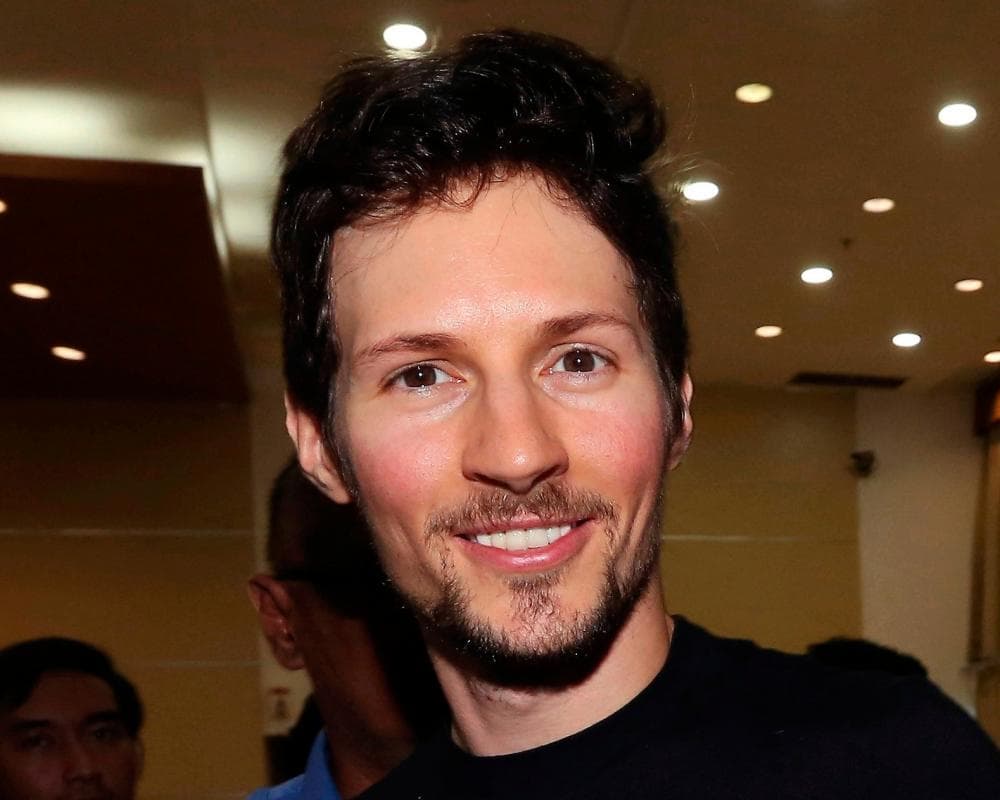
Click any word to translate
Original article by Pjotr Sauer
Tech visionary, Kremlin dissident, FSB agent, free speech absolutist, health guru. These are just some of the labels admirers and critics have attached to Pavel Durov over the past decade.
The Russian-born tech entrepreneur founded Russia’s version of Facebook before going on to create the messaging app Telegram, launch a cryptocurrency ecosystem and amass a multibillion-dollar fortune, all while clashing repeatedly with authorities in Russia and beyond.
But much of Durov’s real story – and the logic that drives him – remains obscured.
A new biography aims to change that.
The Populist, by the independent Russian writer Nikolay Kononov, traces the 41-year-old’s rise from a St Petersburg schoolboy science prodigy to the founder of Telegram, one of the world’s most influential communications platforms, which has more than a billion users.
Kononov describes the book as the product of a 14-year attempt to map Durov’s strategy and mindset, drawing on conversations with Durov himself and people who worked with him, as well as rivals and critics.
The book’s title, he said, refers to a thread running through Durov’s life: his desire to address Telegram’s millions of users directly, allowing him to bypass institutions, the press and any system of representation.
“Durov is one of the first digital populists,” Kononov said in an interview, explaining that “from the very beginning, as soon as he started making his digital products, he programmed into them the ability to write and communicate his ideas directly to his audience.”.
Both VKontakte, Durov’s first venture, and Telegram have at times pushed messages from Durov directly to all users, including users who had not opted in, outlining his libertarian worldview.
“He sees himself as a visionary. And obviously wants to be heard,” the author said.
That strategy has helped promote Durov’s central promise – almost absolute freedom of expression – even as Telegram has become a go-to tool for dissidents, extremists, scammers and war propagandists.
If Durov’s public brand is built on libertarianism, Kononov says his private management style points in the opposite direction: power concentrated in one man’s hands, with few visible checks.
“He is essentially the only one making all the product decisions at Telegram,” Kononov said. “Marketing, PR – it’s a one-man show.”
The portrait he draws is of a tech founder whose worldview has not wavered over the years, remaining most comfortable within an ultra-libertarian, anti-institutional strand of the right that is often misogynistic and, at times, conspiratorial.
“What surprised me most is that Durov hasn’t changed or evolved in all the years that I have interviewed him,” Kononov said.
Durov is not an outlier, Kononov writes, but part of a broader new wave of moguls – most visibly in the US – who pair technological dominance with an outsized sense of personal mythology and a deep suspicion of government constraint.
Like Elon Musk, Peter Thiel and Jeff Bezos, he has shown a strong interest in longevity science as well as pronatalism, the belief that having as many children as possible is a social or civilisational duty.
Durov does not drink or use drugs, Kononov says, regularly dispenses spartan health advice – often alongside photos of him shirtless – and has said he has fathered dozens of children through sperm donation.
One of the book’s most striking sections tells for the first time of Durov’s tense early meeting with President Vladimir Putin in 2014, held behind closed doors.
Kononov writes that Durov described the encounter as a one-way conversation, in which the Kremlin leader reprimanded him over illegal content on Vkontakte and suggested that Durov leave the country.
Under pressure from the authorities, Durov sold his stake in Vkontakte, left Russia and eventually settled in Dubai, where he founded Telegram.
But the clearest mark on Durov in recent years, Kononov suggests, came not from Russia but from France.
Durov, who also holds French citizenship, was detained and held for three days in France in August last year as part of an investigation into crimes linked to Telegram, including the circulation of child sexual abuse images, drug trafficking and fraudulent transactions.
His detention came as a shock to the tech mogul. In interviews conducted in Paris after his arrest, Durov described to Kononov a harsh, disorienting ordeal – a permanently lit cell and little sleep – that rattled a man who had spent years insulating himself from the reach of the state.
It also appears to have sharpened his hostility towards the west. Kononov says Durov now frames Europe as sliding toward “total digital control”, and increasingly conspiratorial rhetoric.
Most recently, Durov appeared to endorse a conspiracy theory promoted by the far-right blogger Candace Owens, suggesting that Paris was behind the killing of Charlie Kirk.
“What interests me about Durov is that, on the one hand, he clearly has a very high IQ,” Kononov said. “But at the same time, he is prone to conspiracy theories.”
Kononov is adamant, however, that Durov’s views should not be conflated with formal political allegiances.
One of the most persistent claims surrounding Durov is that he is secretly aligned with Russian security services.
But Kononov said that in the course of his research, he found no evidence that Durov has worked with, or on behalf of, the Russian state. “He has a huge number of flaws – but not the sin of Telegram acting as a backdoor for the FSB,” Kononov said.
Kononov argues that what Durov has ultimately learned is the need to compromise – with both Russian and western authorities – when it serves his interests and allows Telegram to continue operating.
Kononov recalls Durov once telling him: “I never waste time on things that are unnecessary or that cannot be useful to me personally.” That self-serving mindset, Kononov said, ultimately ended their personal relationship.
About a year ago, the writer asked Durov whether he saw a contradiction between Telegram’s highly centralised, almost authoritarian internal structure and his professed devotion to freedom of expression. After that, Durov stopped responding.
“He quickly realised it wasn’t going to be a book to his liking,” Kononov said.