Loading...
Please wait for a bit
Please wait for a bit
Click any word to translate
Original article by Sam Jones and Jakub Krupa in Budapest
Péter Magyar’s resounding election victory brings an end to 16 years of rightwing populist rule under Viktor Orbán. But the effects of that win are likely to be felt well beyond Hungary’s borders, from Brussels to Moscow and from Kyiv to Washington.
Orbán’s frequent efforts to undermine the EU’s attempts at collective action – not to mention his proud defence of the “illiberal democracy” that Hungary became on his watch – exasperated and infuriated the European Commission. His vetoing of a massive EU loan to Ukraine and his strategy of delaying, and sometimes opposing, EU sanctions on Russia, left the bloc looking toothless and divided.
Meanwhile, his contempt for democratic norms, failure to tackle corruption, disdain for the rule of law and crackdowns on the media led the commission to suspend billions of euros in funding to Hungary.
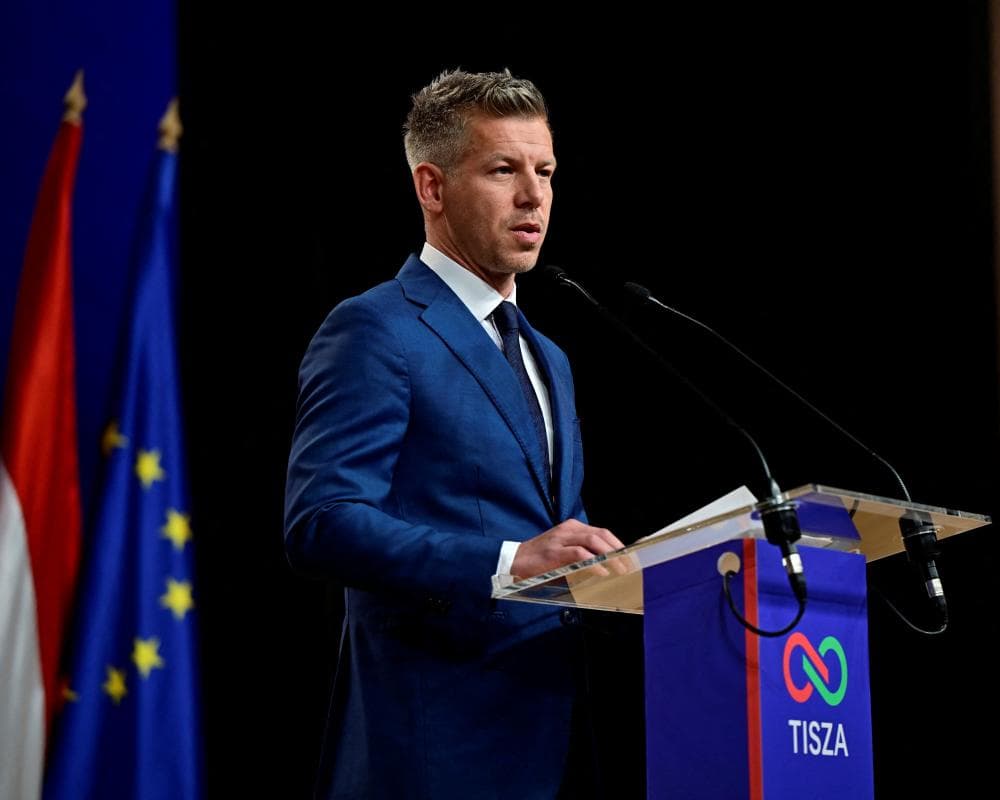
Magyar, on the other hand, has promised to repair Hungary’s strained relationship with the bloc and to address many of its concerns. In a speech on Monday afternoon, he struck a conciliatory note, saying that while the EU was “a complicated, bureaucratic, compromise-seeking” organisation, he felt compromises could be made. “I am sure we will have debates,” he added. “But we are not going there to fight for the sake of fighting so we can write on billboards that Brussels is evil and needs to be stopped.”
Ursula von der Leyen, the president of the European Commission, made plain her relief at the election result – and her hopes for rebooted relations with Hungary – in a post on X. “Hungary has chosen Europe,” she wrote. “Europe has always chosen Hungary. Together, we are stronger. A country returns to its European path. The Union grows stronger.”
Magyar’s predecessor made no secret of his proximity to Moscow. Not only did Orbán continue buying Russian oil and gas – and meeting Vladimir Putin after Russia’s full-scale invasion of Ukraine in 2022 – he also blocked a vital €90bn (£78bn) EU loan to Ukraine for urgently needed military aid and government support. Recent media reports have also suggested that Budapest shared confidential EU information with the Kremlin, prompting further fury from the EU.
Although Magyar described Moscow as a “security risk” for Europe in Monday’s speech – and insisted he would tell Putin “it would be nice to end the killing after four years” were he to call – some of his lines on Russia and Ukraine are not wildly divergent from Orbán’s. He said he hoped the Russian aggression would end soon so that sanctions against Russia could be lifted, adding: “We are neighbours to Russia and it is not in Europe’s interests to buy raw materials at higher prices because that destroys our competitiveness.”
While Magyar said his government would not support Ukraine’s fast-track entry to the EU, he did crucially signal that he was happy with the €90bn EU loan deal to Kyiv, raising hopes the money could finally be disbursed. But he stressed the need for the opt-out that exempts Hungary from contributing to the loan, saying his country was in a “ very difficult financial situation”.
The Kremlin has said it hopes to “continue pragmatic contacts with the new leadership”, while Ukraine’s president, Volodymyr Zelenskyy, said his country was “ready for meetings and joint constructive work for the benefit of both nations, as well as peace, security and stability in Europe”.
The outgoing prime minister’s loud and aggressive defence of traditional Christian family values made him a hugely popular and potent figurehead for his rightwing and far-right contemporaries.
While his critics saw him as illiberal, intolerant and profoundly undemocratic, his admirers delighted in his scorn for many of the values held dear across the majority of EU countries. Orbán’s departure has left them mourning a much-cherished totem.
The French far-right leader Marine Le Pen said Orbán had “defended Hungary’s freedom and sovereignty with courage and determination”, while Italy’s pragmatic prime minister, Giorgia Meloni, congratulated Magyar but also thanked Orbán for “intense collaboration for these years”.
Santiago Abascal, the leader of Spain’s far-right Vox party, was less measured. “Hungary was the only European nation that was safe from the Islamist invasion,” he wrote on X on Sunday night. “The defeat of Victor Orbán puts that in danger. Orbán leaves a Hungary that is much better than the one he inherited. And he leaves a deep mark on all the patriotic forces of Europe.”
Orbán’s defeat will also come as a blow to Donald Trump, his administration and the Maga movement. As Trump’s former adviser Steve Bannon once noted, Orbán was “Trump before Trump” – a beguiling, one-man blueprint for illiberal, bulldozer politics. The US president had repeatedly endorsed Orbán and promised, three days ago, to bring US “economic might” to the country if Orbán was re-elected.
Orbán’s political and ideological importance to Trump was further underlined by last week’s visit by the US vice-president, JD Vance. “We had to show that there are actually lots of friends across the world who recognise that Viktor and his government are doing a good job and they’re important partners for peace,” Vance said as he attempted to brush off accusations of US electoral interference.
The scale of Magyar’s victory has already prompted some on the European right to ponder whether a Trump endorsement could actually be the kiss of death. Belgium’s defence minister, Theo Francken, described Vance’s support as “a really dumb campaign move”, adding: “I’m a rightwing politician and think the far right is being really stupid. And that the Magas should really stop campaigning internationally because everyone and everything they support loses the elections. Lead instead of gold. Best advertisement for the left. Crazy.”
Unsurprisingly, Magyar described the US on Monday as a very important partner and one with whom Hungary needed good relations. He added that while he would not call Trump, he would speak to him if the White House phoned.
Magyar said the issue of abortion was settled and that he did not intend to change the current regulation, which requires pregnant women to have to listen to the foetus’s heartbeat before they can access the procedure. In contrast to most EU countries, emergency contraception pills are not available without prescription in Hungary.
Under Orbán, Hungarian MPs voted last year to ban Pride events and allow authorities to use facial recognition software to identify attenders and potentially fine them. Amnesty International described the moves as a “full-frontal attack” on LGBTQ+ people.
Asked on Monday about his views on LGBTQ+ rights – including whether he would allow Pride parades to go ahead – Magyar backed the right to freedom of assembly, and said he and supporters of his Tisza party had made their position plain.
“We clearly said that, according to Tisza and the many million Hungarian people supporting it, everyone can live with whoever they love as long as they do not violate laws and they are not harmful to others,” he said. “I think everything is in this, without having to explain any of the details.”