Loading...
Please wait for a bit
Please wait for a bit
Click any word to translate
Original article by Jonathan Barrett Business editor
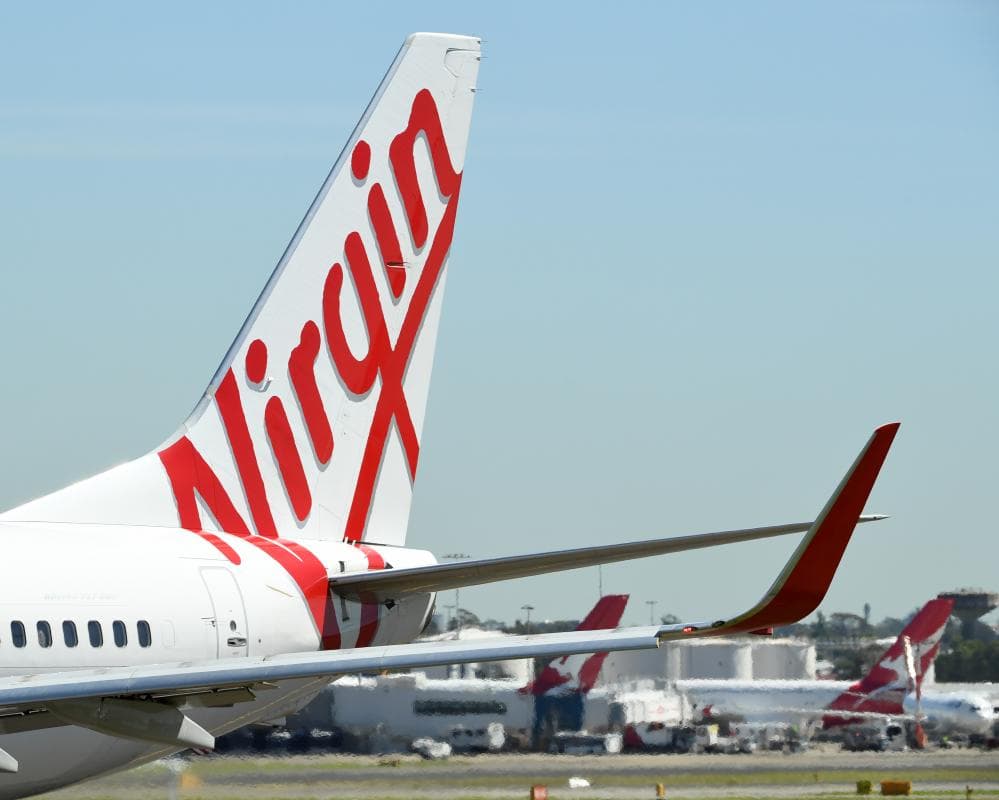
The organisation that manages Australian skies has defended its decision not to immediately report a fresh safety incident at Sydney airport when a Virgin plane aborted its takeoff.
The chief executive of the commonwealth-owned Airservices Australia, Rob Sharp, said he did not believe the incident met the reporting threshold, given the substantial distance between the Virgin plane and a Qantas aircraft crossing the runway in front of it on Sunday.
Sharp said air traffic controllers rescinded clearances while the aircraft were still more than 1km apart.
“Based on that criteria, it didn’t meet the mandatory reporting requirements from our perspective,” Sharp said on Friday.
“However, we’re quite open to reviewing the data that surrounds it. If there are improvements to be made, we will make them.”
The incident was referred to the Australian Transport Safety Bureau (ATSB) on Thursday – four days after the event. It was the third safety issue at the country’s busiest airport in recent weeks.
There are about 60 “runway incursions” a year in Australia, according to the ATSB, but they rarely happen at major airports or with large aircraft.
Sign up for the Breaking News Australia emailThe pilot of the Virgin flight saw the Qantas plane transiting in front of it, reduced thrust and brought the aircraft to a stop at about the same time the clearance was rescinded.
Sunday’s incident took place just a few hours after a Jetstar plane narrowly avoided colliding with a Qatar Airways plane on the Sydney tarmac, prompting nationwide attention on a shortage of air traffic controllers.
A third incident occurred in late July, when a Qantas flight was initially cleared to cross a runway in front of another plane that had just landed. The three incidents are under investigation.
The ATSB chief commissioner, Angus Mitchell, said he was seeking reasons for the delayed report of the latest incident.
“This type of runway incursion and loss of separation is a transport safety concern, and we immediately commenced an investigation upon being notified of this yesterday afternoon,” Mitchell said on Friday.
The safety bureau boss said while it was “too early to make any conclusions”, the ATSB would “consider any organisational or systemic issues that may have contributed” to the incident involving the Virgin and Qantas planes.
The ATSB disclosed there was a “supervisory or training situation” at the Sydney control tower at the time.
Airservices said the controller who issued the initial takeoff clearance was an experienced worker undertaking an “endorsement check”. The worker was being monitored by another experienced controller, who promptly ordered that the clearance be cancelled.
Endorsements refer to the qualification process required for a controller to hold different roles, such as overseeing taxiways and runways.
Current staffing shortages are linked to a pandemic redundancy program whereby 140 experienced controllers left, according to the air traffic controllers’ union, Civil Air.
Newer staff have fewer endorsements, which makes it difficult to plug holes in rosters and can lead to flight delays.
The Civil Air president, Scott Nugent, said controllers “increase the spacing between aircraft” to maintain safety when there were fewer staff.
On Saturday, before Sunday’s two incidents, more than 150 flights passing through Sydney were delayed due to a lack of air traffic controllers.
Additional reporting by Tom McIlroy