Loading...
Please wait for a bit
Please wait for a bit
Click any word to translate
Original article by Deborah Cole in Berlin
The world’s oldest monastic brewery, Germany’s Weltenburger, is being sold to the Munich brewers Schneider Weisse as part of consolidation in the sector in response to plunging sales.
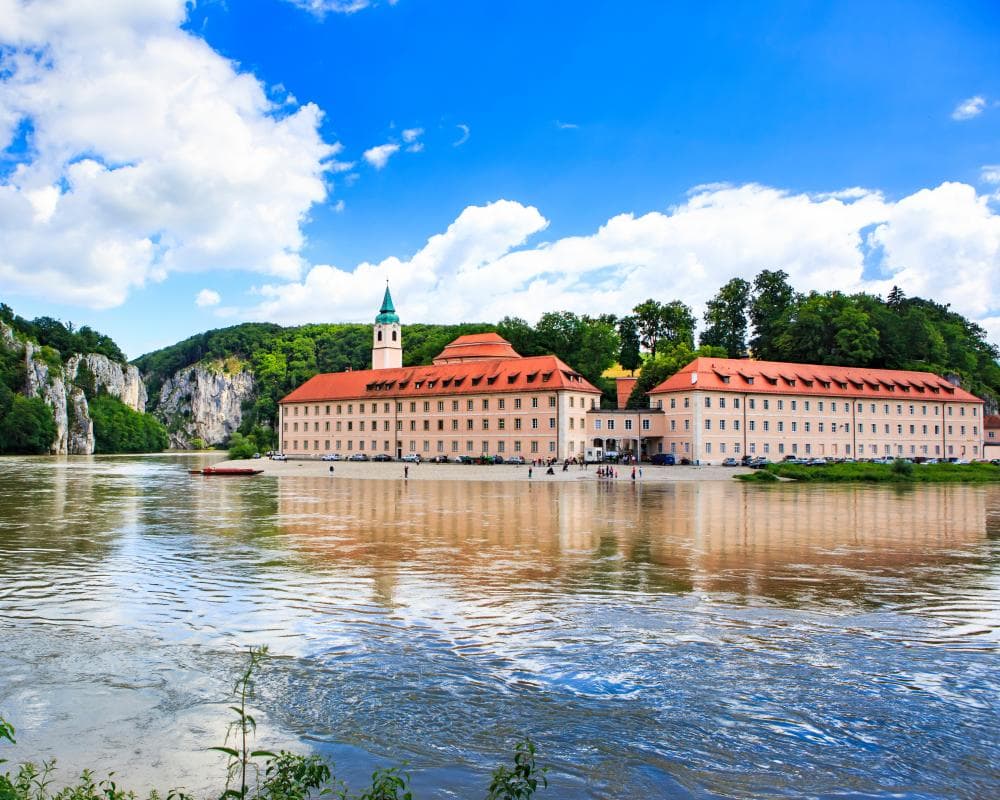
Beer has been brewed at Weltenburg Abbey, a stunning, still active monastery on the banks of the Danube in Bavaria, for nearly 1,000 years.
Although the facility is still owned by the Catholic church, the Benedictine monks handed over production of the brand’s award-winning lager and signature dark brews half a century ago to hired staff from the Bischofshof brewery, which will also be sold to Schneider.
The diocese of Regensburg and Schneider Weisse agreed on the sale after several years in which Weltenburger’s business was in the red, meaning the church had to inject its own funds to prop it up, local media reported.
Till Hedrich, the managing director of both Weltenburger and Bischofhof, said the planned solution could head off the threat of complete closure or break-up of the breweries by an investor with “no connection to the region”, while preserving an “important piece of Bavarian brewing tradition” in the long run.
The financial details of the sale of Weltenburger to Schneider, a comparatively young outfit launched in 1872, have not been released. But the purchase is scheduled to be completed by January 2027 and keep the 21 Weltenburger employees onboard.
“In addition to the aspect of tradition, it is very important to us that we can keep at least some of the jobs directly in the region,” the Regensburg bishop, Rudolf Voderholzer, said.
Bischofshof, which was founded in 1649 and employs 56 people, is to halt production at the end of the year, when the beer’s brand will move to Schneider.
Weltenburger will continue to be made at the historic abbey, while the Regensburg diocese said it was seeking placement for the Bischofshof workers made redundant.
Weltenburger brewery said on its website it had withstood “several fires, floods, destruction and secularisation as well as a world war” in which an order to blow up the entire complex was narrowly thwarted. It now welcomes half a million visitors a year.
“Those who cannot enjoy themselves will eventually become unbearable to others,” the monastery’s abbot, Thomas M Freihart, said, quoting Friedrich Schiller, as Weltenburger beer celebrated its 975th anniversary last May. He added: “The enjoyment of barley juice should be seen as a gift from God.”
German beer sales, however, are on a downward slide, as alcohol consumption falls in many western countries, including Britain. Turnover has shrunk by a quarter in the last 15 years, according to Germany’s main industry body. In 2025, consumption fell by 5m hectolitres, the biggest decline in 75 years.
The German beer market has maintained a standout tradition of fealty to regional brands, with a few dozen nationally or globally known names jostling for drinkers against the output of about 1,500 small and medium-sized breweries.
In most countries where major brands dominate, they have swallowed smaller historic breweries, with only bespoke craft breweries putting up a modest fight.
As a result Germany, perhaps surprisingly given its long and proud tradition, does not have a single brew among the world’s top 10 selling beers.
It does, however, still boast the largest number of monastic breweries, nine managed by monks or their employees and a 10th, the Franciscan convent Mallersdorf Abbey, run by nuns who only sell the small surplus of what they do not drink themselves.
Beer brewing and consumption are believed to date back to at least the Neolithic period but it was monasteries in the middle ages that turned them into a business.
Of late, beer has suffered from an image problem in Germany as consumers turn their backs on alcohol. Often seen as a fusty drink of older generations, classic beers are bound by Germany’s “purity law”, known as the Reinheitsgebot, a medieval food safety rule which deemed that beer could contain nothing other than water, barley, hops and, later, also yeast.
It has made innovation a challenge, even as non-alcoholic brews gain in popularity.