Loading...
Please wait for a bit
Please wait for a bit
Click any word to translate
Original article by Andrew Roth, Jonathan Yerushalmy and agencies
Ukraine, Russia and the US have begun three-way talks for the first time since Russia’s full-scale military invasion began in February 2022, but with the Kremlin maintaining its maximalist demands for Ukrainian territory, it is unclear whether Donald Trump will be able to broker a ceasefire even by putting heavy pressure on Kyiv.
The talks in Abu Dhabi on Friday are the highest-level known summit between the three sides since the beginning of the war, and come as Trump’s demands to take over Greenland have strained tensions among Ukraine’s western allies as the country endures a harsh winter with much of its civilian energy infrastructure damaged by Russian attacks.
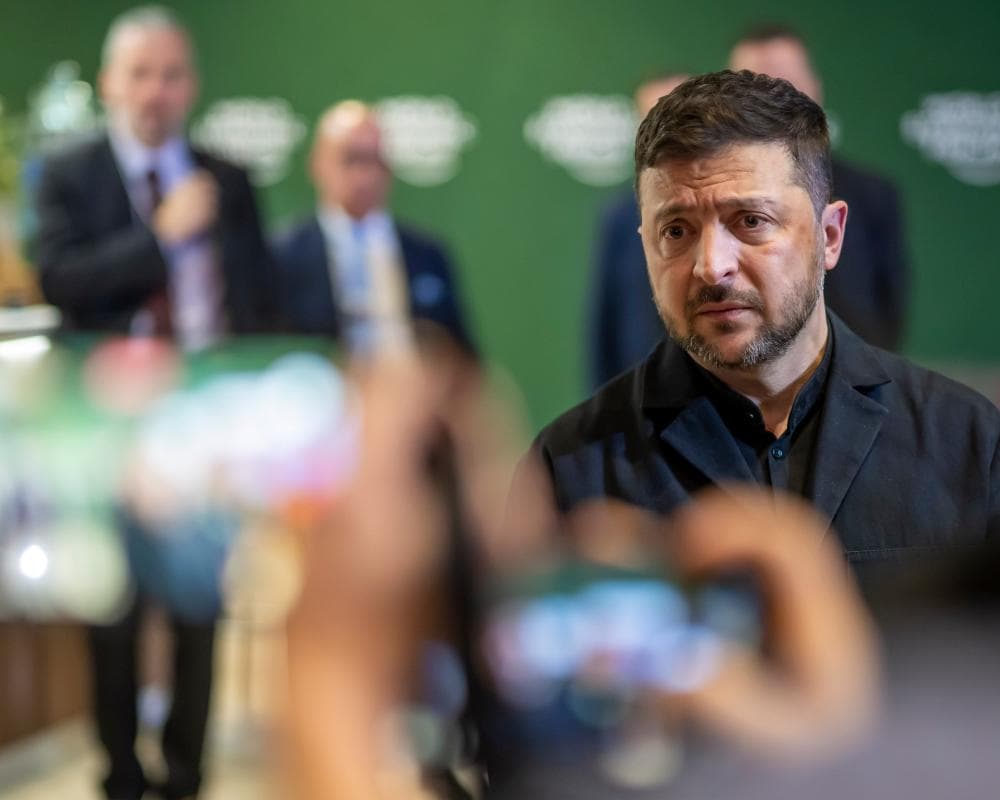
The Ukrainian president, Volodymyr Zelenskyy, said the three sides were meeting at “negotiator level” and that the “format is happening for the first time in a long time”. Kyiv’s delegation “knows what to do,” he said in a voice note to journalists. Russia sent a delegation led by the GRU military intelligence chief, Adm Igor Kostyukov, indicating a focus on military rather than political negotiations.
The talks come after a seventh meeting between Trump’s special envoy, Steve Witkoff, and Vladimir Putin in Moscow, where the main topics of discussion were Russia’s demands for territory and Ukraine’s security guarantees, which Zelenskyy has said were agreed with Trump at this week’s World Economic Forum in Davos.
Witkoff was accompanied in Moscow by Trump’s son-in-law Jared Kushner. They were joined by Josh Gruenbaum, the commissioner of the Federal Acquisition Service (FAS). He was recently appointed as a senior adviser on Trump’s international “board of peace” for Gaza.
The Kremlin’s diplomatic adviser, Yuri Ushakov, told reporters the talks had been “useful in every respect” and that it was “agreed that the first meeting of a trilateral working group on security issues will take place today in Abu Dhabi”.
As the talks were about to begin on Friday, the Kremlin repeated its demand that Kyiv withdraw its forces from the eastern Donbas region for the war to end.
Other senior Russian officials have gone on record demanding Ukraine adopt other measures that have been left out of a “20-point peace plan”, in what they indicated were plans to pursue regime change in Kyiv.
“Any settlement proposal founded on the primary goal of preserving the current Nazi regime in what remains of the Ukrainian state is, naturally, completely unacceptable to us,” Russia’s foreign minister, Sergei Lavrov, said on Tuesday.
Before the talks, a German government spokesperson questioned whether Moscow would be willing to concede on any of its demands, which include taking over territory currently not under its military control.
“There are still major questions about the extent to which Russia is really willing to move away from its maximalist demands,” Steffen Meyer said.
“Nothing would be gained if a peace agreement ultimately only gave Russia some breathing space and allowed it to launch new attacks at a later date. That is why we have focused very strongly on the issue of security guarantees.”
The full details of the UAE talks had not been released at the time of writing, and it was not clear whether Russian and Ukrainian officials would meet face to face. Zelenskyy said the meetings would last for two days.
The Kremlin’s spokesperson, Dmitry Peskov, said: “Russia’s position is well known on the fact that Ukraine, the Ukrainian armed forces, have to leave the territory of the Donbas. They must be withdrawn from there … This is a very important condition.”
The Trump administration has been pushing for a peace settlement, with representatives of the US president shuttling between Kyiv and Moscow in a flurry of negotiations that some worry could force Ukraine into an unfavourable deal. Trump said on Wednesday that Putin and Zelenskyy would be “stupid” if they failed to come together and get a deal done.
Speaking at the World Economic Forum in Davos on Thursday, Witkoff said one key issue remained to be resolved, without giving further details.
Zelenskyy said the future status of land occupied by Russia in eastern Ukraine was unresolved, but that peace proposals were “nearly ready”. Both sides have previously highlighted the issue of territory as crucial.
Putin has repeatedly demanded that Ukraine surrender the 20% of the eastern region of Donetsk it still holds. Zelenskyy has refused to give up land that Ukraine has successfully defended since 2022 through grinding and costly attritional warfare.
Russia also demands Ukraine renounce its ambition to join Nato and rejects any presence of Nato troops on Ukrainian soil after a peace deal.
Zelenskyy said from Davos: “The Russians have to be ready for compromises because, you know, everybody has to be ready, not only Ukraine, and this is important for us.” He said postwar security guarantees between Washington and Kyiv were ready, should a deal be reached, although they would require each country’s ratification.
Zelenskyy was speaking after a closed-door meeting with Trump and a blistering Davos speech in which he accused European leaders of being in “Greenland mode” as they waited for US leadership rather than taking action themselves.
Despite Trump’s limited and scattergun support for Ukraine since taking office a year ago, Zelenskyy focused on Europe’s role in the conflict, accusing the continent’s leaders of complacency and inaction.
“Just last year, here in Davos, I ended my speech with the words: ‘Europe needs to know how to defend itself,’” he said. “A year has passed, and nothing has changed.”
Speaking to reporters as he flew back to Washington, Trump said his meeting with Zelenskyy had gone well,and that the Ukrainian president had told him he wanted to make a deal to end the war.
“I had a good meeting, but I’ve had numerous good meetings with President Zelenskyy and it doesn’t seem to happen,” he said.