Loading...
Please wait for a bit
Please wait for a bit
Click any word to translate
Original article by Philip Oltermann, European culture editor
One reason why art – painting, literature, film, theatre, all of it – is so important to society is that it creates spaces that can tolerate difficult answers to difficult questions. This makes art the opposite of politics, where politicians are under constant pressure to give easy answers to difficult questions.
I was thinking about this distinction this month while watching the European film awards, this continent’s answer to the Oscars, which has moved its annual ceremony to January this year as it seeks to position itself as a major tastemaker for grownup cinema.
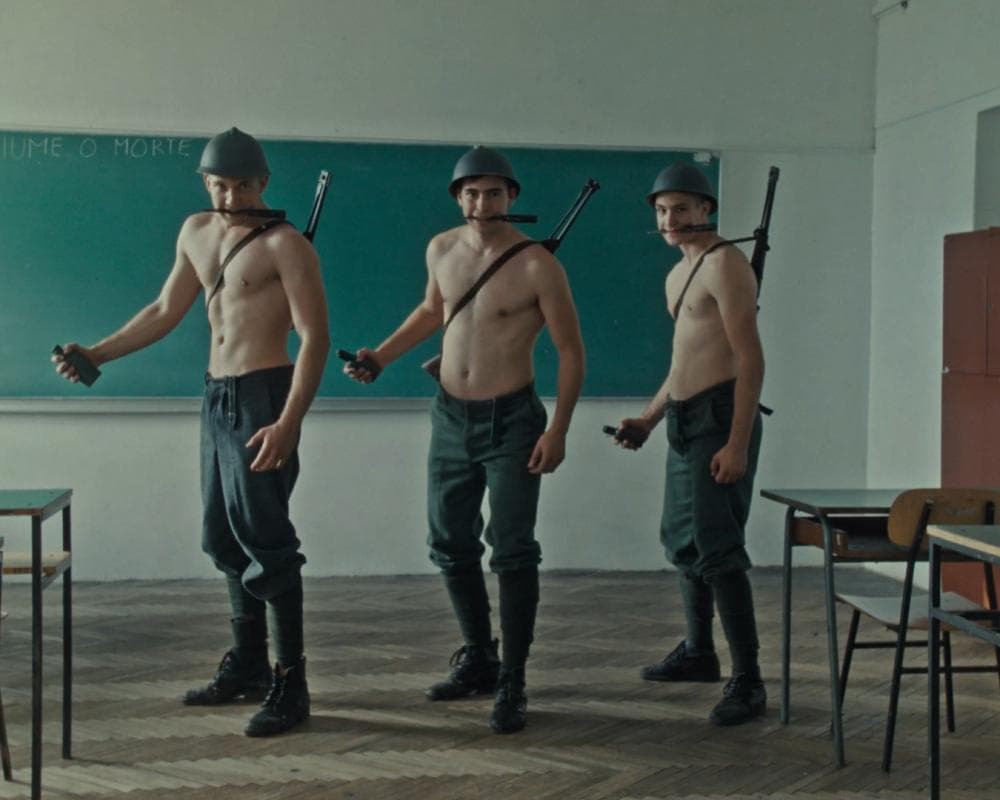
One of the most gratifying wins of the night was the best documentary prize for Fiume o Morte! by the Croatian director Igor Bezinović – an Act of Killing-style re-enactment of the 1919 conquest of the Adriatic city of what is now Rijeka by a rag-tag army assembled by the proto-fascist dandy-poet Gabriele D’Annunzio. It was precisely the kind of quirky cinematic gem that the European film awards should be there to champion: a film ignored by the main festivals, about an overlooked but relevant episode in history.
In his acceptance speech, Bezinović thanked the non-professional actors he’d recruited in his home town of Rijeka. But since the awards ceremony was held in Berlin, he also drew attention to the fact that, last month, 55,000 students in 90 cities had taken to the streets to protest “against the militarisation of Germany and against conscription”. Bezinović said he hoped “that these protests will inspire students all over Europe”.
These words were met with frenetic applause, which is understandable. Pacifism is at the core of modern European identity: we are a crowded-together collective of similar-but-different nation states, who have managed to not be at each other’s throats for an unprecedented period of time precisely because we extricated ourselves from intense militarisation.
History has taught Europeans to be cautious not just of picking up guns but of being sucked into martial mindsets. They value peace prizes over war medals. The European film awards don’t celebrate stories of superheroes or military glories but tales about conflicted antiheroes, like the protagonists of Joachim Trier’s Sentimental Value. American-style board games work with luck and conflict, while “Eurogames” run on collaboration and teamwork. And in Germany, especially, the spectre of a military-industrial complex fanning political fascism is not imagined but a fairly recent historical reality.
And yet “no to militarisation” still feels like an easy answer to a difficult question. It’s difficult because the pacifist consensus that western Europe has established since the time of the cold war has relied on American security guarantees and Russian fossil fuels – two trade-offs that have started to look increasingly unwise since Russia’s invasion of Ukraine in 2022 and, at the very least, since President Trump’s threats of aggression against Greenland this year.
All the evidence suggests that calls for European rearmament are not driven by an out-of-control yearning for former military glories, but a gradual awakening to these realities – which is why this turn is happening slowly and often reluctantly, and why Germany’s new plans fall some way short of conscription, as our Berlin correspondent Kate Connolly explored in a podcast this week. It’s understandable to feel frustrated with political leaders of the past having manoeuvred Europe into this conundrum, or with those of today remaining in the “comfort zone of cowardice and inaction”, as Nathalie Tocci wrote. But we should also ask what role we have to play in this – the kind of people on the liberal left who enjoy thoughtful European arthouse cinema, or indeed those who make it.
Does being more sympathetic to the military automatically take artists down the same route as D’Annunzio, who was a revered literary figure with socialist sympathies before he tipped over into ultra-nationalism? Or can there be a middle way for culture in times of war? When I asked Charlotte Higgins, the Guardian’s chief culture writer, about this, she pointed me to the Ukrainian photojournalist and film-maker Mstyslav Chernov’s Bafta-nominated documentary 2000 Meters to Andriivka, a film “which is not so much ‘pro-military’ but ‘pro-soldier’, deeply empathetic towards the men who are sacrificing their lives for inches of Ukrainian soil”.
In an essay published last year, the former Ukrainian foreign minister Dmytro Kuleba argued that Europe does not have to abandon the idea of pacifism by arming itself to the teeth. Instead, to survive it might have to embrace the idea of being an “armed pacifist”. It’s the kind of paradoxical image you would usually expect from artists, not politicians.
• To receive the complete version of This Is Europe in your inbox every Wednesday, please subscribe here.