Loading...
Please wait for a bit
Please wait for a bit
Click any word to translate
Original article by David Batty
An investigation by the Guardian found 241 UK museums, universities and local authorities hold more than 263,228 items of human remains. Due to the complex way some institutions catalogue their collections, and gaps in their records, the actual figure is likely much higher.
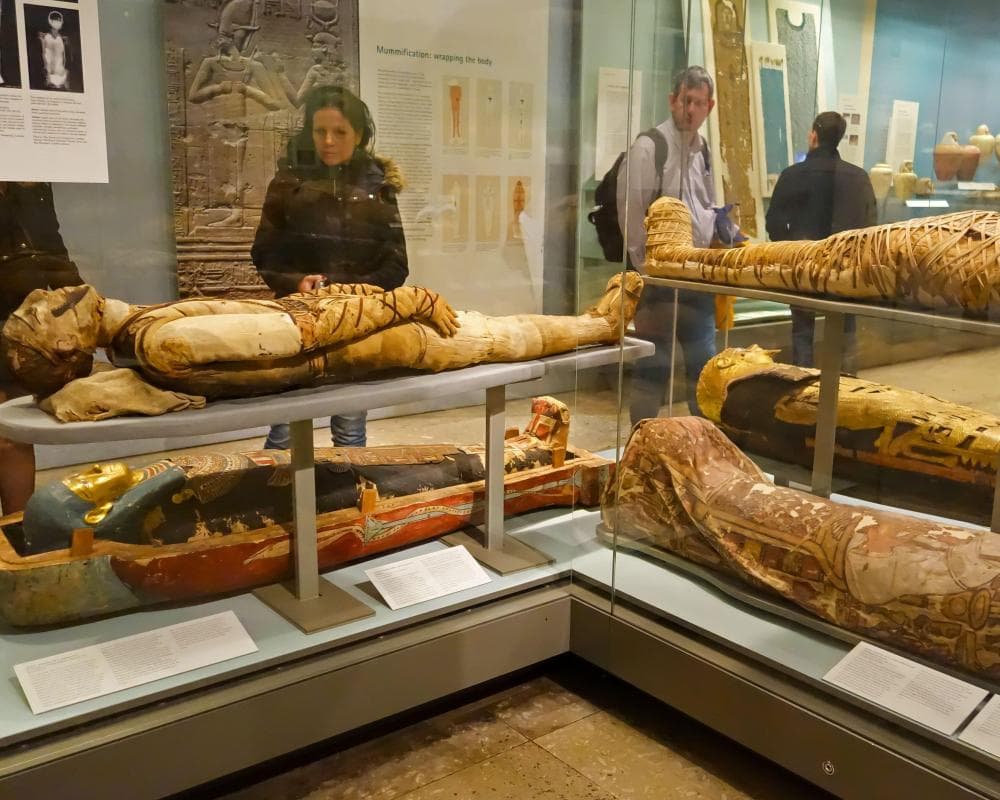
These remains include skeletons, body parts and preserved bodies, such as Egyptian mummies, as well as bones and bone fragments, hair, teeth, nails and remains incorporated into cultural artefacts.
Only 100 institutions provided an exact or estimated number of individuals in their collections, totalling about 79,334 people. The University of Cambridge did not disclose a number, explaining this was difficult because “many remains are commingled and fragmented”.
But a 2003 report stated that its Duckworth Laboratory held the remains of approximately 18,000 individuals. That would bring the recorded total to about 97,334.
A Cambridge University spokesperson said: “The vice-chancellor has written to the families and descendants to acknowledge their profound grief and the enduring uncertainty they have expressed.”
They added that the vice-chancellor had assured the descendants that the Duckworth Collection does not hold the remains of any of the first Chimurenga heroes from Zimbabwe.
Responses to freedom of information (FoI) requests, analysed by Dr Rebekah Hodgkinson, a researcher of colonial legacies in British history and heritage, and Dan Hicks, professor of contemporary archaeology at the University of Oxford, also show that about 5,700 items of remains are not recorded in a database. Some institutions only disclosed having several boxes of human remains of unknown provenance.
The FoI figures do not include human remains held in private collections, such as the Royal Collection, or by individuals.
The Natural History Museum (NHM) in London appears to have the largest collection, representing an estimated 27,500 individuals. The museum said it has 27,864 catalogue records of human remains, which may each represent more than one individual.
Furthermore, one individual may be represented by a single tooth, a small number of bones or up to thousands of bone fragments. The University of Cambridge holds about 20,110 items in its Duckworth Laboratory, of which about 9,399 originated from outside the UK.
The university said there are 1,070 catalogue entries referring to human remains in the Museum of Archaeology and Anthropology, of which an unspecified number were transferred to the Duckworth collections.
The Fitzwilliam Museum holds “a small number of human remains”, of which 14 records are on its public catalogue. The University of Bristol estimated that it holds “well over” 20,000 items, representing about 2,000 individuals.
The University of Winchester holds 30,488 items, but this represents only 150 skeletons excavated in the UK. The National Museums and Galleries of Wales hold 7,391 items, but did not disclose how many individuals this represents.
The Guardian found 166,124 items of human remains are recorded as originating from the UK, representing 63% of the known total. Of these, 122,747 are recorded as coming from UK archaeological excavations, which is less than half (47%) of all the human remains held.
The University of Winchester holds a quarter of the items of remains from UK excavations. There are also high numbers of UK excavated remains held by Armagh city, Banbridge and Craigavon borough council in Northern Ireland (6,400 items, representing only 10 individuals), and the University of Sheffield (3,972).
The FoI responses show there are 37,996 items of human remains recorded as originating from overseas, while the continent of origin of another 16,236 items is unknown. Ninety-seven institutions hold 28,914 items of remains recorded as originating from Africa, Asia, North and South America and Oceania.
Seventy-five institutions hold 11,856 items of remains recorded as originating from Africa. Of these, 6,223 (52%) are held in the University of Cambridge’s Duckworth Laboratory. Fifty-three institutions hold 9,550 items of remains originating from Asia, with the largest collection in the National History Museum.
Thirty-nine institutions collectively hold 3,252 items of remains from Oceania, with the largest recorded collection in the British Museum. Thirty-three institutions hold 2,276 items of remains from North America, with more than half (1,398) held by the National History Museum.
Twenty-nine institutions hold a total of 1,980 items of remains from South America, with most held by the National History Museum (1,141).
The 2003 report of the government working group on human remains said they were acquired in “a very wide range of circumstances”. Some remains were bought from or exchanged with museums abroad. Others, such as tsantsas (shrunken heads), were taken from, and traded by, Indigenous peoples.
The report also noted that many items of remains were acquired unethically by collectors, including as a result of “duress, deceit, unlawful removal and, very occasionally, murder”. Some bodies were taken from graves or from battlefields and hospitals, it added.
The working group said colonised peoples, such as Australian Aborigines and Native American peoples, were “often unable to prevent the removal of human remains because of the dynamics of power in colonial situations”.
Section 47 of the Human Tissue Act allows nine national museums, including the British Museum, the National History Museum, the V&A and the Science Museum, to remove human remains from their collections if they are reasonably believed to belong to a person who died less than 1,000 years before the section came into force.
However limitations do apply and some national museums are prevented by law from deaccessioning items in their collections unless, broadly, they are duplicates or unfit for retention, eg due to damage. These restrictions do not apply to local authorities and universities.