Loading...
Please wait for a bit
Please wait for a bit
Click any word to translate
Original article by Ariel Bogle
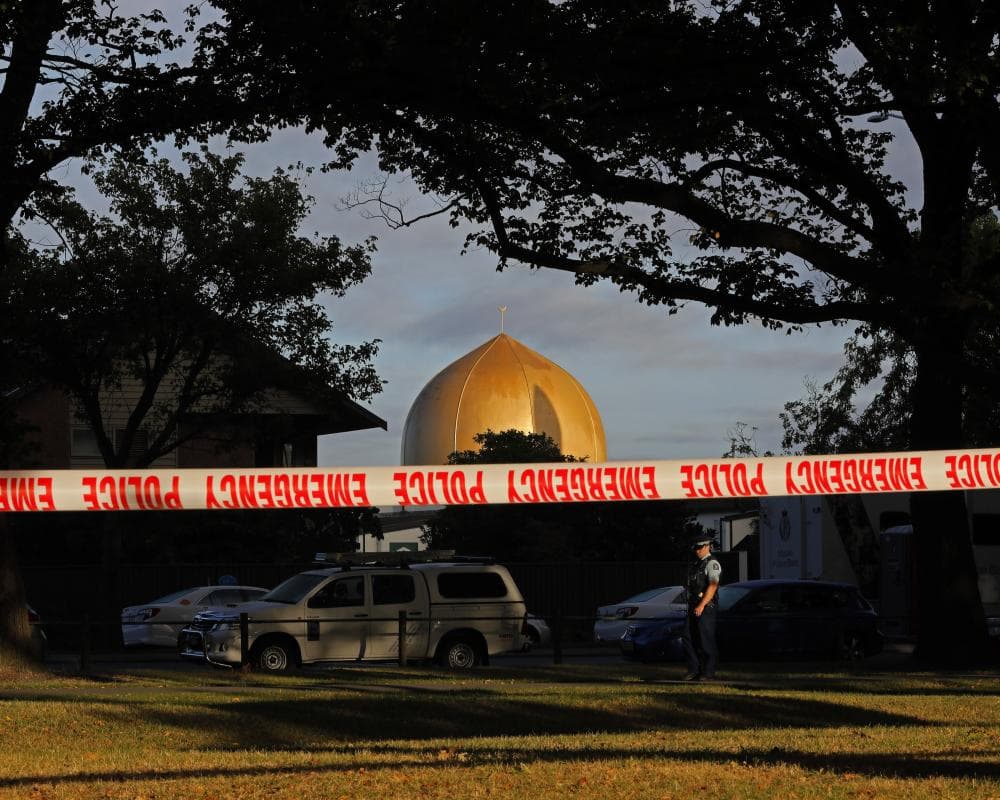
When he was 14, a boy in South Australia downloaded more than a dozen videos of the terrorist attack committed by an Australian man on two mosques in Christchurch, New Zealand, on 15 March 2019.
He was sentenced in 2025 for possessing documents with information for terrorist acts and extremist material, according to the magistrate’s remarks, which included having the shooter’s manifesto on his devices.
Two years earlier, a 16-year-old in South Australia was sentenced for several terrorism offences. The judge commented on his activities on the chat platform Discord, which included sharing material from Islamic State and “modern-day Nazi groups”, as well as death scenes, including images of the Christchurch killings that left 51 people dead.
As a journalist whose job includes tracking such cases, it is always confronting to see the Christchurch terrorist’s propaganda continue to surface in the Australian legal system, especially in cases involving young people.
Courts have heard about animated recreations of the Christchurch mosque shooting; about police finding the attacker’s video on a red USB storage device.
But this growing legal record and the continued reach of the Christchurch attack is at odds with how the man who committed the atrocity – an Australian – is confronted in his home country.
That is, hardly at all.
In 2020, the terrorist pleaded guilty to 51 murders, 40 attempted murders, and engaging in a terrorist act. He was sentenced to life imprisonment without the possibility of parole.
New Zealand held a royal commission. With a coronial inquiry still under way, New Zealand continues to confront what happened that day, and to ask what could have prevented it.
In Australia, meanwhile, there has been little public accounting of what, if anything, could have been done here to identify the terrorist or stop the attack – despite the terrorist’s known interactions with local far-right groups.
Australians care about what happened at Christchurch, said Rita Jabri Markwell, legal advisor to the Australian Muslim Advocacy Network, but the country’s leaders have failed to help us remember it together.
“To grieve what happened, together. And that grieving is so important, because it validates our shared humanity,” she said.
In the United States too, court records show the terrorist, his manifesto and the digital propaganda of his livestreamed attack on the Al Noor mosque and the Linwood Islamic Centre remain pervasive.
When Dallas Humber, one of the leaders of the white supremacist Terrorgram network, was charged in 2024 for soliciting hate crimes and the murder of federal officials, among other offences, the indictment detailed how she helped create a publication that celebrated “white supremacist attackers as heroes of the white race”.
Their so-called Saint Encyclopedia sat between two stills from the livestreamed massacre. Humber was sentenced to 30 years in prison, and Terrogram has since been listed as a terrorist organisation in Australia.
Hank Teran, chief executive of Open Measures, an open-source threat intelligence and social media research platform, also tracks the spread of such material.
He suggested the terrorist’s propaganda continues to be spread because it was intentionally framed under the guise of the “great replacement” conspiracy theory: the claim that there is a plot to take over white European countries with immigrants – or generally, “the other”.
“In the Christchurch context, that ‘other’ was … Muslims,” Teran said. “The Poway synagogue shooting in California a few weeks after the Christchurch shooting, it was Jews. The El Paso shooting in Texas, it was Latinx.”
For Teran, the public response can’t just be content moderation or de-platforming, or even age restriction on social media “and hoping it all goes away”.
“It’s more about disrupting that pipeline from passive exposure to active planning,” he said. “That typically requires some proactive education amongst parents, community stakeholders to understand the intricacies of some of these complicated communities that they’re likely not in on a regular basis.”
The significance of the Christchurch terrorist’s roots in Australia are still not properly recognised or addressed, said Jabri Markwell, even as the Muslim community continues to be painted by politicians and others in positions of power as a group “to fear or hate”.
“He was socialised in his attitudes growing up in Australia,” she said. “A lot of his online activity was in Australia. A lot of the hate that he developed happened in Australia. Those views are not shaped in a few weeks, they are shaped over years.
“There has been no accountability since that horrible day for the role that official language had in that Australian’s radicalisation.”
Alaa Elzokm OAM, imam of Elsedeaq Heidelberg mosque in Melbourne, will be travelling to Christchurch for a commemoration of the attack. He will be speaking with Sakinah Community Trust, which is led by widows, mothers and daughters who lost family members on that Friday in 2019.
Elzokm said dealing with Islamophobia in Australia, as with all forms of racism, is not only about showing sympathy but firm action so that everyone can feel safe when they worship.
“We don’t want the incident to be forgotten with time,” he said. “Words are no longer enough.”