Loading...
Please wait for a bit
Please wait for a bit
Click any word to translate
Original article by Hannah Ellis-Petersen South Asia correspondent
Hundreds were feared dead after a strike on a hospital treating drug users in the Afghan capital of Kabul, which officials from Afghanistan blamed on the Pakistani military.
Afghanistan’s deputy government spokesperson Hamdullah Fitrat said the death toll had “so far” reached 400 people, while about 250 people had been reported injured. He said most of those killed and wounded were patients undergoing treatment at the facility.
Pakistan rejected the claim as false and misleading and said it “precisely targeted military installations and terrorist support infrastructure” on Monday night, dismissing allegations it had hit a civilian target.
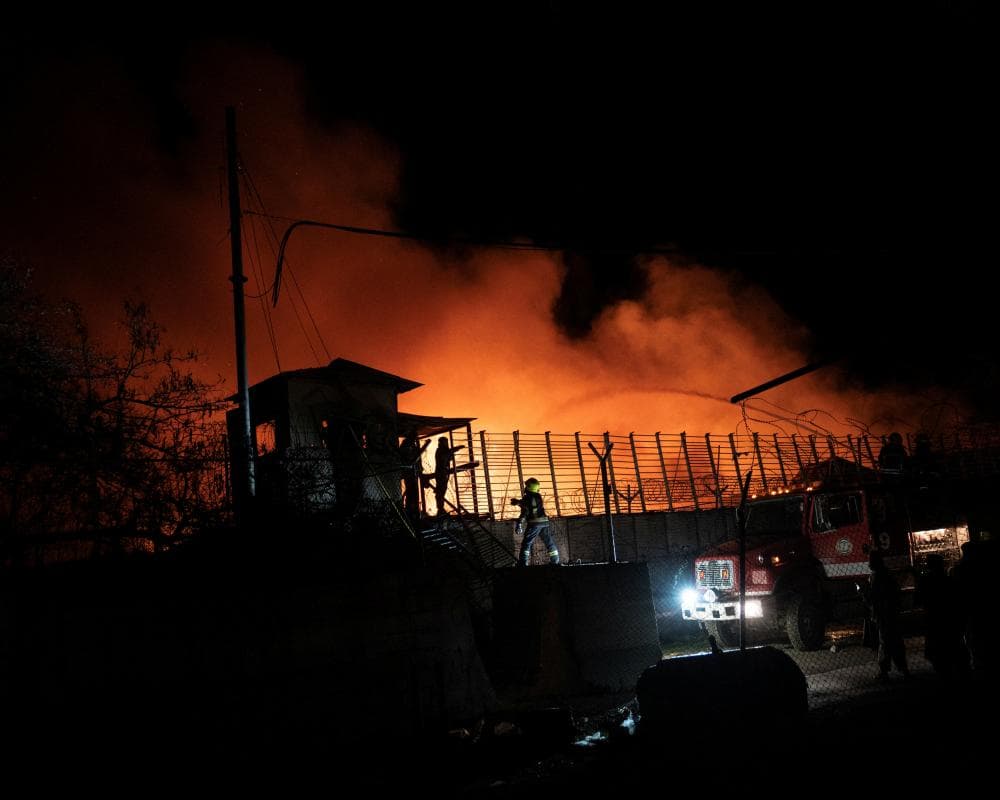
Sharafat Zaman, the Taliban’s health ministry spokesperson, said there were about 3,000 patients in the state-run Omid hospital at the time of the strike. Local television stations posted footage of firefighters struggling to extinguish flames among the ruins of a building.
“The whole place caught fire. It was like doomsday,” said Ahmad, 50, a security guard at the hospital. Of the 25 people staying in the hospital’s staff dormitory, he was the only one to survive.
The strikes were reported to begin around 9pm on Monday night. Omid Stanikzai, 31, a security guard at the drug treatment centre, told AFP the assault began with the firing of anti-aircraft guns.
“There were military units all around us,” he said. “When these military units fired on the jet, the jet dropped bombs and a fire broke out.”
Witnesses reported severe damage to the building, with sections collapsing after the strike. On Tuesday morning, only blackened walls and piles of debris remained while rescue teams searched the rubble for survivors.
Ambulance driver Haji Fahim said he had arrived at the hospital to find “everything was burning, people were burning”.
“Early in the morning they called me again and told me to come back because there are still bodies under the rubble,” he told Reuters.
“We were inside the wards when the explosion happened,” said Yousaf Rahim, a patient. “My bed was in the corner, and I suffered injuries to my leg and thigh. It was a horrific scene. Patients fell from their beds, screaming and running as fire and smoke filled the wards and rooms.
“Thick smoke and dust spread throughout the hospital,” he added. “Many people lay on the ground. Dozens died instantly, and the critically injured were pleading for help. I didn’t know what to do. I stepped over bodies and managed to escape outside.”
Dejan Panic, Afghan director of the Italian NGO Emergency, said it had received three bodies after the strike on Monday night and was treating 27 wounded.
The UN Special Rapporteur on the situation of human rights in Afghanistan, Richard Bennett, said he was “dismayed” by reports of the air strikes and civilian casualties.
“I urge parties to de-escalate, exercise maximum restraint and respect international law, including the protection of civilians and civilian objects such as hospitals.”
The alleged attack came hours after Afghan officials said the two sides had exchanged fire along their common border, killing four people in Afghanistan, as deadly fighting between the neighbouring countries continued to worsen.
This is the third time that Pakistan has targeted Kabul with missile strikes in recent weeks. In a post on X, Pakistan’s ministry of information said Monday night’s strikes “precisely targeted military installations and terrorist support infrastructure including technical equipment storage and ammunition storage of Afghan Taliban” as well as Afghanistan-based Pakistani militants in Kabul.
“This misreporting of facts as drug rehabilitation facility seeks to stir sentiments, covering illegitimate support to cross-border terrorism,” they added.
Islamabad has described the situation with Afghanistan as an “open war”. The fighting began in late February after Afghanistan launched cross-border attacks in response to Pakistani airstrikes inside Afghanistan. The clashes disrupted a ceasefire brokered by Qatar in October.
The conflict is the worst to break out between the former allies. Relations began to fray over the Afghan Taliban’s alleged role in giving a safe haven and sponsorship to radical militants, particularly the Pakistan Taliban, that have been responsible for a surge in deadly terrorist attacks in Pakistan. Afghanistan’s Taliban government have denied any involvement in cross-border terrorism in Pakistan.
China has attempted to play a mediating role in the conflict. Last week, they dispatched a special envoy to the region to try to ease tensions and bring the two parties back to the negotiating table, but without success.
The deadly fighting also continued along the volatile border areas. Afghan officials said four people, including two children, were killed and 10 other people were wounded in south-eastern Afghanistan in an exchange of fire on Monday.
On Sunday, Pakistan said a mortar fired from Afghanistan hit a house in north-western Bajaur district, killing four members of a family and wounding two others, including a five-year-old.
Haroon Janjua and agencies contributed additional reporting