Loading...
Please wait for a bit
Please wait for a bit
Click any word to translate
Original article by Carlos Mureithi in Nairobi
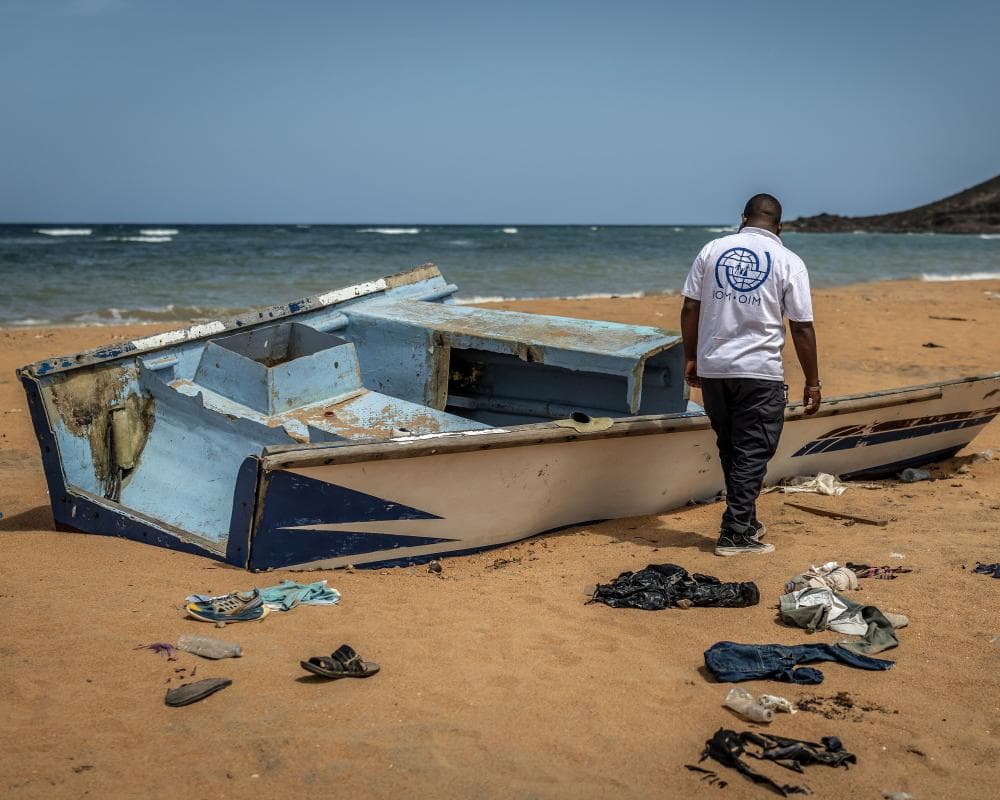
At least 139 people, including 15 children, have died after a boat carrying 305 migrants capsized off the coast of Djibouti, the International Organization for Migration (IOM) said.
Another 84 people are still missing after the incident, which, according to survivors, happened near Guhere, north of the fishing town of Obock, during the night of 8-9 October when the boat was travelling from Djibouti to Yemen.
Eighty-two people, all Ethiopian nationals, survived the capsizing, the UN agency said.
It described the incident as one of the deadliest boat disasters recorded on a migration corridor between the Horn of Africa and the Arab peninsula known as the eastern route.
“This is a devastating loss of life. Our thoughts are with the survivors and the families who have lost loved ones or remain without news of their relatives,” said Alexandre Coissac, the IOM’s chief of mission in Djibouti.
The organisation is providing healthcare, psychosocial, food and other assistance to 64 survivors at its Obock migrant response centre.
The IOM is working with local authorities to provide emergency assistance. Djiboutian authorities are continuing search and rescue operations, and local authorities are providing medical care to survivors and arranging burials for those who died.
The eastern route is one of the busiest migration paths in the world. Hundreds of thousands of people a year, mostly Ethiopians and Somalis, use it to reach Gulf countries, mainly Saudi Arabia. Some have been forced out of their communities by conflict and natural disasters, and others move to seek work and other economic opportunities.
The route accounts for most of the migratory movement from the Horn of Africa. The other main ones are the northern route to north Africa and Europe, and the southern route to southern Africa.
The eastern route is also one of the most dangerous globally, with some people dying from walking long distances in searing heat and others from the capsizing of boats that smugglers have crammed them on to in the Red Sea and the Gulf of Aden.
Coissac said: “This tragedy is a stark reminder of the dangers faced by migrants along this migration corridor as they seek economic opportunities.”
In 2025, more than 900 people died or went missing along the route, according to the IOM’s missing migrants project, while the number undertaking the journey increased by 18%. In March, nine people died and 45 went missing after a migrant boat capsized.
This week’s tragedy shows the movement is happening despite fighting between the Iran-aligned Houthi rebel group and Saudi-backed government forces for control of strategic heights on the Red Sea coast.
The violence has forced more than 3,800 people to cross to Djibouti to seek protection, according to the country’s office for assistance to refugees and disaster victims (Onars).