Loading...
Please wait for a bit
Please wait for a bit
Click any word to translate
Original article by Andrew Roth in Kyiv
The White House’s unilateral effort to negotiate an energy ceasefire between Russia and Ukraine has collapsed as Moscow sent a record swarm of drones overnight to attack infrastructure in central Ukraine and Kyiv appeared to resume strikes on Russian oil refineries despite warnings from Donald Trump.
Moscow accused Ukraine of launching a strike against a Russian oil refinery in the Ryazan region, its first since Trump abruptly declared an “energy ceasefire” that neither Russia nor Ukraine said they had agreed to.
Trump has demanded that Volodymyr Zelenskyy stop attacking Russian oil refineries, claiming it is the cause of a global rise in the price of diesel fuel.
An attack on two neutral ships in Romanian territorial waters at the mouth of the Danube River indicated that strikes against vulnerable commercial targets are set to expand.
The Romanian president, Nicușor Dan, said two Russian drones violated Romanian airspace and struck two chemical tankers, setting the ships ablaze. Rescue crews were searching for at least seven missing sailors.
“The situation in the Black Sea is serious,” he said. “Commercial ships are being attacked and sunk. Seafarers killed, injured and missing, very close to the shores of Romania and Bulgaria. This is unacceptable and it has to stop.”
Zelenskyy said on Wednesday he would resume strikes on Russian oil refineries, after briefly halting them to demonstrate that Ukraine was ready for peace talks. “The block [on attacking refineries] is out. We’re done,” he told the Financial Times. He also attacked a gap in US intelligence sharing as “dangerous”.
Images from Ryazan showed flames at the refinery, which regional officials said had been targeted by 69 drones and four Flamingo cruise missiles. Moscow claimed debris from a drone struck by anti-aircraft fire had hit the refinery and sparked the fire.
Ukraine also struck back at Russia’s military, hitting four Sukhoi Su-34 fighter/bomber jets and damaging two more, according to Zelenskyy. Ukraine’s military said it had used a Neptune cruise missile to strike an airfield in Russia’s southern Voronezh region.
“These very warplanes were ready to launch new attacks on Ukraine and were loaded with aerial bombs,” Zelenskyy said, publishing a satellite photo of the damaged airfield.
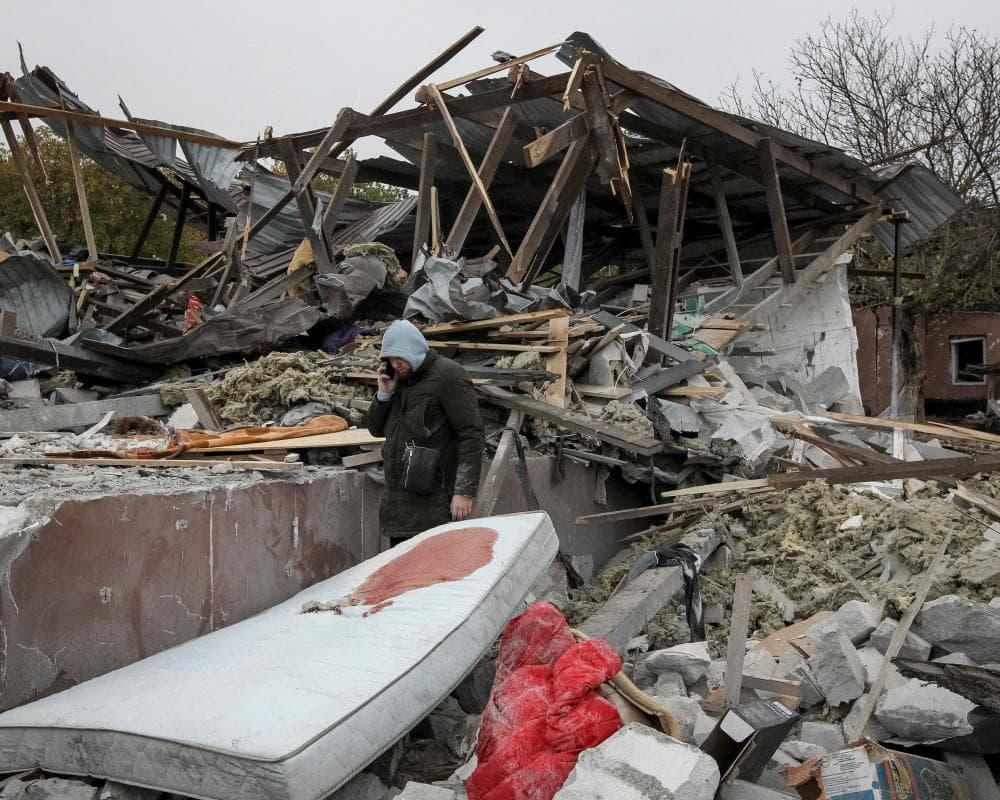
In Ukraine, more than 360 Russian drones targeted Kirovohrad, a central region that has been hit less hard than others closer to Russia, in attacks that killed three people and injured six.
“The enemy deliberately hit critical infrastructure, transport enterprises, logistics facilities and residential homes,” the regional governor, Andriy Raikovych, said in a statement.
Zelenskyy said Russia had attacked Ukraine with more than 850 Shahed drones at a time when the speed of Ukraine’s defensive capabilities was being “artificially restricted”, a reference to sudden limitations on Ukraine’s use of the Starlink and Starshield mobile internet terminals.
“It is obvious that Russia deliberately chose to escalate its attacks after receiving sanctions relief and seeing attempts to pressure Ukraine,” Zelenskyy said in a social media post on X, referring to a growing quarrel with the Trump administration.
“Ukraine needs steady support, above all in defending our skies. We need HONESTY from our partners about this war: It is important that everyone in America stand not with the aggressor, but with our efforts to protect lives, end this war, and guarantee security,” he said.
Trump suddenly declared an “energy ceasefire” last week, writing on TruthSocial: “Effective immediately, there is an ENERGY CEASEFIRE in the War between Russia and Ukraine. Both parties have agreed. Do not break it!”
Despite Trump’s claims, however, Russia continued to launch heavy strikes on Ukraine’s civilian infrastructure, using hypersonic and ballistic missiles to target key Ukrainian power plants, leaving cities including Kyiv without power and water for hours. Ukraine said it would not strike Russian oil refineries in the interim in order to show that it was ready for negotiations.
But the White House piled pressure on Zelenskyy to capitulate to Russia by threatening to cut programmes to deliver arms to Ukraine and to stop sharing US battlefield intelligence with Ukraine.
The US appeared to make good on some threats. Ukraine said it had not received advance warning from Washington of Russian missile strikes for several days this week. And on Wednesday, Ukrainian soldiers complained that their access to Starshield programmes controlled by the US military had been restricted, scuppering drone missions on the frontlines.
The feud between Zelenskyy and Trump has spun out of control over the last week. Trump, who believes his support for Ukraine should come with a degree of control over the country’s leadership, has said Ukraine should “get a new president”.
Zelenskyy, when asked on Thursday by Piers Morgan whether he felt betrayed, said yes. “It’s a pity that we are losing, we are losing a strong partner,” he said.
Musk, the head of SpaceX, which produces the Starlink terminals used by Ukraine’s military, has emerged as a leading critic of Zelenskyy in the US.
On Thursday, Musk denied throttling the Starlink systems and said they were controlled by the US government. But in a social media post commenting on a Zelenskyy statement that Ukraine would continue to fight until Russia’s defeat, he wrote: “And so the slaughter continues … Time for Zelensky to go.”