Loading...
Please wait for a bit
Please wait for a bit
Click any word to translate
Original article by Oliver Holmes South-east Asia correspondent
Singapore is threatening to prosecute companies responsible for some of the worst fires in years in neighbouring Indonesia, as the region grows increasingly frustrated with a persistent, acrid haze that could result in diplomatic relations fraying.
Lawrence Wong, the Singaporean prime minister, said his government was distributing masks to vulnerable citizens and working with countries in the region to deal with the smoke. “At the same time, we are looking into which companies may be responsible for the fires,” he said in a Facebook post on Thursday, adding that he was exploring the idea of “joint action with other countries”.
Singapore has no plantations or forests of its own, but several companies with concessions in Indonesia are reportedly based in the city-state.
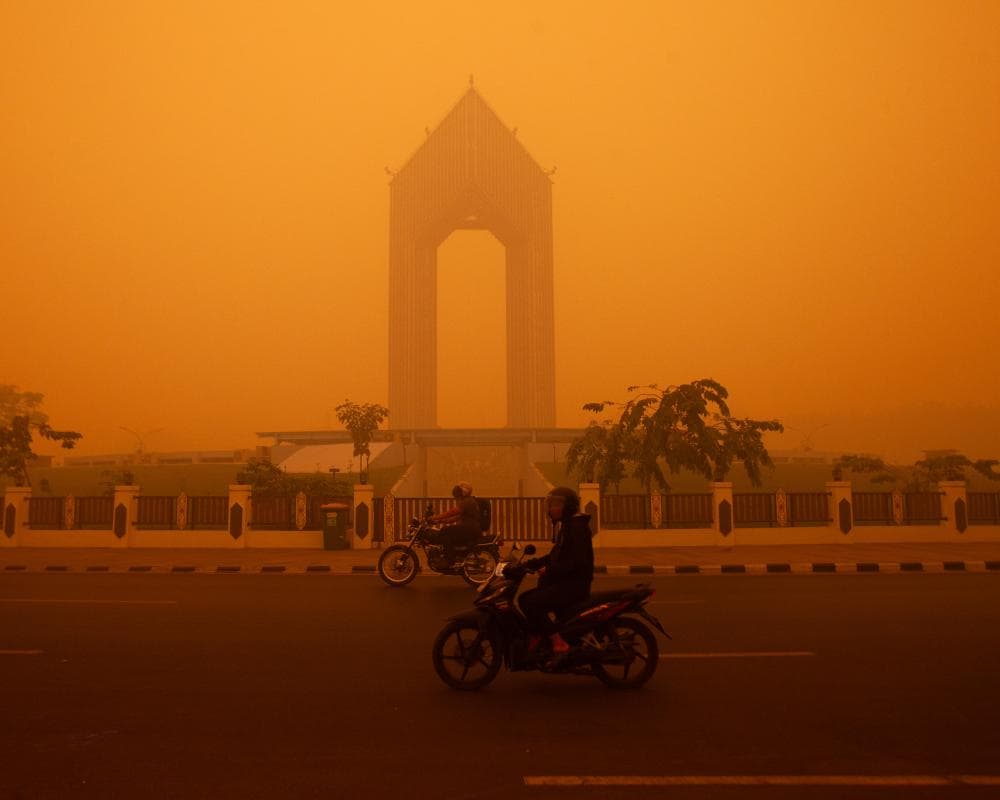
Haze is a persistent problem in Indonesia, but drier-than-usual conditions mean the thick smoke has been drifting into nearby Singapore, Malaysia, Brunei and Timor-Leste, and as far afield as the Philippines and Vietnam. Millions are affected, with school closures, respiratory illness spiking and air pollution indexes reaching unhealthy levels.
Malaysians and Singaporeans have been sharing images online of their cities, with skyscrapers disappearing into the smog, and frustration with the region’s most populous country is boiling over.
“Year after year, the haze comes back. It affects our health, closes schools, hurts businesses, and costs us billions,” a veteran Malaysian social activist and former politician wrote in a public letter this week. Lee Lam Thye said that real enforcement and “not just polite words” were needed. “Those responsible must be named, investigated, and punished. Clean air is not a favour. It is a basic right.”
While Indonesia regularly battles wildfires in the dry season, these blazes are the most intense in more than a decade and exacerbated by slash-and-burn practices to clear land for agriculture, including palm oil, of which Indonesia is the world’s largest producer.
Regional diplomats have offered to help Indonesia, but their offers have not always been immediately accepted. On Monday, an Indonesian official said the country was “still capable of handling it”. By the end of the week, Jakarta said it would accept assistance.
Such delicate diplomacy is routine among the region’s Association of Southeast Asian Nations (Asean), which is built on quiet engagement and non-interference. A meeting of regional foreign ministers in the Philippines is due next month, but that might be too late.
Nerves are fraying. In remarks that went viral on social media, Syahganda Nainggolan, the head of Indonesia’s government communication agency, hit back at the criticism on Saturday. “We don’t only send haze,” he said, “the oxygen in Singapore and Malaysia comes from our forests.”
Rare strong words came earlier this month from Anwar Ibrahim, the Malaysian prime minister. He said he had been in contact with Indonesia’s president, Prabowo Subianto, “who agreed to take the necessary steps, and this commitment must be followed by immediate and effective action from the Indonesian side to tackle the root causes of the haze”.
At the same time, pressure is growing on Jakarta to declare a national disaster, first from civil society groups but now also from Indonesian politicians and neighbours.
According to the Jakarta Post, Indonesian students have been holding protests across Kalimantan and Sumatra, demanding accountability and government action. In one video posted online, a child in a mask stands outside under a dark orange sky and calls on the local and national government to help. He holds a sign that says: “Save our little lungs”.
The country has dispatched firefighters and announced a crackdown on arsonists, but declaring a disaster would unlock funds and help thousands with medical expenses.
On Friday, the Indonesian forestry ministry said four firefighters were killed in a national park in Java.
Longtime onlookers say the issue is not just firefighting, but targeting the companies involved. In recent years, several attempts to take legal action against the companies exacerbating “transboundary haze” have failed, both locally and internationally, and posed a diplomatic minefield.
Haze is complex for Singapore and Malaysia, as they host companies working in Indonesia. A Greenpeace report published this month identified businesses based in Singapore and Malaysia that it claimed were linked to burning land in Indonesia.
Ultimately, Indonesians bear the brunt of the blazes. The health ministry has reported nearly 280,000 people in the country with respiratory infections linked to the fires, with children under five accounting for more than 60,000.
Michelle Dyonisius, a campaigner at Amnesty International Indonesia, said rights groups and civil society organisations were ramping up pressure on the government to declare a national disaster emergency. “It has been going on for months, affecting millions and millions of people, including abroad,” she said.
“I think there is a refusal to acknowledge the gravity of the issue at hand and also the belief that it is under control. But considering the gravity of the issue and all of the people affected, it seems quite naive to remain in that position.”