The far right’s rise is a wake-up call for Europe | Letters
Click any word to translate
Rafael Behr is right to warn that far-right parties, Maga ideology and Kremlin influence threaten Europe’s liberal democracies (European democracies are running out of time to turn away from the abyss, 9 September). But he overlooks the role of the liberal centre itself in creating the conditions for their rise.
While Thatcher, Reagan and their successors weakened trade unions and workers’ bargaining power, subsequent centre-left governments largely accepted these changes rather than reversing them. Under the banner of the “third way”, they expanded labour market insecurity, embraced financialisation and allowed private interests to penetrate ever deeper into public services. Social and economic inequality soared.
From the anti-globalisation movement and post-2008 anti-austerity protests to more recent pro-Palestinian mobilisations, the liberal centre has relied increasingly on policing, surveillance and legal restrictions to contain political opposition.
Decades of economic insecurity, shrinking democratic participation and declining faith in established institutions have created fertile ground for the far right. Kremlin money and Maga-style politics can only thrive because the centre has hollowed out the social and political foundations of liberal democracy. The Alternative für Deutschland’s success should be a wake-up call. History suggests the centre will hit the snooze button.
Benjamin Selwyn
Professor of international relations and international development, University of Sussex
• Jörg Lau rightly identifies the shattering of Germany’s postwar consensus in Saxony-Anhalt, but framing this as a sudden rupture obliterates decades of the political establishment’s structural rot (Friedrich Merz is now on borrowed time. But that’s not why the AfD’s triumph is seismic, theguardian.com, 8 September).
Germany’s crisis began with suppressing authentic reckoning. In the immediate postwar era, former Nazi party members were allowed to dominate state institutions. This continued until the 1970s. Willy Brandt, the “Historikerstreit”, the countrywide discussion of the series Holocaust and Goldhagen’s book Hitler’s Willing Executioners were short glimmers of real change. Then the institutionalised remembrance culture emerged. It was top-down – a state-directed ritual to appease European partners that reinforced the German “nanny state” mentality.
In eastern states like Saxony-Anhalt, this top-down moral framework was forced on a population thrust into the post-1989 market shock. Now, with an ageing demographic and economic stagnation straining the social safety net, this abandonment is coming due. The AfD feeds on these unhealed wounds, exploiting anger over stale ritualised politics and, once again, channelling economic angst into xenophobic nationalism.
Merz is a product of decades of missed opportunities. But the AfD is not an alien shock to the system. Mainstream parties built the void the far right now occupies. If mainstream political Berlin continues to ignore their systemic neglect, the collapse will be complete.
Dr Michael Esser
Los Angeles, California, US
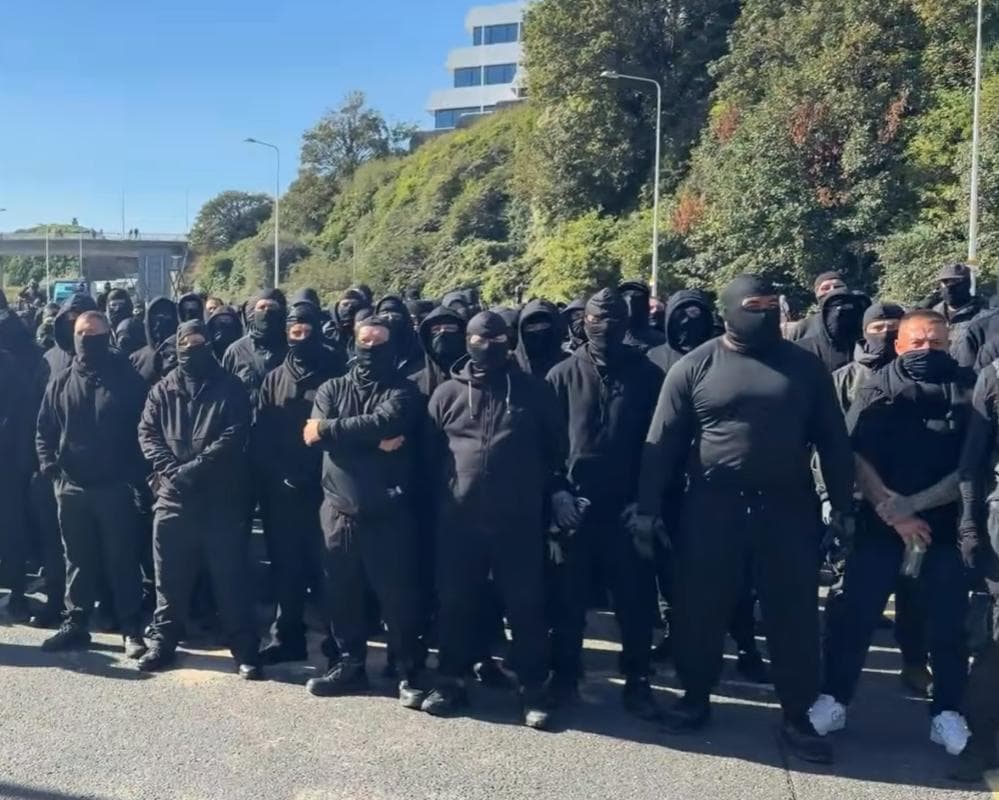
• The Public Order Act 1936 put a stop to the quasi-military demonstrations by Oswald Mosley’s blackshirts. Is there any reason why it cannot be used to put an end to thuggish demonstrations by intimidating, black-clothed and balaclava-wearing protesters on the streets of Dover and Portsmouth?
William Ward
London
• Have an opinion on anything you’ve read in the Guardian today? Please email us your letter and it will be considered for publication in our letters section.