Loading...
Please wait for a bit
Please wait for a bit
Click any word to translate
Original article by Raphael Rashid in Seoul
South Korea and Ukraine are locked in an escalating diplomatic dispute over who agreed what regarding the circumstances of two prisoners of war captured fighting for Russia.
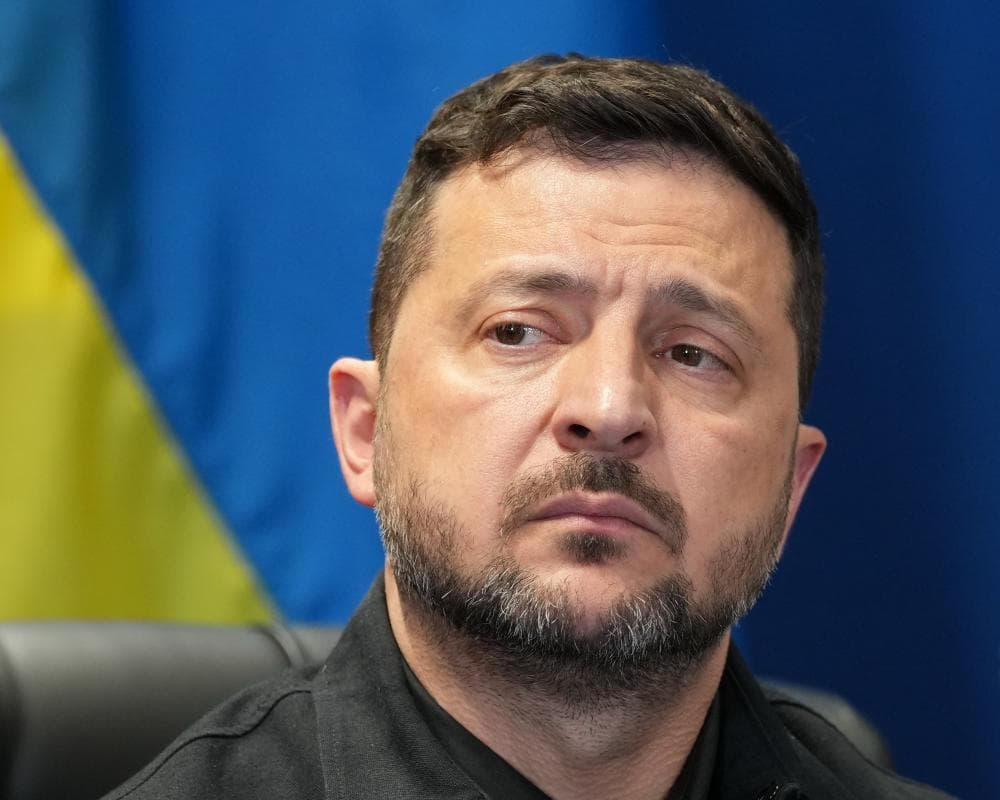
Ukraine’s president, Volodymyr Zelenskyy, told the UN general assembly last week that his country had “sent two North Korean prisoners of war to the Republic of Korea”.
Seoul had long said it would take the men. But rather than celebrate, on Monday South Korea summoned Ukraine’s most senior diplomat in Seoul and demanded an apology.
Here’s a brief guide to what has happened, and why.
Ukrainian forces captured the two men in Russia’s Kursk region in January 2025. They were among thousands of troops Pyongyang sent to fight for Moscow. Both men later said they wanted to go to South Korea, which regards North Koreans as its own citizens.
In July, Zelenskyy and South Korea’s president, Lee Jae Myung, agreed to resolve the issue while respecting the soldiers’ “free will”. The captured pair reportedly arrived in South Korea via a third country earlier this month.
North Koreans arriving in the South as defectors are usually questioned by the National Intelligence Service before being sent to a state resettlement centre, although sensitive cases can reportedly bypass the centre.
Seoul says Kyiv requested secrecy about the transfer, fearing domestic criticism for passing up the opportunity to exchange them for “a large number” of Ukrainian prisoners. South Korea says it agreed, citing the safety of the two men and their families as well as diplomatic and security considerations.
After Zelenskyy revealed the transfer in his UN speech, Lee said on X that Ukraine had broken a “non-disclosure agreement” and that this was regrettable. Zelenskyy’s adviser Dmytro Lytvyn responded on Facebook that there had been no such agreement, prompting accusations from Lee’s critics that the president, whose approval rating has hit a low of 37.9%, had lied.
Lee’s office called Kyiv’s statement “false” and said its conduct “seriously damages trust” between the two governments. On Monday, the foreign ministry summoned Ukraine’s chargé d’affaires, demanding an apology at governmental level.
South Korea’s foreign ministry told Ukraine’s envoy there had been a “clear agreement”. Asked by the Guardian the same day whether anything had been put in writing, the ministry said only that the two sides “had decided to handle it confidentially”. Ukraine’s embassy in Seoul did not respond to a request for comment.
No. South Korea’s unification ministry said it had “not identified any related developments so far” and would continue monitoring.
North Korea has glorified soldiers who killed themselves rather than be captured. The transfer of two who survived and chose the South is “a fatal matter” for Pyongyang, says Cho Han-bum of the Korea Institute for National Unification. Having built a “heroic narrative” around its troops, the regime is unlikely to disclose the transfer domestically, he says.
After Russia launched its full-scale invasion of Ukraine in February 2022, South Korea condemned Moscow’s actions, joined western sanctions and, in July, pledged a $100m support package. But it has kept the war at arm’s length, refusing to send weapons directly to Kyiv, in line with its practice of not supplying lethal arms to countries at war. Before the war, Russia was one of South Korea’s biggest trading partners. Lee’s government is also keen to improve relations with Pyongyang.
The row has turned that cautious support for Kyiv into open criticism, largely from Lee’s own camp. Kim Byung-joo, a Democratic party lawmaker, said there was “no reason or need” to support Ukraine and has urged the government to review its aid “immediately”.