Saudi-backed forces gather on Yemen border as separatists face pressure to pull back
Click any word to translate
Original article by Patrick Wintour Diplomatic editor
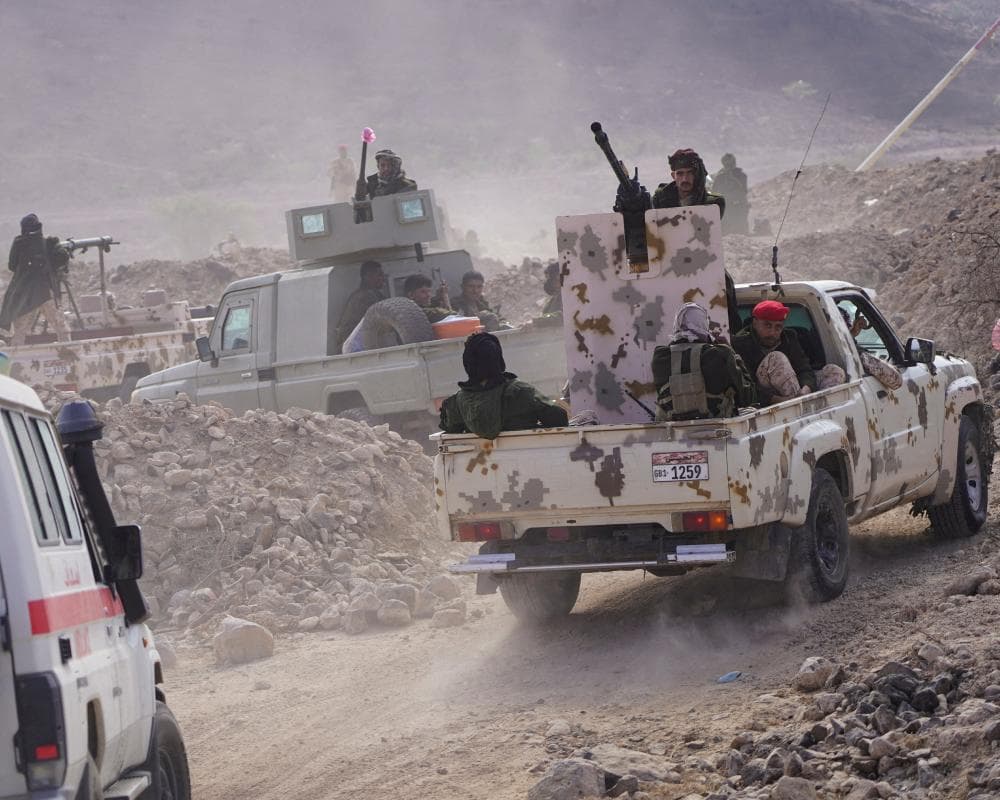
As many as 20,000 Saudi-backed forces are gathering on the border of Yemen as the separatist Southern Transitional Council comes under pressure to withdraw from the huge territorial gains it has made in the last month in the vast, oil-rich governorate on Hadramaut in eastern Yemen.
The STC is using its advance to raise its demand for Yemen to revert to two states, north and south, as it had been until 1990.
The STC, which is backed by the United Arab Emirates, has been warned there is a possibility of direct airstrikes by Saudi forces, a development that would threaten key STC positions. Well-paid troops, mainly drawn from a Saudi-funded militia called the National Shield, have been gathering in the al-Wadeeah and al-Abr areas close to the Saudi border.
The STC has been reassured it retains the support of the UAE, raising the prospect of future clashes between troops loyal either to Saudi Arabia or the UAE.
The UN secretary general, António Guterres, predicted a full-scale resumption of fighting in Yemen could have consequences across the Red Sea, the Gulf of Aden and the Horn of Africa. He urged all parties in Yemen, including external actors that “unilateral actions will not clear a path to peace, but only deepen divisions, raise the risk of wider escalation and cause further fragmentation”.
“The sovereignty and territorial integrity of Yemen must be preserved,” he said on Wednesday, adding that nearly 5 million Yemenis had been forced to flee their homes owing to a lengthy civil war between the Houthis in the north and the now badly fracturing forces in the south.
The STC, in talks in the stronghold of Aden last Friday, said it would not obey a Saudi demand to withdraw its forces, which first entered Hadramaut a fortnight ago and then moved into the neighbouring governorate of al-Mahra, bordering Oman. It has also tightened its grip by sending troops into a third governorate, Abyan.
The sudden and unexpected STC advance stunned Riyadh, which had previously been the dominant player in Yemen. The UK, along with most of the international community, favours retaining Yemen as one country, but this requires the Houthis that dominate in the north coming to an agreement to share power with the south in a federal government. The STC is proposing that an independent south could become an anti-extremist bulwark protecting the Red Sea shipping lanes from Houthi and al-Qaida terrorism. The STC’s difficulty is that by no means all southern groups want Yemen to divide, but it will have to see if it can form a coherent government.
Farea al-Muslimi, a research fellow on the Middle East programme at the Chatham House thinktank, said: “So far Saudi Arabia has tried strategic patience, but I do not think that will last. It does not mean it will necessarily go into a direct war with the UAE in Yemen. But Yemen is a poor country with too many young fighters and too many proxies. Both sides are putting all their cards on the table.
“While much of what that has happened is not surprising for Yemen observers, the optics is too humiliating for Saudi Arabia. This is playing out on its borders, not those of the UAE.”
With the capture of the two governorates, the STC can claim it controls all the land that made up the old southern state of Yemen. Hadramaut spans 36% of Yemen’s territory, possesses the country’s largest oil reserves and includes key ports such as Mukalla, al-Shihr and the oil terminal at al-Dhabba.
The leadership of the Islah party, the largest political party in Yemen and which is opposed to secession by the South, told the Guardian it believed the calls from within Hadramaut for the STC to withdraw may soon become overwhelming.
On a visit to London, Islah’s acting secretary general, Abdulrazak al-Hijri, said: “We hope this can be resolved peacefully, but what happened in Hadramaut is a dangerous development and negatively impacts on the legitimate state institutions. Irregular forces not under state control have invaded stable and secure governorates throwing everything into chaos”. He said Hadramaut had a long history of independence and all the major political and tribal leaders in the governorate wanted the STC to leave.
He added widespread reports were circulating of STC human rights abuses, including theft of property and mass arrests. “Saudi Arabia is determined that these forces must leave and return to their own places. The legitimate government is being fragmented and the only beneficiary of these intensified divisions will be the Houthis,” he added.
Hijri claimed the Houthis “do not see Yemenis as a people, but rather see them as a group of slaves over whom they are the masters”.
Islah says it is a civilian party and has no connection with the Muslim Brotherhood, contrary to UAE claims. Since 2022 the STC had been uneasily sharing power on a Saudi-organised presidential leadership council with a variety of other groups, including the Islah party.