Loading...
Please wait for a bit
Please wait for a bit
Click any word to translate
Original article by Patrick Wintour Diplomatic editor
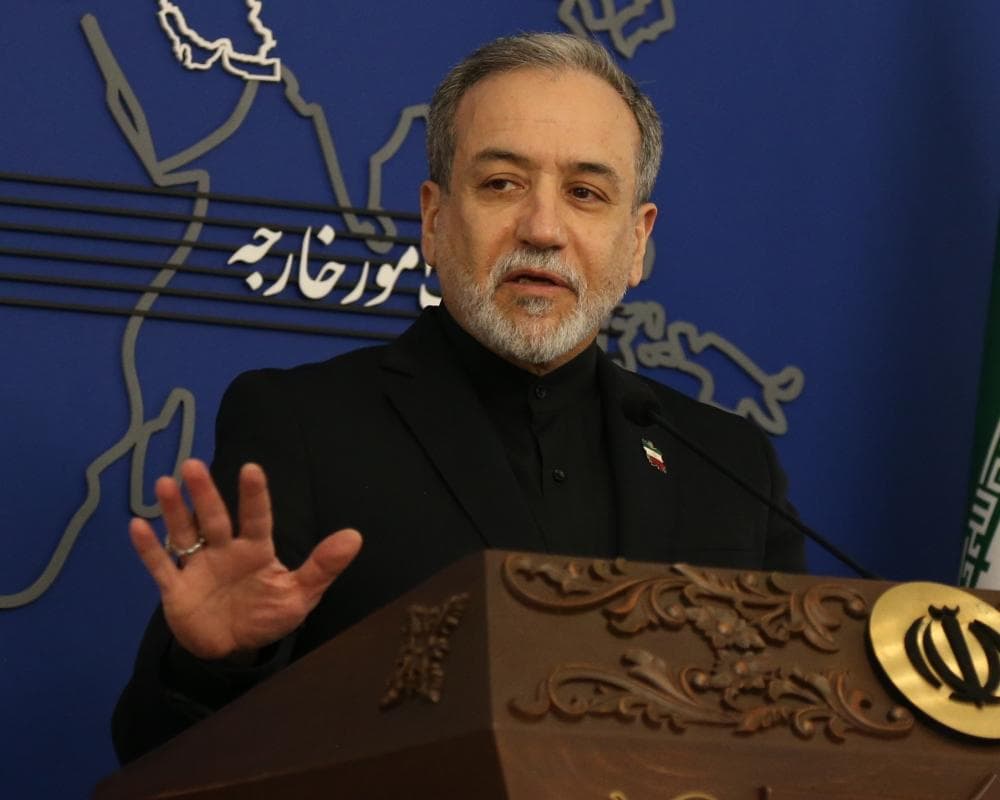
In a move designed to increase pressure on the US to make compromises in its conflict with his country, Iran’s foreign minister, Abbas Araghchi has been briefing European capitals on the nature of the offer Iran had been willing to make about its stockpile of highly enriched uranium and future stewardship of the strait of Hormuz during the weekend talks in Islamabad.
After the inconclusive talks, Araghchi held phone briefings with the French and German foreign ministers, Jean-Noël Barrot and Johann Wadephul, as well as the Saudi, Omani and Qatari foreign ministers.
It is understood he stressed that Iran did not regard the Pakistan-led process as exhausted even after 21 hours of intensive talks.
Europe has been sidelined on the Iran file by Donald Trump for more than a year, as the US president focused on working with Israel, while Tehran has largely dismissed European governments, seeing them as inveterate creatures of America. But the signs of the deepening transatlantic split, and the intense pressure being applied to European economies, has led Iran to review its stance on Europe as a potential lever on Trump.
European countries, to show some respect for Trump’s demand that they provide military support for his war, have focused on building a defensive non-belligerent naval alliance to police the freedom of navigation in the strait of Hormuz, but only after the conflict ends. The plan requires delicate talks about rules of engagement, likely to be drawn from the EU’s experience in the Red Sea fending off the Houthis during Operation Aspides.
The French president, Emmanuel Macron, announced a further joint conference with the British to discuss the proposal with allies, the third such meeting since the initiative was launched. Any plan will require discussion with Tehran, including on its plan to impose tolls.
Trita Parsi, director of the Quincy Institute, said: “It is likely the Iranians are going to see if it is possible to move the Europeans at best in their direction, compared to where they have been before, which from the Iranian perspective has been very subservient to the US, and, if not, to see if there is a deeper split in Europe in which not all the states have to follow the line set by Germany, France or the UK.
“Iranians in particular are trying to establish quickly this mechanism at relatively low toll fees and to get as many countries as possible to agree to it.”
In the short term, Iran will be urging the countries with minesweeper equipment – Germany, the UK and Italy – to resist pressure from Washington to start clearing mines from the strait since Tehran will see this as an action as in support of Trump’s illegal blockade of Iranian oil ports.
The removal of the largely unmapped mines would be perilous in a benign, peaceful environment, but even more fraught if the operation was being carried out under attack by Iranian drones. British ministers said the issue of Iranian mines would be discussed at the Franco-British conference.
In the case of Italy, Trump’s attack on the pope, coupled with the defeat of Viktor Orbán in Hungary, makes it politically fraught for the populist rightwing Italian prime minister, Giorgia Meloni, to accede to the US pressure. Her close relationship with Trump and her support for Israel are buckling.
Tehran has not expressed a definitive view of the French-British initiative, partly since it is not still clear what it entails, or what Iran’s long-term plan for the strait would require, including which ships would pay fees, on what legal basis, at what price, or in which currency.
A bill before the Iranian parliament proposes that new tolls would apply to all commercial traffic, and not just oil tankers. It is possible the country would demand payment in cryptocurrency as a way of avoiding US sanctions. The strait of Hormuz alone accounts for 11% of global maritime trade and a third of all seaborne oil.
Malley said he did not think a toll system would be sustainable, but added: “Iran has discovered a new means of deterrence which is more effective than acquiring a nuclear bomb and that is closing the strait of Hormuz.” The UK has insisted that freedom of navigation means navigation remains free.
Araghchi was highly critical last year of Europe’s refusal to stand up to Trump when the E3 powers – France, Germany and the UK – permitted UN sanctions to be reinstated due to Iran’s alleged failure to meet its commitments on access to its nuclear sites.
But the Iranian foreign ministry has watched as the split between Trump and Europe has grown over the Middle East, extending to the US’s commitment to Nato, and whether Israel should be required to join the ceasefire, as Iran demands, by ending its attacks on Hezbollah in southern Lebanon.
Iran feels a strong obligation to protect Hezbollah from Israeli assaults, and the EU Commission president, Ursula von der Leyen, said it was vital that the war in Lebanon be included in any ceasefire talks. She said on Monday that the crisis was costing €22bn in raised fossil fuel energy bills.
On Iran’s nuclear program, senior officials were stressing that the country had been willing to show its good faith by diluting, not handing over to a third party, its stockpile of highly enriched uranium. Ali Nikzad, deputy speaker of Iran’s parliament, said: “The Islamic republic was ready, to prove its good faith, to dilute – not hand over – 450kg of enriched uranium.”
He added: “A consortium was to be formed for dilution, with the participation of Iran, the United States and Saudi Arabia, but they backed out of this agreement.”
But European diplomats said it remained a puzzle how to persuade Iran to make concessions on its nuclear programme, including a long-term pause in its domestic enrichment programme, when it has no means of ensuring US sanctions relief would be permanent. Some diplomats argued the strait could be offered as a legitimate source of income, or compensation, if the US resiled on sanctions relief.
Nitya Labh, a member of the Chatham House international security programme, argued a new regime may have to be developed for the strait, adding: “Iran must be party to any agreement over the strait.”
She wrote that this would probably require structured sanctions relief and management of the strait. Joint verification for transit and naval escorts of ships through the region involving Iran and other regional partners was likely. She conceded that bringing Iran into a structured framework that includes specific maritime proposals and new multinational coordination would not be a quick fix, but the foundation for stability.
Labh said: “A future agreement must go further and define not only the nuclear constraints Iran would accept but also the political and economic relationship it would gain in return. It must do so in terms concrete enough to gain domestic support on all sides.”
More broadly there is a mood inside Europe to be more assertive with Trump, even if it risks undermining the grand bargain they thought they had struck with him over support for Ukraine. Sophia Besch, a senior fellow at the Carnegie Endowment for International Peace, said it was in Europe’s interest to be more critical of the US’s conduct in Iran. She said: “If we want to try to keep up the permissive consensus for European rearmament, if we want to try to keep voters on board with all this money that we’re putting into our defense, we cannot follow military adventurism and unilateral wars.”