Loading...
Please wait for a bit
Please wait for a bit
Click any word to translate
Original article by Martin Belam
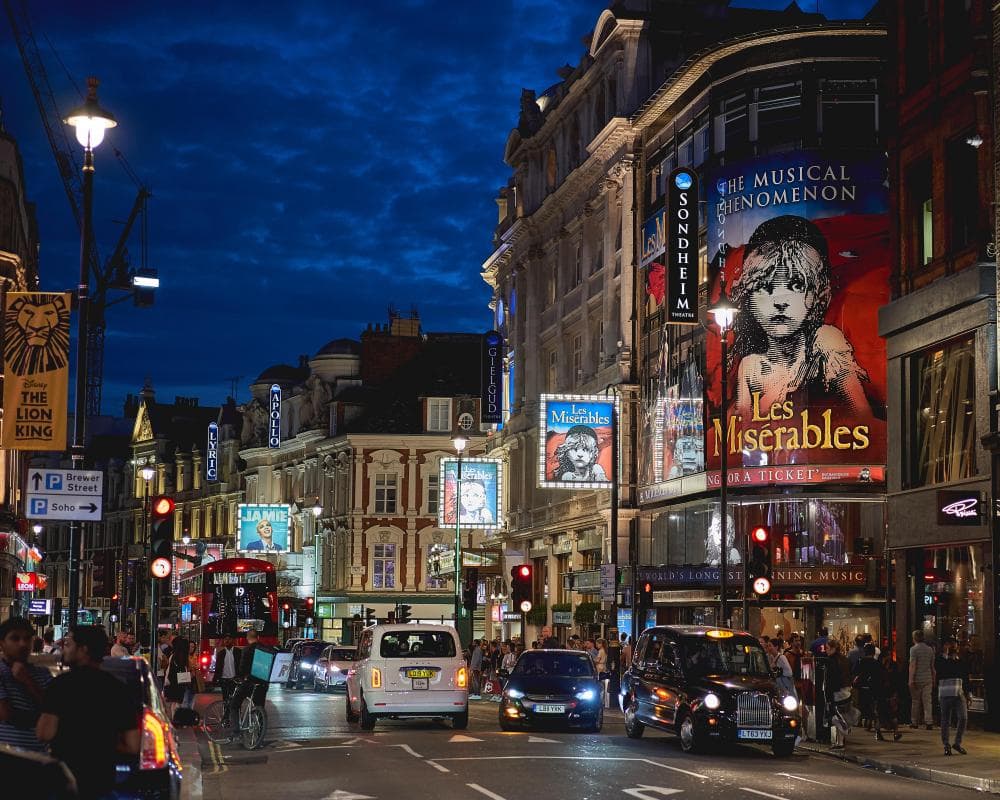
Good morning. We all enjoy a great night out at the theatre. Last year, 37 million people visited theatres in the UK. And while London may sometimes feel like New York City’s less cool cousin, the West End welcomed 3 million more fans than Broadway in 2025.
When you look at the star-studded lineup at last weekend’s Olivier awards, with Rosamund Pike, Adjoa Andoh, Elaine Paige and David Harewood among those lighting up the red carpet at London’s Royal Albert Hall – you can see why audiences jump at the chance to witness live performances.
But behind the headline numbers of bums on seats and money splashed at the bar, there are growing concerns about the future of the industry – not least the impact of the cost of living on the affordability of a night out, and the escalating cost of staging shows.
For today’s newsletter I spoke to the Guardian’s chief theatre critic, Arifa Akbar, about the state of British theatre in 2026 – where it is thriving, where it is struggling, and why it still matters. First, the headlines.
Middle East crisis | Donald Trump has announced a 10-day ceasefire in Lebanon to be followed by a meeting between Israeli and Lebanese leaders next week, in a deal that it is hoped will bring progress toward a parallel peace agreement between the US and Iran.
UK politics | Peter Mandelson failed his security vetting clearance but the decision was overruled by the Foreign Office to ensure he could take up his post as ambassador to the US.
Russia-Ukraine war | Russia has carried out its deadliest attack against Ukraine this year, killing at least 17 people and injuring more than 100 in a wave of drone and missile strikes across the country.
UK news | A teenager and two men have been arrested after an attempted arson attack at the offices of a Persian media organisation in north-west London, the Metropolitan police said.
UK news | A church warden who was jailed for life for the murder of a university lecturer has had his conviction quashed at the court of appeal and a retrial has been ordered.
British theatre in 2026 is popular, culturally vital, and in places creatively strong – but financially being slowly squeezed to death. That was the headline finding of a joint report on the industry by UK Theatre and the Society of London Theatre, which was published earlier this year. That tension – between strong audiences and fragile economics – is at the heart of the sector right now.
Along with the 37 million people who who enjoyed shows in the UK last year, the report says that the industry has other, wider, positive effects: it supports 100,000 jobs in the UK and every £1 spent on a theatre ticket generates a further £1.40 in local economic activity. West End revenue topped £1bn last year. That all sounds healthy, but there is a caveat. The report notes: “Real-terms ticket prices have fallen since 2019: theatres have absorbed inflation rather than pass[ing] it on fully, sustaining access at the cost of margins.” It suggests that a third of organisations in the sector forecast operating deficits this year.
It concludes: “Demand is strong. Talent is abundant. What is at stake is scale, access, and long-term resilience.”
***
Big pressures
Arifa says the pressures are showing up most clearly in how theatre is being made and sold. One of the most striking trends, she says, is the dominance of celebrity casting. “It’s not the occasional Hollywood name any more,” she says. “It’s dominating theatre – and bleeding into subsidised theatre too.”
The effect of this, she argues, is being felt across the industry, with trained theatre actors increasingly squeezed out of leading roles by big names from film and television. “Some are having to leave the industry. Some are doing second jobs – delivery work, whatever. Ten or 20 years ago, a non-celebrity theatre actor could headline a cast. Now, to get people booking, you need a big name,” she says.
“It leaves a lot of theatre actors hostile and upset,” she adds – and it changes the theatre-going experience. “I saw Sarah Jessica Parker and Matthew Broderick in a show – people clapped when they walked on. There was actual gasping. It was like a zoo – people had come to see her, not the play.”
At the same time, ticket prices in the commercial West End have quietly shifted into a new – more expensive – normal. “We used to make a fuss about a ticket costing £350,” Arifa says. “Now nobody seems to bat an eyelid.”
The rising cost raises serious questions about access and representation. So who can afford to go to the theatre and who is being priced out?
***
Safe bets and creative risks
There is a line in The Theatre, a 1993 song by Pet Shop Boys, about a homeless person begging for change late at night “from a patron of the arts … or at least The Phantom of the Opera”. It is a knowingly snooty take on populist theatre – but also a reminder that this end of the market has always been a part of the West End.
Even if such shows have long since existed, Arifa worries, though, about a more recent loss of range in the industry. “There’s a sort of fever,” she says, as producers try to bring audiences back after the pandemic. That can mean safer choices – revivals, adaptations of films such as Mrs Doubtfire and The Devil Wears Prada –and what she calls “nostalgic” crowd-pleasers and “prosecco musicals”, where producers bank on stag and hen parties pitching up en masse for a sing along.
But it is not all about retrenchment. Alongside the commercial pressures, there are still signs of creative risk and renewal. Arifa points to the rise of immersive theatre, particularly among younger audiences who “want to be part of an experience rather than just watch”. Some of that work can feel derivative, she says – but when it works, it can be genuinely powerful. She name-checks I Do, a show where the audience move around the rooms of a hotel watching the preparations for a wedding. She also highlights producers such as Nica Burns, whose Soho Place theatre is the first new-build in the West End for decades.
But theatre will always rely on revisiting old stories, and when it does, Arifa argues, it should do so with purpose. She cites recent productions of Arthur Miller plays such as All My Sons, as an example of theatre based on past texts that still manage to speak to the present.
That production of All My Sons could, she says, “have been about Grenfell, or PPE scandals – corruption, people dying because of it”. She notes that one of its stars, Paapa Essiedu, has argued that if you revive something, it should feel relevant, rather than simply returning to familiar classics for their own sake.
In a separate interview, Mark Gatiss makes a similar point about the Royal Shakespeare Company’s upcoming production of Bertolt Brecht’s The Resistible Rise of Arturo Ui, noting that despite being written in 1941, its depiction of populist politics feels strikingly contemporary.
***
Cultural power
For all the challenges, Arifa is clear that British theatre remains a space of real cultural power. On stage, she says, there has been visible progress in representation, with more diversity and more disabled performers than in previous decades – even if that progress has yet to be fully reflected behind the scenes. Almost three quarters of of respondents to the UK Theatre and Society of London Theatre’s report said that their programming reflects the diversity of the communities they serve, which they achieve through targeted outreach, partnerships with schools and community groups, and sustained investment in diversifying workforces.
But there are also concerns that progress is uneven. Studies suggest the gender gap in the industry has stalled or even worsened, a reminder that gains can slip back under pressure. In the UK cultural sector as a whole, for every £1 earned by men, women were paid 85p in 2023, the second successive year the pay gap in the industry had increased. “That’s something we need to watch,” says Arifa.
***
Art for all
At its best, though, theatre can still do something few other art forms can: provoke, unsettle and stay with an audience long after the curtain falls. Dramas exploring the theme of justice picked up several awards at the Olivier’s at the weekend, even if the sticky paws of Paddington: The Musical dominated the prizes.
“Theatre can leave you thinking about issues for days afterwards,” Arifa says. That enduring impact matters, particularly at a moment when the wider economics of the industry are under strain. For Arifa, though, the case for theatre goes beyond economics.
For all the celebrity casting, rising prices and creative compromises, it still occupies a unique place in public life. “Despite everything, theatre still matters. It’s our congregation,” she says.
Stuart Heritage writes movingly about taking his son to get glasses for the first time, and the memories it brings back from his childhood. Patrick, newsletters team
Jonathan Liew describes the men’s 2026 Fifa World Cup as “a grotesque experiment in vulture capitalism” as he looks at price-gouging on the cost of physically getting to the matches. Martin
If you thought training to run a marathon was hard work, how about trying to train to run one entirely underground in a Swedish zinc mine. Patrick
Emily Dinsdale speaks to five photographers – including Anton Corbijn – who are exhibiting at Japan’s epic photography festival: Kyotographie 2026. Martin
Gaby Hinsliff is thoughtful on the wider implications after Judge Sir Adrian Fulford highlighted the role of Axel Rudakubana’s father and mother in the run-up to the Southport stabbings. Patrick
Football | Morgan Gibbs-White’s 12th-minute goal, shortly after Porto’s Jan Bednarek was sent off, was enough to give a nervous Nottingham Forest a 1-0 win and a semi-final against Aston Villa. Crystal Palace were beaten 2-1 in Fiorentina but progress to the Europa Conference semi-final with a 4-2 aggregate victory.
Football | Alex Manninger, the former goalkeeper who helped Arsenal win the Double in 1998, has died in a car accident in Austria, aged 48. According to local reports, Manninger’s car was in a collision with a train on a level crossing on the Salzburg local railway in Nussdorf am Haunsberg on Thursday morning.
Golf | LIV Golf has insisted the tour will to continue “uninterrupted and at full throttle” this season amid claims that its Saudi Arabian backers will imminently withdraw having funded the breakaway league to the tune of $5bn (£3.68bn).
Our critics’ roundup of the best things to watch, read, play and listen to right now
TV
Beef | ★★★☆☆
The second series stars Carey Mulligan and Oscar Isaac as a married couple who oversee the running of a luxury country club. Josh is the general manager (with a penchant for gambling and camgirls) and Lindsay is the interior designer-cum-hostess (with a penchant for restoring the social status she had as a posho in her native England and an icily ruthless streak). They are both frustrated with where life has led them – so close to real money, but so far from having it themselves. Overall, Beef feels like an entertaining potboiler rather than the dark march towards truth that the first series was. Not enough meat on the bones. Lucy Mangan
Music
Massive Attack: Boots on the Ground (ft Tom Waits) | ★★★★☆
Even by the standards of a band noted for their unhurried approach, Massive Attack’s recorded output has dwindled to a trickle in recent years. Tom Waits’s presence on Boots on the Ground underlines their continued ability to attract blue-chip collaborators. Your attention is drawn by Waits’s voice – at its most Beefheartian here – and what he’s saying. Apparently sung from the viewpoint of a boorish, violent, unbound figure of authority – the type of aggressor and warmonger so emboldened of late – the lyrics veer between the surreal and the distressing. Clearly, this isn’t a piece of music destined to elbow Massive Attack’s greatest hits – Teardrop, Safe from Harm, Unfinished Sympathy – from people’s affections: it is dark, disturbing, ominous, with a distinct streak of WTF?. Which makes it music perfectly fitting for the times. Alexis Petridis
Games
Pragmata | ★★★★☆
Despite its sparkling near-future setting, Pragmata succeeds because it feels like a throwback to gaming’s recent past. It’s a beautifully made, heartfelt single-player adventure with a novel combat idea, and it prioritises storytelling and atmosphere. Where attempts at heartwarming games often come across as off-puttingly saccharine, Pragmata pulls off its father-daughter relationship with surprising deftness. This is Capcom’s belated, surprisingly soulful first entry into gaming’s sad dad genre. Tom Regan
Film
Miroirs No 3 | ★★★★☆
German director Christian Petzold delivers an elegant and disquieting psychological mystery of the sort that doesn’t interest today’s British film-makers, though this one appears to have more than a taste of PD James or Ruth Rendell. It is about family dysfunction and grief and unnervingly lays out the aftermath of a sudden violent trauma. The faint suggestion that the film itself has gone into a kind of shock could have layered the proceedings with something infinitesimally dreamlike and unreal. What makes this film interesting is that it isn’t heading for a macabre twist or chilling denouement but something positive and even redemptive. It is highly diverting, elegantly contrived study of an unhappy family group and the cuckoo in its nest. Peter Bradshaw
“Revealed: Mandelson failed security vetting for US role,” is the lead story at the Guardian on Friday. “Starmer on brink as his Mandleson ‘lies’ are exposed,” says the Mail. “Mandelson hired after failing to pass vetting,” has the Times. “Starmer accused after revelation that Mandelson failed vetting for US post,” runs the FT, as the i says “Starmer in peril again as No 10 turns on the Foreign Office,” and the Express: “‘Starmer must resign after blatant lies to MPs’”.
“Putin’s Brit hit list revealed,” is the splash at the Mirror. “Posh breaks Brooklyn silence,” is the lead story at the Metro. “Footie ace killed in train horror,” has the Star. Finally, the Sun with “Long time no see, Fergie.”
Will Trump regret taking on the Pope?
The president’s posting of an AI-generated image of himself as Jesus horrified many Christians. Sarah Posner tells Annie Kelly why evangelical voters still flock to him.
A bit of good news to remind you that the world’s not all bad
Step away from the bustling centres of major UK cities and a different country emerges: high streets that were once full of life are punctuated by derelict buildings. In a new series, Sam Wollaston tells the story of six of these empty sites. The first is the tale of Wildings, an old department store in Newport – once among the grandest in the Welsh city – which fell into disrepair and became a drug den. The photos, captured by Christopher Thomond, are beautiful, and help chart the decline of parts of the UK in a new and moving way.
Sign up here for a weekly roundup of The Upside, sent to you every Sunday
And finally, the Guardian’s puzzles are here to keep you entertained throughout the day. Until tomorrow.