Loading...
Please wait for a bit
Please wait for a bit
Click any word to translate
Original article by Tom Burgis and Michael Goodier
Iran’s central bank appears to have been using vast quantities of a cryptocurrency championed by Nigel Farage, according to a new report.
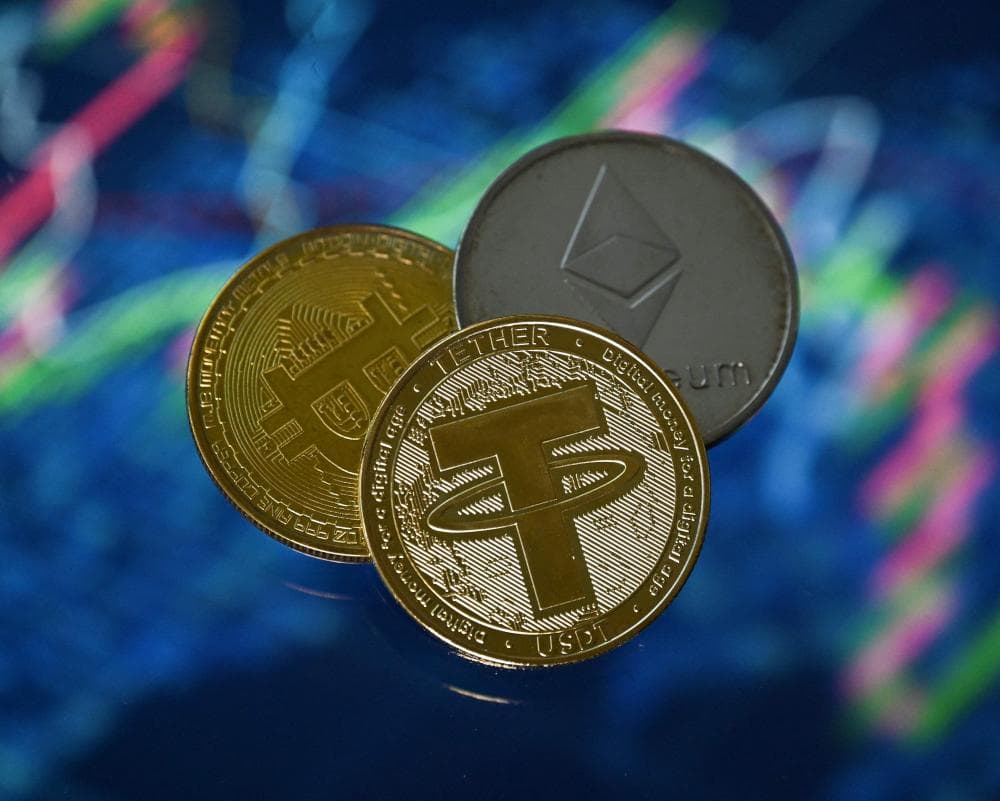
Elliptic, a crypto analytics company, said it had traced at least $507m (£377m) of cryptocurrency issued by Tether – a company touted by the Reform UK leader – passing through accounts that appear to be controlled by Iran’s central bank.
Elliptic’s report tracked what it says is the Iranian central bank’s “systematic accumulation” of Tether stablecoins, a type of crypto that is pegged to the dollar so it can easily be exchanged for hard currency.
This pointed to “a sophisticated strategy to bypass the global banking system”, perhaps to trade or to prop up the rial, Iran’s currency.
With thousands confirmed dead in the brutal suppression of protests, the Iranian regime’s apparent use of Tether’s stablecoins raises questions for Farage about his support for the cryptocurrency.
In September, Farage revealed he was planning to raise Tether during a meeting with the governor of the Bank of England, Andrew Bailey.
If you have something to share on this subject you can contact Tom using one of the following methods.
Email (not secure)
If you don't need a high level of security or confidentiality you can email tom.burgis@theguardian.com.
Secure Messaging in the Guardian app
The Guardian app has a tool to send tips about stories. Messages are end to end encrypted and concealed within the routine activity that every Guardian mobile app performs. This prevents an observer from knowing that you are communicating with us at all, let alone what is being said.
If you don't already have the Guardian app, download it (iOS/Android) and go to the menu. Select ‘Secure Messaging’.
To send a message to Tom please choose the ‘UK Investigations’ team.
SecureDrop and other secure methods
If you can safely use the tor network without being observed or monitored you can send messages and documents to the Guardian via our SecureDrop platform.
Finally, our guide at theguardian.com/tips lists several ways to contact us securely, and discusses the pros and cons of each.
“I’m going to go tomorrow to say this,” Farage told LBC radio. “You know, Tether is a stablecoin. Stablecoins are the way which money goes from conventional currencies through into cryptocurrencies and back again. Tether is about to be valued as a $500bn company.”
Farage criticised Bailey for imposing restrictions on crypto and urged the UK to catch up with the US, where Donald Trump, who chose Howard Lutnick, Tether’s banker, as his commerce secretary, has reversed efforts to police digital currencies.
Farage added: “You know, stablecoins, crypto – this world is enormous, and I’ve been urging for years that London should embrace it. We should become a global trading centre for this stuff, under proper regulation.”
One of Tether’s major shareholders, the tech investor Christopher Harborne, is Reform’s biggest donor. His lawyers said Harborne, who does not hold an executive post at Tether, is not responsible for illicit activities by its users. Suggestions that Harborne profits from Iran’s use of Tether stablecoins were “baseless drivel”, the lawyers said.
A spokesperson for Reform UK said “many companies and organisations across the globe” use Tether. They added: “All donations to Reform UK comply with electoral law and regulations. We stringently vet each donation. We continue to actively support the Iranian people in their fight for freedom.”
Booming demand for Tether’s stablecoin – known as USDT – has generated huge returns from the real-currency reserves the company holds to maintain its peg to the dollar. Tether’s $13bn annual profits are one-and-a-half times those of McDonald’s.
Some of that demand comes from illicit sources. In the face of US, UN and other sanctions that make it difficult to trade, buy foreign currency and hold accounts with most banks, it seems Iranians and their rulers have turned to Tether’s stablecoins.
Last year, Israel revealed what it said were dozens of crypto accounts used by Iran’s Revolutionary Guards.
That prompted a prominent Iranian businessman to complain on X about the regime’s failure to keep its dealings secret. His post contained two crypto account numbers the businessman said were used by Iran’s central bank.
It was through this apparently inadvertent disclosure that Elliptic’s researchers found connections between 50 accounts, concluding with a “high level of confidence” that they were controlled by Iran’s central bank.
A Tether representative did not address questions about Iranian central bank use of its stablecoins, but said: “Tether maintains a zero-tolerance policy toward the criminal use of our financial products.”
The representative said Tether followed US sanctions guidelines. “We work closely with law enforcement globally to identify and promptly, upon request, freeze assets to prevent further movement whenever they are identified to be in connection to illegal activity or illicit actors.”
They added that Tether has collaborated with more than 310 law enforcement agencies across 62 countries and frozen more than $3.4bn in assets “linked to criminal activity”.
Tether has frozen the suspected Revolutionary Guards accounts identified by Israel last year but most of those that appear to have been used by the Iranian central bank seem to remain active.