Loading...
Please wait for a bit
Please wait for a bit
Click any word to translate
Original article by Dan Sabbagh Defence and security editor
Concerned western officials said they were closely monitoring the deteriorating security situation in north-east Syria amid fears that Islamic State militants could re-emerge after the Kurdish defeat at the hands of the Damascus government.
The US military said it had transported “150 IS fighters” from a frontline prison in Hasakah province across the border to Iraq, and said it was willing to move up to 7,000 to prevent what it warned could be a dangerous breakout.
Kurdish sources said the prison involved was Panorama, which holds men from numerous countries – including a handful from the UK – though there was no detail on who had been rendered across the border.
The dramatic advance of Syrian government forces, halted by a fragile ceasefire on Tuesday, resulted in prisons holding former IS fighters and a camp of over 23,000 IS women and children changing hands in a chaotic fashion within a few days.
Though other high-profile female detainees, such as Shamima Begum, are thought to remain in the still Kurdish-controlled al-Roj camp in the extreme north-east of Syria, reports of escapes and a loss of control remain a source of anxiety in Europe.
Reprieve, a human rights campaign group, estimates there are about 55 men, women and children from the UK or with a claim to UK nationality held in north-east Syria, though many – like Begum – have had their British citizenship removed.
An estimated 120 IS militants escaped on Monday from the Shaddadi prison after it was seized from Syrian Kurdish forces in a bloody fight, although the Syrian government said that 81 had been recaptured since.
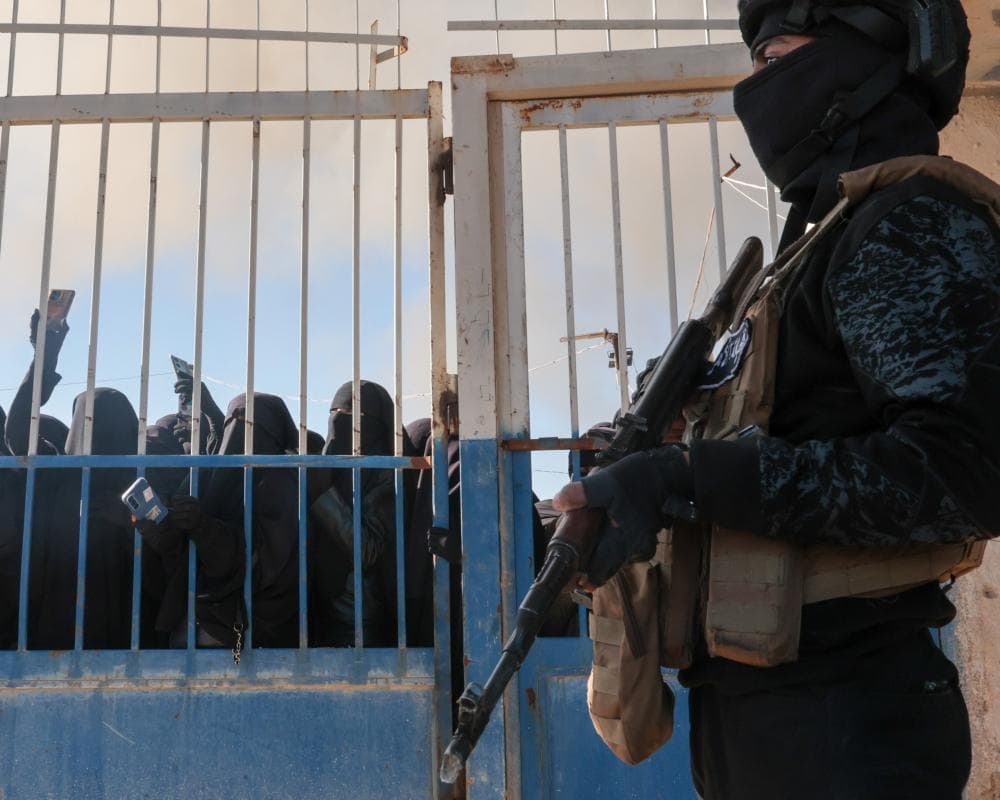
Al-Hawl camp, holding more than 20,000 women, originally from about 70 countries, changed hands on Tuesday amid conflicting reports that at least some of the women detained there had been able to leave after Kurdish forces departed.
Humanitarian organisations providing food, water and heating materials for al-Hawl, which lies in hostile desert, said they had not been able to visit since Sunday and were concerned that the situation there could become more unstable.
European officials warned that many militants in the prisons and camps were considered to be dangerous, though it was unclear how far they would be able to regroup, and whether the Syrian government led by Ahmed al-Sharaa, the president, would clamp down on them as had the Syrian Kurds.
IS was territorially defeated in 2019, with the Syrian Democratic Forces (SDF) military led by Kurdish fighters acting as ground troops. Thousands of male militants were detained in prisons, while women and children were moved to camps, from where some have been gradually repatriated while others have remained for years.
The SDF remained in control, as an effective government in north-eastern Syria during the final years of al-Assad’s regime in Damascus. But when al-Assad was ousted in December 2024 by al-Sharaa’s Hay’at Tahrir al-Sham (HTS), it led to an uncertain situation with the SDF unwilling to fully integrate into the new Syria.
Nanar Hawach, a Syria expert and analyst with Crisis Group, said there was a danger was “not a reborn caliphate but a dispersed insurgency rebuilding in the cracks”. Prison breaks “may have released experienced operatives into a contested security environment” between Syrian government and SDF forces, he said.
On Tuesday, the US signalled it had abandoned its support for the SDF. Tom Barrack, the US special envoy for Syria, said: “The original purpose of the SDF as the primary anti-Isis force on the ground has largely expired” and Washington’s partner in holding down IS was the Damascus government.
Though HTS has its origins as an offshoot of al-Qaida, the terror group, it has had a history of opposing IS, and cut its ties with al-Qaida in 2016. Before beginning its offensive on Damascus, al-Sharaa emphasised that HTS had moved on, though there has been sectarian violence targeting Alawite, Druze and Kurdish minorities.
Hawach said that the new Syrian government “clearly wants to be seen as a counter-terrorism partner” – but he cautioned that “securing Isis detention facilities, managing camps like al-Hawl, and suppressing sleeper cells across newly acquired territory requires resources, discipline, and institutional capacity that the Syrian government is still building”.
A lightning offensive by the Syrian government forces, starting over the weekend, led to rapid gains from the SDF. The city of Raqqa was captured on Sunday and the SDF agreed to hand over the provinces of Raqqa and Deir ez-Zor for a ceasefire. That broke down almost immediately, and government forces made more gains.
Al-Sharaa agreed to a fresh ceasefire on Tuesday, a day after he had spoken to Donald Trump. The US president said he had been “trying to protect the Kurds”, though it is unclear if the SDF will agree to al-Sharaa’s demands or risk another round of fighting.
The SDF leader, Mazloum Abdi, had been given four days from Tuesday to consult Kurdish leaders over accepting the Syrian government’s demands for close integration with Damascus.