Loading...
Please wait for a bit
Please wait for a bit
Click any word to translate
Original article by Angela Giuffrida in Rome
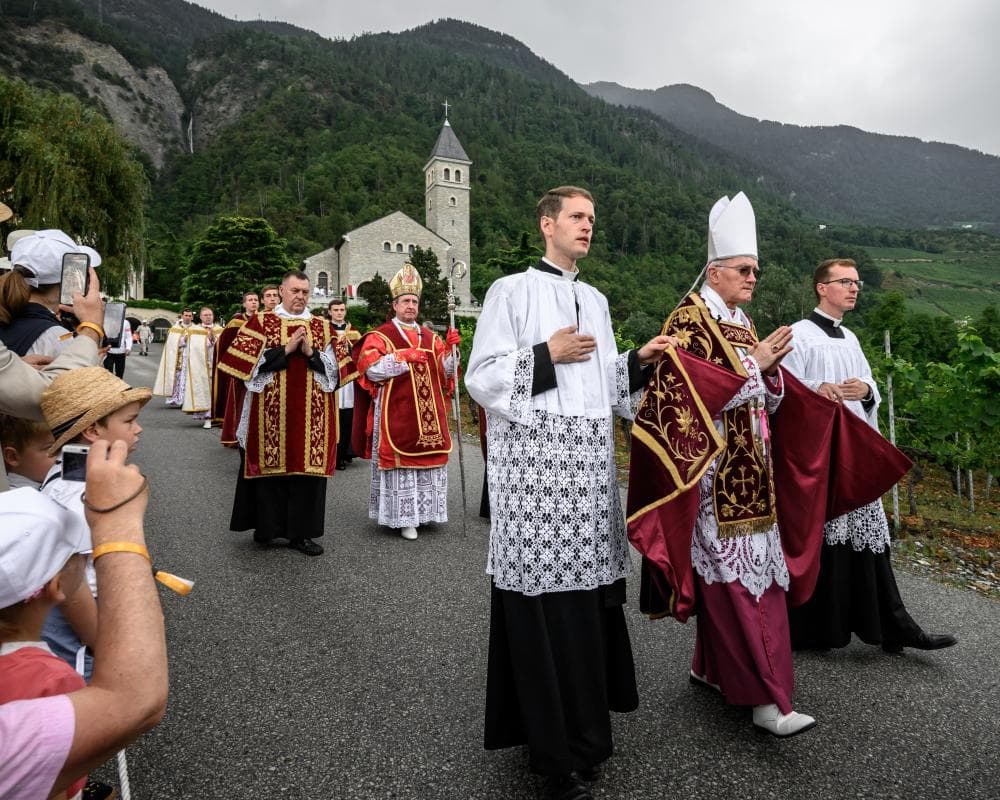
The Vatican has excommunicated a rebel group of ultra-conservative Catholics who defied Pope Leo by ordaining bishops without his consent, creating a schism in the Roman Catholic church.
In a statement on Thursday, Cardinal Víctor Manuel Fernández, who heads the Holy See’s Dicastery for the Doctrine of the Faith, said the group from the Society of Saint Pius X (SSPX), founded in the Swiss village of Écône in 1970, had “committed an act of a schismatic nature” which, under canon law, was punishable with automatic excommunication.
The Vatican went further than expected and said all priests of the SSPX and all Catholics who “adhere formally” to the group were in schism and excommunicated. The Vatican also reversed concessions on sacraments made to the society by the late Pope Francis, meaning confessions and marriages administered by its priests are invalid.
A schism is a term to indicate a severe, formal rupture within the church.
Andrea Vreede, the Vatican correspondent for NOS, the Dutch public news radio and TV network, said: “The Vatican hopes that by being harsh on the bishops, the priests and faithful, maybe some of them will repent and turn back to mother church. Because it’s not nice to be excommunicated.”
Pope Leo had made a last-ditch effort to persuade the society to halt the ordinations, which took place during a ritual-filled ceremony on Wednesday, calling them a “schismatic act” and a “sin of extreme gravity”.
But the society said the ordination of bishops who “are entirely faithful” to the Catholic church’s “tradition” was “a sacred duty”.
An estimated 16,500 people gathered in Ecône for the ceremony, including members of New Force, an Italian neofascist political party, and National Future, a new far-right force threatening the Italian prime minister Giorgia Meloni’s chances of winning a second mandate in general elections next year.
Despite being a splinter group, the SSPX, which has nearly 1,500 priests, seminarians and other vocational members, has made strides in attracting a following of an estimated 150,000 to 200,000 people around the world, especially in the US, France and Argentina.
The society rejects central changes that emerged from the second Vatican council – a landmark gathering of cardinals, patriarchs, bishops, theological experts and others between 1962 and 1965 – including allowing mass to be celebrated in local languages. Until then it had been said only in Latin. It also rejects dialogue with other religions and does not recognise other Christian churches.
“It’s a very minor group but they are very loud and very ultra-right,” said Vreede.
Since Leo was elected in May last year, the first North American pope has made church unity a priority and has worked especially hard to heal rifts with traditionalists, which had deepened during Francis’s papacy.
The society had pursued the ordinations for three reasons, said Vreede. First, with only two ageing bishops left, the order needed new ones. It bided its time after Leo was elected and, seeing that he wore the classic papal vestments and revived the tradition of going to the summer retreat in Castel Gandolfo, close to Rome, had hoped he would be more tolerant of them than Francis was, only to discover he mostly followed in his predecessor’s footsteps.
Last, the order is hoping it can gain traction from the global far-right resurgence. “The world is so much turning towards extremism, and they think they might flourish with that,” added Vreede, who expects Leo to continue to prioritise unity and not try to appease the traditionalists.
The clash is the first between the Vatican and the SSPX since 1988, when Archbishop Marcel Lefebvre, the society’s founder, and four bishops he had ordained without the permission of the then pope, John Paul II, were excommunicated, including a British bishop, Richard Williamson. In 2009, the conservative Pope Benedict lifted the excommunications. Shortly before, Williamson had caused uproar by denying the Holocaust.
“Leo will be very unhappy about [what’s happened], but he saw it as inevitable,” Vreede said. “It has happened in the past and it might happen again. It’s a nuisance but it won’t damage him. It’s not a very important schism and I think people will appreciate his coherence.”
Marco Politi, a Vatican journalist and author, said that while the SSPX put on “a big show”, the schism would not have a dramatic impact on Leo or the Catholic church, especially given the roughly 1.4 billion Catholics in the world compared with the society’s small number of followers.
“Everyone saw that Leo tried to find an agreement with them, and the reaction shows his firm stance,” he added. “The other element is that even though there are the most conservative factions in the Catholic church, when one goes against the pope and gets excommunicated, they are rarely on the side of the excommunicated.”