Loading...
Please wait for a bit
Please wait for a bit
Click any word to translate
Original article by Patrick Wintour Diplomatic editor
Iranian flights to and from Yemen are an unacceptable violation of the country’s sovereignty, the vice-president in Yemen’s Saudi-backed, UN-recognised government has said.
Abdullah al-Alimi said in an interview that the planes contained equipment for the Houthi movement, which he said had transformed from merely a domestic threat into a regional and international threat to global security and the global economy.
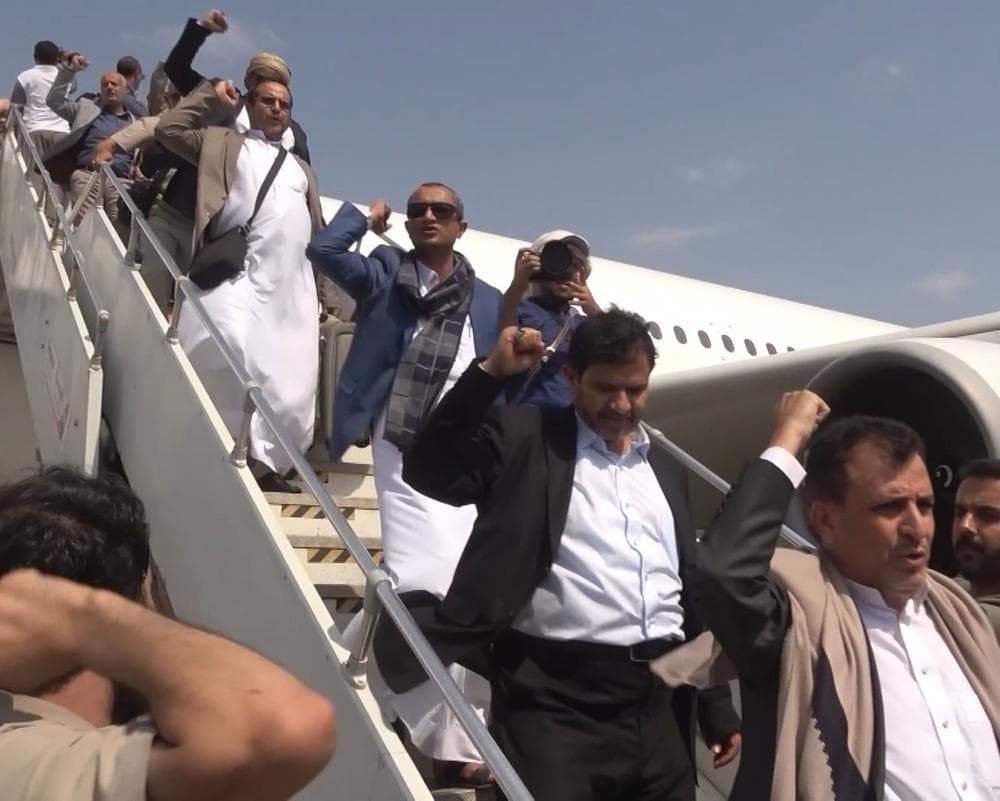
He was speaking after Yemeni government planes, supported by Saudi Arabia, bombed the Houthi-controlled Sana’a airport in protest at Iranian efforts to send a plane to the city containing a Houthi delegation returning from the funeral of the Iranian supreme leader Ali Khamenei.
The plane containing the delegation eventually landed at another airport, in the Houthi-controlled Red Sea port of Hodeidah. The Houthis fired missiles at Saudi Arabia in response, breaking a four-year truce in the conflict between Saudi Arabia and the Iran-aligned group.
An emergency session of the UN security council heard calls for both sides to de-escalate.
The head of the Houthi national delegation said: “Defending oneself, the homeland and the people is a religious, national, moral and humanitarian duty, and a legitimate right affirmed by Islamic law and international law. The aggressor is the real wrongdoer.”
Yemen has been in a state of intermittent civil war since 2015, when the Houthis seized control of Sana’a, the capital, forcing the UN-recognised government to withdraw to Aden in the south with Saudi support.
Al-Alimi, a long-term major player in Yemen politics, has a critical role in the government.
He said the Houthis were in a weaker position than they had been for many years. This was due to a number of factors including, in part, the weakening of Iran, their longstanding supporter.
He said: “It is realistic that we can end their coup and restore the state and its institutions, contribute to the security and stability of the region and the world, secure the waterways and protect the global economy.”
Al-Alimi said the Iranians were using the funeral as cover to bring equipment and experts to the Houthis.
“We have tried repeatedly to negotiate with the Houthis, but that has achieved nothing,” he said. “However, there has been a strategic change in the impact of the Houthis. They are no longer an internal threat but have become a regional and international threat because of their threats to the waterways in the Red Sea and Bab al-Mandab [strait]. Any understanding with the Houthis must be based on recognition of the need for the state to hold a monopoly over weapons and for the legitimate government to restore the institutions of the state.”
He said the government would “continue to brandish the sword of peace until the very last moment”, but: “We are ready if the Houthis impose war.”
Al-Alimi said Houthi targeting of oil export facilities had placed severe pressure on his government’s budget, including its ability to pay civil servants’ salaries. “Without Saudi support, the government would not have been able to meet its salary obligations,” he said.
The threat to oil exports made it almost impossible to attract international investors, he said, and as a result his government “needs security”.
Yemen has faced civil war and proxy warfare from outside powers for more than a decade. The Saudi-led coalition intervened in 2015 against the Houthis, triggering one of the world’s worst humanitarian crises. Violence flared again late last year after the Southern Transitional Council – a separatist movement backed by the United Arab Emirates – swept through territory in the south, splintering the Saudi-led coalition created to fight the Houthis.
Al-Alimi claimed that after the STC’s failure to establish its own state, there was now, for the first time, a greater degree of cohesion within the presidential leadership council, Yemen’s executive authority. He stressed that many of those who had been part of the dissolved STC remained present within the various structures of the state, beginning with the presidential leadership council and extending through the government, the governorates and the different structures.
He defended his government’s reliance on Saudi support as well as its relationship and coordination with Saudi Arabia, saying: “We share a 1,200km border with Saudi Arabia, deep historical and cultural ties, and a common destiny between the two countries. Saudi Arabia has stood by the Yemeni people in all humanitarian, economic, developmental and political fields.”