Loading...
Please wait for a bit
Please wait for a bit
Click any word to translate
Original article by Peter Walker
Drivers who are told about the safety risks posed by SUVs to cyclists and pedestrians are very unlikely to be deterred from buying one, a new study has found.
The findings indicate that if governments want to reduce the number of large, dangerous vehicles on the roads, it is likely to require financial penalties, according to the psychologists at Swansea University who led the research.
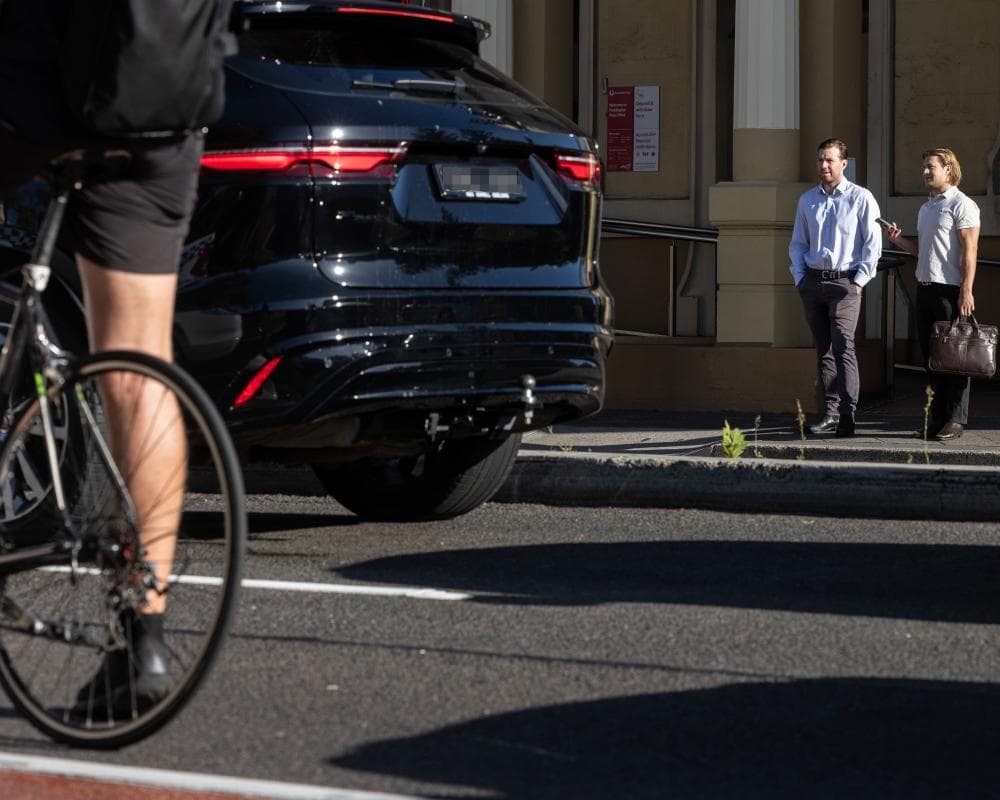
A series of studies have shown that sport utility vehicles (SUVs) and similarly oversized domestic vehicles such as pickup trucks are more dangerous than standard cars for pedestrians and cyclists. Much of the risk comes from their higher and blunter front ends.
A meta-study of existing safety research earlier this year found that if an adult pedestrian was struck by an SUV, they were 44% more likely to be killed than if the vehicle was a smaller car. This rose to 82% higher for children.
To test how much this affected people’s buying decisions, the study took a UK-wide sample of more than 2,000 people, including drivers and nondrivers, and split them randomly into two groups.
Half of the sample was shown one of three mocked-up SUV adverts, which included a warning that the vehicle concerned posed a “significantly higher risk of fatality” to pedestrians and cyclists. The others were shown the same adverts, but without the safety warnings.
Both groups were asked questions about their awareness of the risks from SUVs before and after viewing the adverts. Among those who saw the warnings, this rose from 35% awareness to 54%.
But when the same people were asked if they intended to buy an SUV as their next car, the proportion who said they would fell only very slightly. Compared with the group who saw the standard adverts, they were only 3.7 percentage points less likely to make the same decision after they had seen the safety warnings.
The overall effect, as the authors noted, was negligible: 95% of people who said they wanted to buy an SUV stuck with the decision, despite being told about the risks.
It was almost as minimal even among the subset of the sample who said the safety of vulnerable road users was an important factor in what car they decided to buy. Of those, 86% stuck with their plans to buy an SUV.
Prof Ian Walker, an environmental psychologist at Swansea University and one of the study’s authors, has closely studied the idea of what he called “motornormativity” – the way people judge car travel by different metrics to other areas of their life.
He said: “Buying whatever vehicle we like, and driving it wherever and whenever we please without having to think about the consequences for other people, has become normalised and ingrained across our society over decades.
“As such, it’s not surprising there’s a growing body of evidence that says asking or encouraging people to drive differently doesn’t work, and that stronger interventions will be needed if governments want to get serious about the issue.
“This almost certainly includes having a more honest conversation about how driving, no matter how useful to the person doing it, imposes harms on to other people.”
With SUVs now making up nearly 60% of new car sales across Europe, some places have started to respond to the difficulties they pose, which also include greater emissions due to their increased weight.
Paris tripled parking charges for SUVs in 2024 after a vote by residents. Transport for London is considering whether to impose extra charges for SUVs in the UK capital, in part because of the greater risks they pose to others.