Loading...
Please wait for a bit
Please wait for a bit
Click any word to translate
Original article by Tory Shepherd and Graham Readfearn
Poultry farms in Western Australia have gone into lockdown after the deadly H5N1 bird flu arrived on the country’s mainland, with tests confirming a second bird also carried the disease.
On Monday, the Ingham’s Group – Australia’s largest poultry producer – announced a “complete lockdown” in WA, despite no commercial detections of H5N1.
It came after a brown skua, found on a remote beach near Esperance, was discovered to have the “highly pathenogenic” H5N1 virus on the weekend.
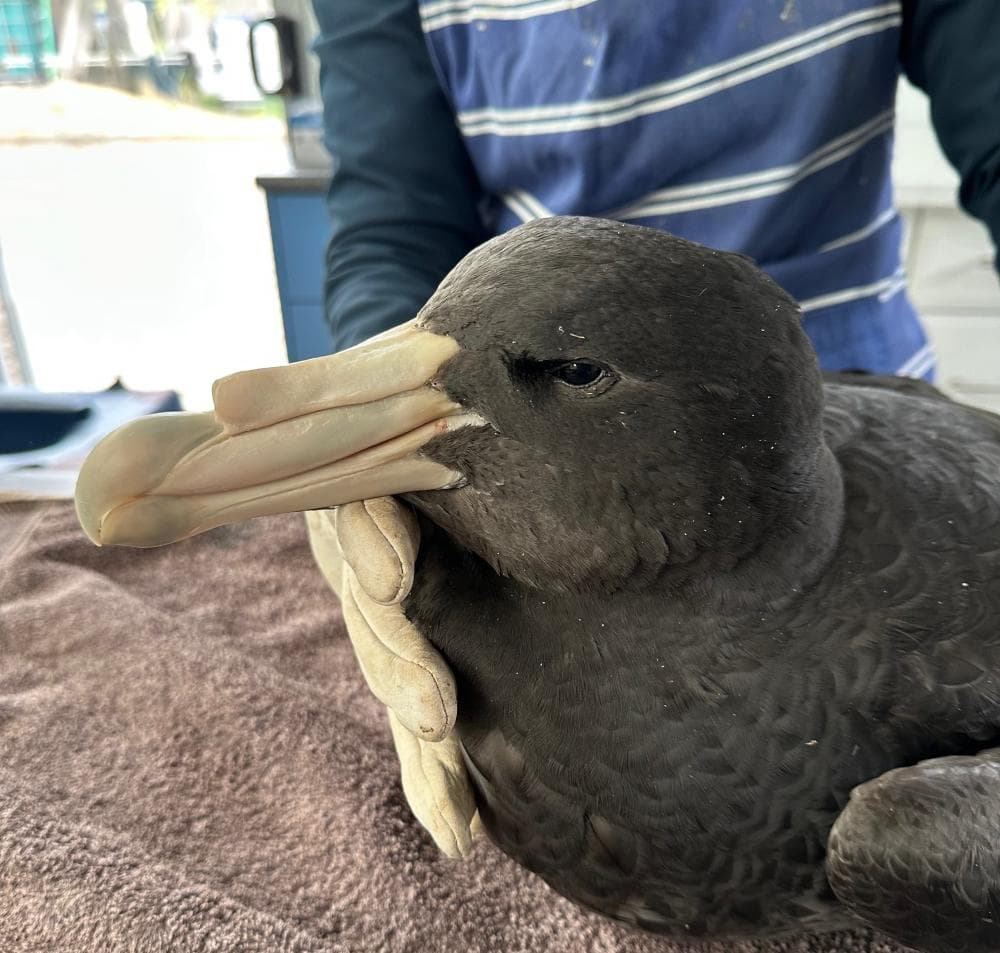
A giant petrel, found several kilometres away, also tested positive for the H5 strain, ministers said on Monday, as the WA government confirmed more than 50 calls to a hotline to report sick and dead birds.
Before the confirmation of H5N1’s arrival, Australia had been the only continent free of the virus, which has killed millions of birds and thousands of marine mammals since 2021.
Ingham’s said in a statement it would ask the state government to allow free-range chickens to be kept indoors, while all nonessential access to its operations would be stopped.
The state’s chief veterinary officer, Dr Michelle Rodan, said there were 42 calls to the emergency animal disease hotline from “multiple locations around the state” about unwell and dead birds on Sunday. There had been 16 calls the previous day.
Based on a risk assessment of the likelihood of a H5 infection, nine samples were collected for testing, including from reports of dead seabirds in the Esperance area – where the skua and petrel had been discovered sick.
Australia’s chief veterinary officer, Dr Beth Cookson, said there was “no indication [the disease] has spread to other populations.”
She told ABC’s Radio National the virus had not been detected in wildlife, poultry or agricultural systems. But Cookson said authorities were trying to work out whether the infected birds had spread the disease into other populations.
Sign up for the Breaking News Australia email“Our approach is to really learn from the overseas experience and look at the practical actions that can be put in place to mitigate the impacts as far as possible,” she said on Monday.
Shares in Ingham’s dropped as much as 14% on Monday, according to Bloomberg.
The share price has been sliding for four months and was down more than 23% in the year to date, according to the news agency. The Australian Financial Review reported on 1 June that the $777m company was “deep in turnaround mode”, after a contract with Woolworths was restructured.
Watt said state and territory environment ministers had been invited to a special briefing from the threatened species commissioner, Dr Fiona Fraser, and the chief vet, Dr Beth Cookson, on Monday afternoon.
“We’ve been working very hard with states, industry, environment groups [and] scientists over the last couple of years to make sure that we are as well prepared as we possibly could be,” he said.
“As a government, we’ve invested $113m, including $11m in the most recent budget in those preparedness efforts. So I feel confident that we’ve got the systems in place, and that we’re working cooperatively with states, territories and others to make sure that we can manage this outbreak if it does get more serious.”
The National Farmers’ Federation said it would be a “stressful time for farmers” but that Australia was well prepared.
“It’s important to prepare for the worst and hope for the best,” president Hamish McIntyre said.
The Greens, BirdLife Australia and the Australian Conservation Foundation echoed a call from the Invasive Species Council for the government to set up a $200m emergency fund to protect wildlife.
Anyone seeing sick or dead birds or marine mammals were advised to avoid the animals and not handle them, but to take photos or a video and call the Emergency Animal Disease Hotline on 1800 675 888.
– with Australian Associated Press