Loading...
Please wait for a bit
Please wait for a bit
Click any word to translate
Original article by Lisa O’Carroll
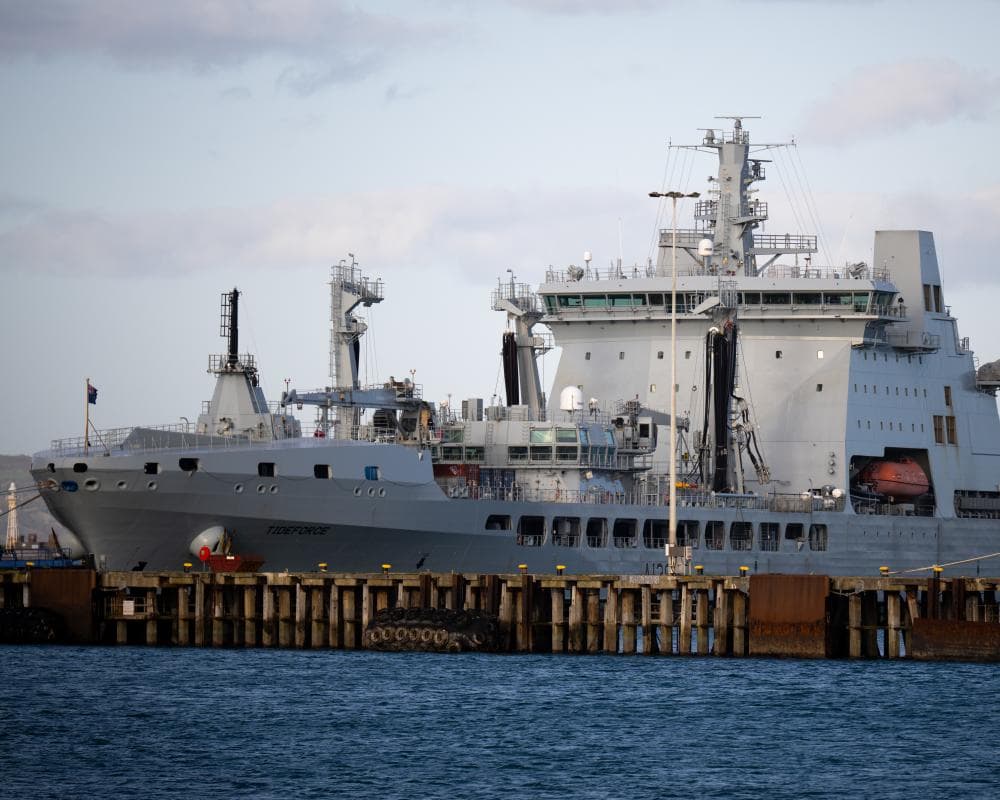
The UK has signed a “rebooted” defence agreement with Dublin that could mean the Royal Navy responding to hostile ships and other issues in Irish waters.
The deal, announced at the second post-Brexit Ireland-UK summit, held in Cork on Friday, updates a 2016 agreement to include cyber-threats and the sabotage of critical internet and electricity undersea cables.
It comes after a series of incidents in the Irish Sea in the last 18 months, including the escorting of a Russian spy ship after it entered and patrolled an area containing critical energy and internet submarine pipelines and cables.
In an apparent reference to Russia, the taoiseach, Micheál Martin, said: “We know what’s happened in other seas where there has been interventions, we know that certain elements have been observing the cables and other vital infrastructure, and so that’s the context, and it’s to protect that and to make sure we can respond effectively if an event was to happen.”
Asked if it would involve the Royal Navy patrolling Irish waters, he said he “would not get into specifics” but “it’s not patrolling”.
The UK defence secretary, John Healey, said: “This rebooted memorandum of understanding modernises our framework for cooperation on areas critical to both our nations’ security, in particular to counter the growing undersea and cyber-threats we share.”
Ireland’s poor defence has been the subject of criticism domestically and internationally, partly because 75% of all transatlantic cables go through or close to Ireland, giving it an outsized strategic importance in Europe.
Its defence capabilities are also in the spotlight as it takes up the presidency of the EU in July. Ireland is not in Nato, has no submarines and operates a policy of neutrality, with one of the smallest defence forces in Europe.
Last month it emerged that Dublin would benefit from enhanced security courtesy of the French during the EU presidency. It also announced it hoped to link up with the Joint Expeditionary Force (JEF), a UK-led alliance focused on maritime security involving 10 Nato members.
The new agreement between the UK and Ireland will mean closer liaison between defence and naval organisations, coupled with a new framework on subsea infrastructure, for a “coordinated response mechanism for addressing major subsea communication cable incidents” that might affect the two countries.
The Irish foreign and defence minister, Helen McEntee, said on Friday: “We’re militarily neutral, but we’re not neutral to any of the threats that exist at the moment.
“So it’s already the case that we have UK ships, for various reasons, military or otherwise, in our waters. This is about making sure that if there are threats or issues that emerge, we have structures in place that we can work with each other in cooperation.”