Loading...
Please wait for a bit
Please wait for a bit
Click any word to translate
Original article by Dan Sabbagh Defence and security editor
If there was a moment when the absence of a US strategy on Iran was exposed, then this was it. Donald Trump demanded on Saturday that the UK, China, France, Japan and others participate in a naval escort for oil tankers through the strait of Hormuz.
Despite launching the attack on Iran, with Israel, the White House does not seem to have fully anticipated what was likely to follow. Iran had few good military options for fighting back, but attacking US bases, US allies and merchant shipping in the Gulf was the most obvious response – to try to impose costs on the west.
Iran had been gearing up for a long period of resistance, with Ali Khamenei, the former supreme leader, pressing subordinates to name four levels of succession in the expectation that he and others might be killed.
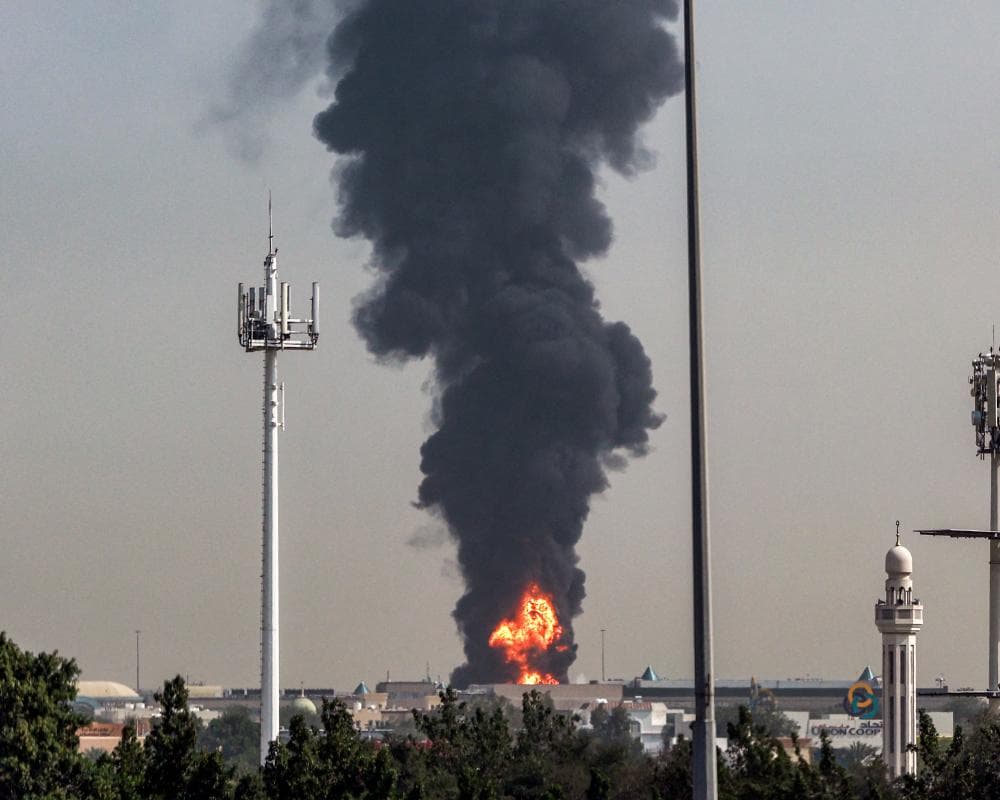
So far, in the two-week bombing war, the US has focused on Iran’s navy and missile sites. But this has not managed to eliminate the asymmetric threat posed against undefended merchant ships. Sixteen have been attacked, according to the Lloyd’s List journal, and tankers do not want to risk the journey through the strait.
Ten days ago, Trump urged tanker owners to “show some guts” and make the passage, even though the US navy appeared unwilling to undertake it. “The US has not done it because the Abraham Lincoln carrier strike group can sit 200km off Oman and strike Iran with little risk,” said Matthew Savill of the Royal United Services Institute thinktank.
Chris Wright, the US energy secretary, suggested last week that after further airstrikes, the US navy might be in a position to escort tankers “by the end of this month”.
Iran has, in theory, a range of small-scale attack options, including Islamic Revolutionary Guard Corps speedboats, aerial drones and up to 5,000 sea mines (though despite repeated US media speculation, these appear not to have been deployed yet).
But, in a reflection of the lessons from the war in Ukraine, the indications are that Iran is having most success attacking with sea drones (uncrewed surface vessels that resemble speedboats as shown in this video). One may have struck the Mayuree Naree, a vessel from Thailand, last week.
Trump, fixated on military power, had no particular desire to work with any country other than Israel – and none wanted to join in starting a war against Iran. As a result, naval preparation by US allies before the start of the war was nonexistent. None of Britain, France, China and Japan had warships ready to take up convoy duties.
For any escort operation to be viable, it might require eight to 10 destroyers, according to Richard Meade, the editor-in-chief of Lloyd’s List, though that would be enough to protect only “five to 10 vessels, making a transit every day and a half”. That would amount to about 10% of prewar shipping volumes.
At the same time, there has been a muted response to Trump’s appeal for help. Japan, for whom international military deployments are legally complex, said it had yet to receive a formal request from the US. China has not responded to the appeal, making it possible that Trump may respond by delaying a visit to Beijing at the end of the month.
Over the weekend, the US president said in an interview that Nato allies should feel obliged to take part. “Now we’ll see if they help us,” he told the Financial Times, warning of “a very bad future” for the alliance if they did not. The threat came despite Nato covering only Europe and North America and more than a year of heavy US messaging that Europe should focus on the defence of its own continent, not the Middle East, Indo-Pacific or elsewhere.
France has sent eight warships to the eastern Mediterranean but said it was not ready to go to Hormuz until the “most intense” fighting was over. The UK has struggled to prepare a destroyer and had to rush HMS Dragon out of dry dock, destined for Cyprus.
The UK has been criticised for failing to anticipate the need to have a warship in the region when the US was assembling two carrier strike groups. However, the Royal Navy was focused on deploying the Prince of Wales aircraft carrier into the north Atlantic later this year as part of an Arctic protection mission demanded by Trump at the time of his pursuit of Greenland.