Loading...
Please wait for a bit
Please wait for a bit
Click any word to translate
Original article by Jennifer Rankin in Brussels
The European Commission wants to ensure there is no repeat Viktor Orbán among the next generation of EU member states, as it set out plans to prepare for the bloc’s enlargement into eastern Europe in the next few years.
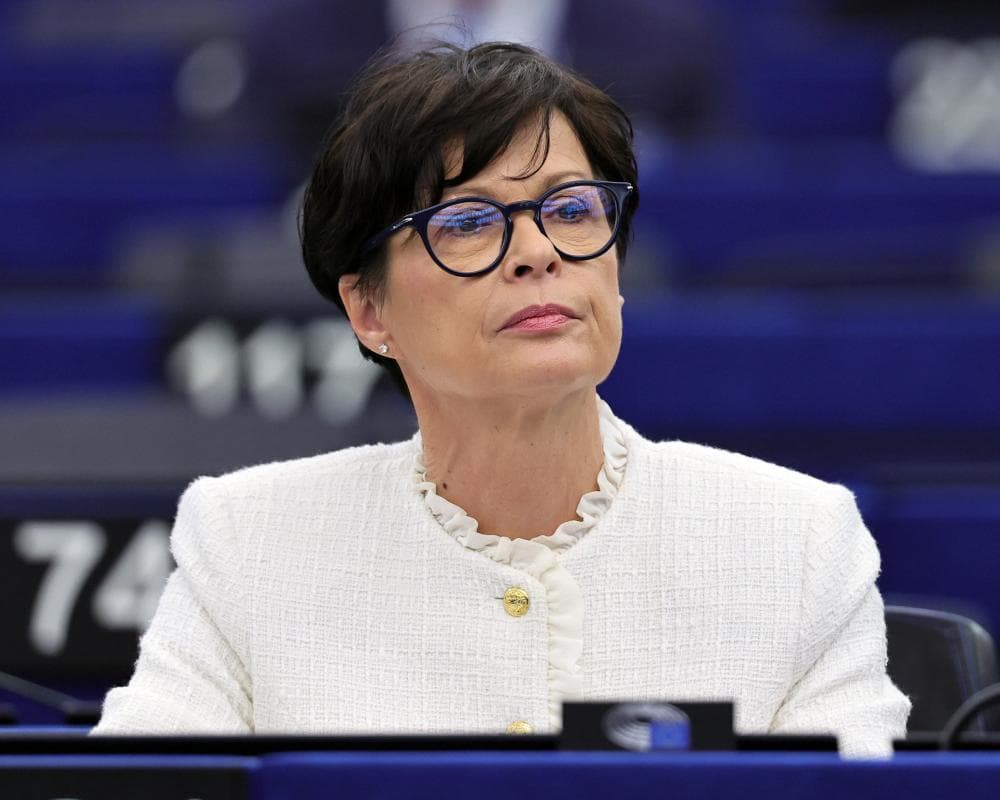
In an interview with the Guardian and other European newspapers, the EU commissioner for enlargement, Marta Kos, outlined proposals for special safeguards to protect the bloc from leaders who could flout democratic values and hold hostage decision making, a pattern of behaviour exemplified for many by the former Hungarian prime minister.
“No more Viktor Orbán,” said Kos. “We have to have quicker mechanisms than only article 7 [a sanction that allows a member state’s voting rights to be suspended] if the newcomers would go against the rule of law, democracy or our values.”
Under the plans Kos published on Tuesday, any new EU member state would face a 15-year probation period, during which they could be stripped of voting rights or EU funds for breaching basic democratic values or loyalty to the EU, the principle of sincere cooperation. The plans would have to be agreed by EU member states.
The EU treaty’s article 7 permits member states to remove voting rights from a rogue member state for a “serious and persistent breach” of democratic values. But this so-called nuclear option has never been triggered, despite lengthy discussions about democratic backsliding in Poland and Hungary, under previous governments.
The ultimate sanction was never taken, largely because the two central European allies used their veto power to protect each other.
Under the new proposals, the threshold for suspending voting rights – or another punishment – for breach of democratic standards, would be lower. An EU official said: “This is a big innovation and an important message to citizens in more enlargement-sceptical countries that we have a very strong framework even if something went wrong after enlargement.”
But officials acknowledged the time-limited safeguard would eventually expire. “If this [safeguard] would be unlimited, we would … have the situation where we have first and second-class members,” Kos said.
The call for stricter safeguards comes amid new momentum in EU enlargement, with Montenegro, Albania, Moldova and Ukraine all identified as frontrunners.
The full-scale invasion of Ukraine in February 2022 injected new life into EU expansion, an issue which had long been moribund. Ukraine and Moldova filed applications to join the EU days after the Russian attack, a step that jolted life into EU accession efforts in the western Balkans, a region of 17.4 million people, where Russia and China are vying to gain influence.
The EU’s existing 27 member states must agree unanimously to admit new member states, with scepticism notably high among French and Czech voters.
Nevertheless, Kos said she believed enlargement was politically possible. “Member states also understand what is at stake,” she said, pointing to the contest for influence in eastern Europe and the Balkans. She named Russia and China as “external disruptive forces, who are after our candidates”.
Describing enlargement as “our strategic interest”, she said: “If we are not able to integrate our neighbourhood, somebody else is coming [and] weaponising them against us.”
As an example, she said Russia had “invested millions” trying to deter countries from a European path, citing elections in Moldova, an EU candidate country, and Armenia, which is seeking closer EU ties. China, on the other hand, she suggested, uses its economic clout as an investor to influence countries.
EU officials hope to open negotiations with Ukraine and Moldova on two negotiating areas of EU law next week. Specifically, these are the “clusters” – thematic groups of negotiating files – for internal market and competitiveness, a vast swathe of the EU rulebook covering economic and monetary policy, tax policy, research and media.
Kos said it was “much too early to speculate” on whether a country at war or with a frozen conflict on its territory could become an EU member. She confirmed that Ukrainian grain farmers would not get EU subsidies while facing restrictions on the EU market.
Officials said Ukraine, known as the breadbasket of Europe and a vital supplier to Africa and the Middle East in prewar times, had a different scale of production to EU member states.
EU leaders will discuss the ideas next week, when they will confront difficult choices.
In order to avoid gridlock in a potential EU of 35 members, governments will be invited to waive veto rights on issues such as taxation and sanctions policy – and accept they may not always have a European commissioner in Brussels.
Attempts to shrink the size of the European Commission in the past have run into opposition, notably from Irish voters who rejected the Lisbon treaty in 2008, in part because they objected to the loss of a permanent Irish top official. Ireland voted in favour of the treaty the following year, after EU leaders pledged the EU executive would continue to have one commissioner for each member state.