Loading...
Please wait for a bit
Please wait for a bit
Click any word to translate
Original article by Leyland Cecco in Toronto
Canada’s federal government said Wednesday it would advance legislation to prevent people whose sole health condition is mental illness from accessing euthanasia, an effort by the ruling Liberal party to address a clash in the country over who has access to physician-assisted death.
Under the current rules, people whose sole underlying medical condition is a mental illness have been barred from accessing medical assistance in dying (Maid) to end their lives. But that ban – due to be lifted in March – has divided lawmakers over whether to permit this expansion of the Maid program.
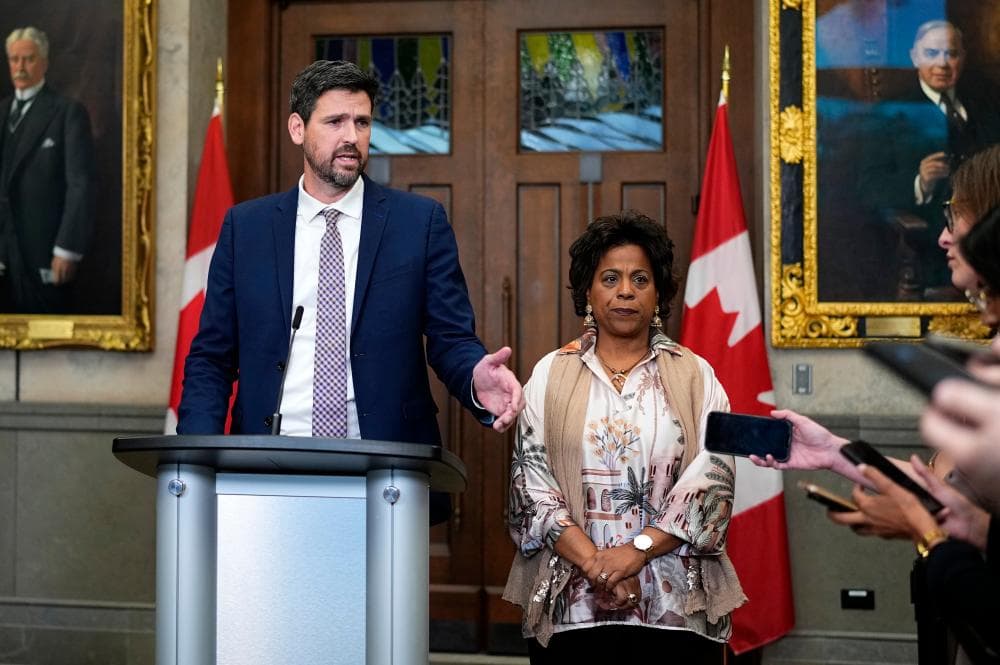
Speaking to reporters on Wednesday, the justice minister, Sean Fraser, said his government would indefinitely bar people whose sole condition is mental illness from accessing the program. He said that while there was no “perfect consensus” on this issue, upcoming legislation reflected the “correct” approach.
Earlier this year, a government committee concluded the government should expand access to Maid and should “indefinitely exclude persons whose sole underlying medical condition is a mental illness from eligibility for medical assistance in dying”. That report also flagged the need for “increased and more equitable access” to mental health services.
Canada’s medical assistance in dying (Maid) laws, drawn up after a 2015 supreme court decision, initially only permitted those who are terminally ill to be eligible for the procedure. But in 2019, a Quebec judge ruled that restricting access to those who had a “reasonably foreseeable death” was unconstitutional, forcing federal lawmakers to amend and expand the existing laws.
In 2021, the law was updated so adults could receive an assisted death if two doctors confirmed an irremediable physical condition causing immense suffering that cannot be relieved. Given the uncertainty surrounding mental illness, lawmakers in 2021 initially put a temporary exclusion in place for people who suffer solely from a mental illness. They renewed that pause in 2023 and 2024.
According to the latest government figures, the vast majority of Maid deaths – 95.6% – involved people whose natural death was considered “reasonably foreseeable”. Only 4.4% were cases in which death was not considered reasonably foreseeable. Those include people with conditions such as multiple sclerosis and incurable neurological disease that can causes profound disability and immense suffering.
The Liberal party’s legislation is also an effort to ward off a private member’s bill that would amend the section of the criminal code covering Maid so that “a mental disorder is not a grievous and irremediable medical condition”.
Advocates for expanding Maid to include mental illness alone say the current rules violate their constitutional rights and access to healthcare. Fraser acknowledged to reporters that a federal case, led by the advocacy group Dying With Dignity Canada, to challenge the government’s previous decision to delay access to Maid for people with mental illness, could affect the upcoming bill.
Fraser said lawmakers would also work to decriminalize what are known as advanced requests, effectively giving people suffering from some illnesses such as Alzheimer’s the chance to choose Maid before their illness deprives them of the capacity to consent.
At present, Quebec is the only jurisdiction that permits the use of these requests. Fraser gave no specifics on the timing of the legislation but said that provinces will decide whether to provide advance requests. While the province of Alberta has already said it will not permit advance requests, the jusice minister said the bill attempts to ensure “the doctors who provide the services will not be treated as criminals for doing so”.
In Canada, Crisis Services Canada can be contacted at any time on 1.833.456.4566, or via text on 45645 from 4pm-12am ET. In the US, you can call or text the 988 Suicide & Crisis Lifeline at 988 or chat at 988lifeline.org. In the UK and Ireland, Samaritans can be contacted on freephone 116 123. In Australia, the crisis support service Lifeline is 13 11 14. Other international helplines can be found at befrienders.org